#10 - Nowhere to Hide (1999)
Reviewed by Russell Edwards.
Jang Sun-woo and Kim Ki-duk raised more eyebrows and Shiri (Kang Je-gyu, 1999) made more money, but Lee Myung-se’s Nowhere To Hide (인정사정 볼 것 없다) was one of the flagbearers for worldwide interest in South Korean cinema in the late 90s/early 2000s. An episodic cops and robbers movie featuring Park Joong-hoon and Ahn Sung-ki as the hero and villain respectively, Nowhere To Hide was so glossy and directed with such finesse that international audiences from New York to Sydney who had become hip to East Asian cinema thought they had found the perfect blend of John Woo and Wong Kar-wai.
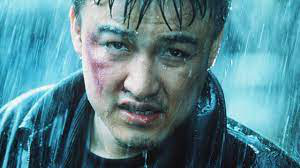
[Figure 1: Park Joong-Hoon rain scene. Image source: MUBI]
The two actors had played together before notably in Chilsu and Mansu (Chilsu wa Mansu, Park Kwang-su, 1988), but also in a popular Lethal Weapon-styled pairing called Two Cops (Kang Woo-suk, 1993). While in both previous films, the pair were allies, in this arthouse crime drama, director Lee puts them on opposite sides. In a nod to energetic American cop film The French Connection, Ahn Sang-ki’s villain, Chang Sungmin, is stylish, handsome and intelligent. Conversely, Park Joong-hoon’s ‘rough diamond’ good guy, Detective Woo is sloppy, violent, ungrounded and an all-around loose cannon.
The difference between the two is established not only by the performances by the two leads — where Park lumbers along like an angry gorilla, while Ahn’s movements have the poise of a ballet dancer — but also expressed through the music that introduces them. Detective Woo is first seen tussling with local hoods to post-punk thumping rhythms as a prelude to a brawl. In contrast, in a street awash with rain and fallen gingko leaves, Sungmin strolls up to slice up a rival gangster to the accompaniment of the Bee Gees harmoniously singing the mournful ‘Holiday’.
Given less screen time, but also important, is Jang Dong-gun (Taeguki, Kang Je-gyu, 2004; Friend, Chingu, Kwak Kyung-taek, 2001) who plays the hero’s police partner. Supportive of Detective Woo’s tireless pursuit of the villain, Detective Kim is like the film’s conscience as the hero and villain play cat and mouse. A channel for the film’s submerged tenderness, Kim would rather be at home with his family. In fact, he would rather that Woo would be at home with his family.
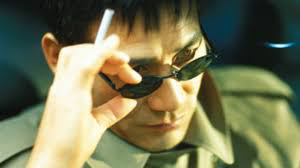 [Figure 2: Ahn Sung-Ki car scene. Image source: Cinema Clock]
Beyond all of this film’s poetic violence, its splendid and heightened use of colour and the sheer adrenalin drive of the film, Nowhere To Hide indeed has a sense of lonely despair. Although, often moving swiftly and cutting fast, the film also finds time for a sweet scene where Detective Woo meets with his sister and her family on a snowy winter’s night. It’s a reminder that Lee Myung-se’s range is wider than even this — his best film — would attest. He tinkered with melodrama in Their Last Love Affair (1996), and the musical in Bitter and Sweet (1995), but he’s doing more than exploring a different genre. With this film, Director Lee takes a kaleidoscopic approach to his visuals as he sometimes forcefully, sometimes lightly, but always playfully, engages with his images. Using the police chase format to create a narrative, Nowhere To Hide unfurls like a two-hour painting scroll with each frame a prompt for the next, but with no guarantee of what will fill the screen next. It is a great film in the sense of its own beauty. It is pure cinema and if you go with it, letting poetry, rather than logic, be your guide, you will be dazzled.
Nowhere To Hide is available here.