#12 - Nambugun (1990)
Reviewed by Niall McMahon.
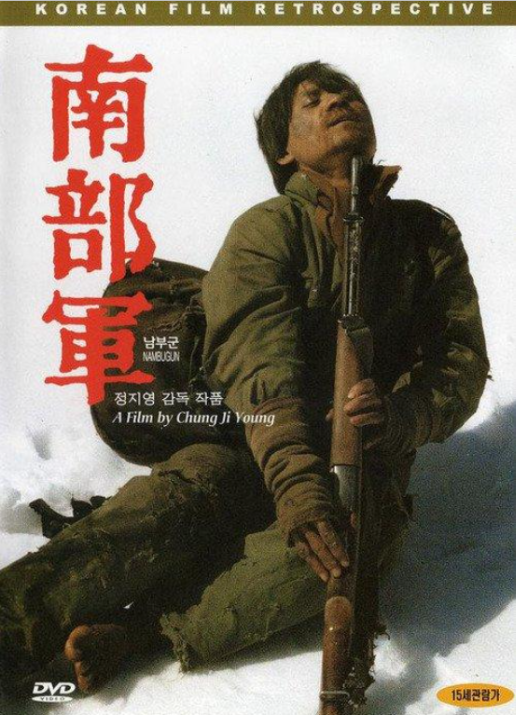
[Figure 1: Nambugun DVD cover. Image source: TMDB]
Showing a rare glimpse of the North Korean side of the Korean War (1950-3), Nambugun is a frequently challenging, often provocative, yet ultimately rewarding film for those who can brave its near three-hour runtime. The film follows Lee Tae (played by legendary South Korean actor Ahn Sung-ki), a war correspondent turned partisan during the Korean War. Operating in the mountains of South Korea, Lee Tae moves between several North Korean guerrilla factions, eventually joining the elite Nambugun unit to carry out a variety of raids and operations against the South Korean army. The film has multiple titles, with North Korean Partisans in South Korea and North Korea’s Southern Army being the most common.
Films about the Korean War are not uncommon in South Korean cinema, but those depicting the North Korean experience are few and far between. In the decades after the Korean War, the South Korean government mandated that any films that attempted to humanise the Northern soldiers were either banned or edited, at times even leading to the imprisonment of the filmmakers themselves. Notable examples of this were the films Piagol from 1955 and The Seven Female POWs (Dol-a-on Yeo-gun) from 1965, with the former required to change its ending to show the South being unambiguously superior to the North, and the later resulting in filmmaker Lee Man-hee being imprisoned until “problematic” scenes were deleted. As government censorship began to ease in the late 1980s and early 1990s, sympathetic and humanistic portrayals of the North Korean citizenry began to seep through resulting in films such as Nambugun that began to alter the historical narrative from one of northern aggressors and southern defenders, to a national tragedy that tore families, and the peninsula, apart. What is significant about this shift in cultural perspective is that the partisans in Nambugun are South Koreans who have chosen to side with the North due to their common ideologies. In short, the film depicts southern characters teaming up with northern soldiers to defeat the southern army; a narrative that could never be produced if the filmmaking mandates of the 1950s-1980s remained.
As previously mentioned, the film has a gargantuan runtime of over two and a half hours. Uniquely for a war film, the pacing is slow, favouring lengthy, wide and stationary shots of characters walking in and out of frame, complete with deep-focus cinematography that allows the South Korean mountains to stretch for miles in every scene, almost consuming all the characters as they struggle to defend their homeland. A notable example of this pacing and cinematography comes near the end of the film where Lee Tae and a fellow soldier struggle to climb up a snowy hill while being pursued by a platoon of South Korean soldiers. The scene runs for close to two minutes and is comprised of a single shot as the men struggle and climb amongst gunfire, the images of the pursuing soldiers being mere dots in the background. The film takes place entirely in the South Korean countryside and small villages dotted amongst the landscape, as such, stillness and quiet is an important element of the film, allowing the cinematography and editing to capture the scale of the country. When the film’s score and sounds of battle finally occur, they feel alien and strange, as if war is unnatural to the land.
Due to the film’s slow pace, the North Korean partisans are given time to sit and talk, developing deep relationships with each other over the runtime. A significant portion of the film’s middle section is dedicated to a romance between Lee Tae and a nurse named Park Min-ja. It is quickly established that only a handful of the partisans are soldiers, with the rest being made up of civilians who joined the war effort for either ideological reasons or for survival. The progression from innocent civilian to battle-hardened solider is enforced through this subplot. The film can be quite tender in its first half, specifically during the scenes between Lee Tae and Park Min-ja. However, this tenderness is short-lived as the pair are forced apart by their command, who state that love affairs are ‘an erroneous act against the nation and the people’, and that they both have ‘weak-hearted sentimentalist natures’. After Lee Tae and Park Min-ja are forced apart, they are never seen on screen together again and with it, any affectionate emotions the film may have had leaves with them. Through this and other tragic scenes, Lee Tae evolves from a man with grand ideals and tender love to a hollow husk who has no other emotion than those required to survive. The toll the war has on Lee Tae’s humanity is slow and gradual, with the character at the end of the narrative bearing little resemblance to one at the beginning, revealing the little-seen human cost the Korean War had on the North Korean soldiers.
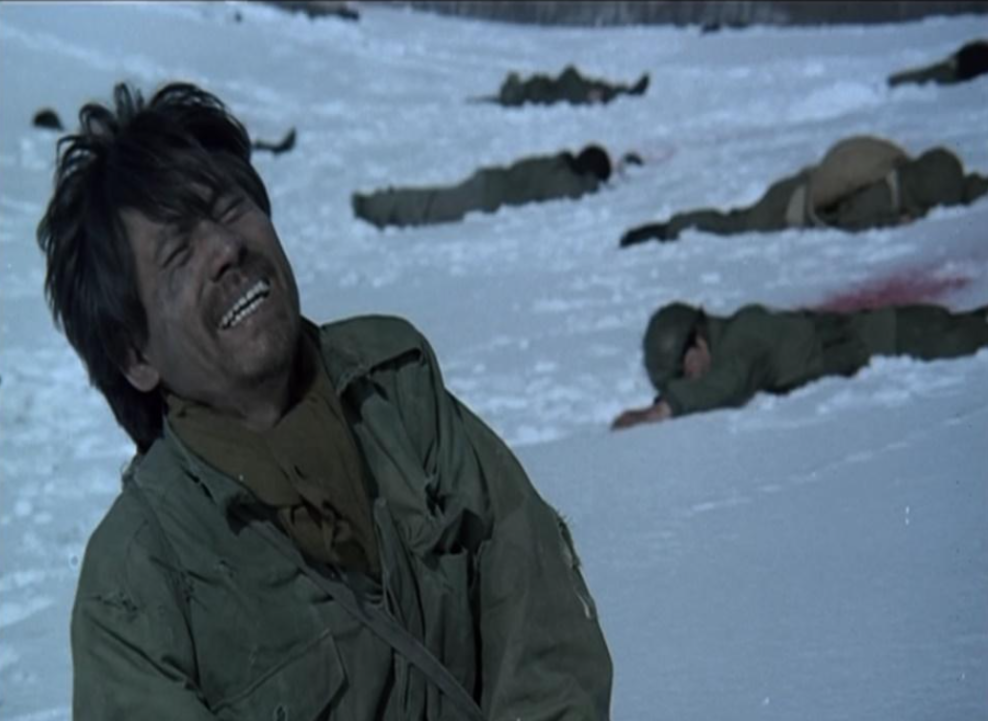
[Figure 2: Lee Tae finds the aftermath of battle. Image source: screenshot from movie]
Nambugun has numerous battle sequences that pit the partisans against the South Korean army. However, these are also affected by the film’s unique pacing and cinematography. Despite the North Koreans facing explosions, bloody gun wounds, and returning fire at their enemy, no South Korean is ever shown clearly on screen. The enemy soldiers are either off-screen entirely or far in the background with none of their faces being able to be seen clearly. As a result, the focus of the film is kept on the partisans and their very human reactions in battle, rather than focusing on spectacle. While blood and body parts still fly freely, these scenes rarely get more than a few minutes of screen time, with the film more concerned about the aftermath and consequence of battle rather than the act of violence itself. More time is shown of the partisans recovering from their wounds or becoming lost in the mountains, starving and freezing, than depicting the act of combat. The war is happening, the characters know it and so does the audience, and together we must survive all of it; not just the bullets, but the exposure, frostbite, starvation, boredom, and more.
Nambugun is a rare and singular film. As beautiful as it is brutal and as methodical as it is at times chaotic. It is one that should be seen by all who have an interest in Korean history and essential for anyone serious about South Korean film.
Nambugun is available on You Tube here.