#13 - Festival (1996)
Written by Russell Edwards.
Many of Im Kwon-taek’s films are aimed at reacquainting Koreans with their own arts and culture. Sopyonje (1992) and Chunhyang (1999) showcase the musical tradition of pansori, the latter by presenting Korea’s most famous folktale. In addition, Chihwaseon (2002) focuses on painting, while earlier in Im’s career, The Surrogate Woman (1987) accentuates dance and masks (as well as the callous misogyny of feudal rulers). This is neither nostalgia, nor ethnographic indulgence. These films present a sense of Im immersing himself in the traditional roots that feeds his own art and sustains his work as a filmmaker. In Festival (1996) this cultural pride takes the form of various superimposed titles that detail the names of particular funeral rites. For the Western viewer the detail is fascinating for its demonstration of the intricacy of funeral rites, but for a Korean audience it is both a reminder of centuries of tradition, and also an admonishment that these things must never be forgotten.
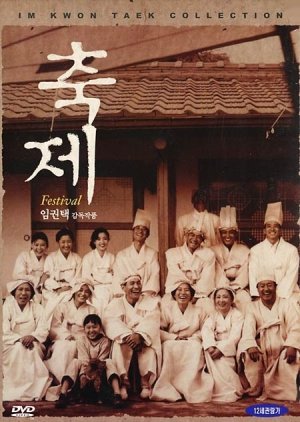
[Figure 1: Festival poster. Image source: MyDramaList]
While the family, particularly the women, must perform their grief, the funeral guests have their own duties to perform. The drinking, the gambling, the eating, the light-heartedness is all expected as it is done to ease the burden of the family mourners. As an invited mourner, to join the weeping and wailing, would only increases the agony of the family… so please, have another drink. The problem is, who is legitimately performing their role as a supportive guest at a funeral and who is more expediently taking advantage of the free booze, the delicious food and the free gambling money? Based on a novel by Lee Chung-joon — as was Sopyonje — the deep sadness that dwells within keeps Festival grounded, preventing the film from spinning off into Rabelaisian chaos. Yes, people get drunk when they shouldn’t, and fights break out over the games of go-dori, but the film never loses touch with the loss of a beloved matriarch who kept the family alive while they struggled to survive crushing poverty.
Holding that gravitas in place is the graceful, heartfelt performance by film icon Ahn Sung-ki. Debuting as a child actor with Kim Ki-young in the early 1960s, Ahn worked continually since childhood up to his recent appearance in Hansan: Rising Dragon (Kim Han-min 2022), but has since retired due to a debilitating illness. Together, Ahn and Im made nine films including the director’s 103rd and last film, Revivre (2014). Like any productive artist, Ahn’s character in Festival, the novelist Joon-sup must create for himself a quiet space within the emotional storm that is his grandmother’s funeral. He stoically bears responsibility for the circus it becomes as a result of his own fame as a novelist, but as the film unfolds an idyllic fable that runs parallel to the main narrative shows how Joon-sup also uses the experience to fuel his creative process. Ahn’s character is pensive, but Festival’s nods to Confucianism indicate that Joon-sup remains fully aware of his duties as the family’s male figurehead. Like the plain white sackcloth worn by mourning families that itches and irritates the skin and scalp, the chief mourner role is often an uncomfortable, physically disturbing fit, but the process must be followed. Deceased elders must be served beyond death, so that they may have their deserved rest.
[Figure 2: Funeral scene. Image source: screenshot from trailer.
In the shadow of the film’s events, there are several references to Korea’s tragic history. The dying grandmother is from Dokdo, one of the islands that South Korea is still trying to reclaim from Japanese Occupation. At the subsequent funeral, one of the mourners vividly recalls a body that was left in the village’s main street during the Korean War, but cannot remember whether the corpse belonged to the North or the South. The poverty and famine of the post-war era, is on display in this small village and the beginnings of South Korea’s economic miracle is on display in the fine clothes worn and the urban sophistication carried by the estranged granddaughter, Yong-sun (O Jeong-hae) who further embarrasses her family by bringing flamboyant gifts to honour her grandmother’s passing.
Despite its sociological and ethnographic gaze, Festival also carries the emotional power of a personal film. As the perceptive Adam Hartzell informs in his koreanfilm.org review, Im did not perform these rites for his own parents and as the eldest son in a family of seven children (identical to that of literary protagonist Joon-sup) through the making of this film, Im atones for his own shortcomings as an ‘ungrateful’ descendent of those who reared him. Using Lee Chung-joon’s novel as his source, Im leans into Korean culture to ensure that others will not neglect the traditions as he had done.
A mini Im Kwon-taek retrospective will take place at Sydney’s Ritz cinema from May featuring Sopyonje (May 4); Mismatched Nose (May 11); Ticket (May 18) and Festival (May 24). Sopyonje will also play at Melbourne’s Lido Cinema on May 11 & May 14.