#15 - The Widow (1955)
Written by Spencer Hines (PhD Candidate in the School of Culture and Communication, Faculty of Arts, University of Melbourne).
Park Nam-ok’s The Widow (Mimang-in, 1955) is South Korea’s first film to have been directed by a woman. Shin-ja (Lee Min-ja), the titular widow, is a single mother raising her daughter, Jun (Lee Seong-ju), having lost her husband during the Korean War. The wealthy Mr Lee (Shin Dong-hun), a friend of her late husband, is helping her start a business as a seamstress. Yet this is complicated by the meddling of his wife, Mrs Lee (Park Yeong-suk), who suspects the pair of having an affair, perhaps cognisant of her husband’s straying affections. This is quite the decoy-come-double standard, however, as Mrs Lee herself is secretly involved with a young man, Taek (Lee Tak-kyun). Ironically, it is not Mr Lee, but Taek to whom Shin-ja’s affections are drawn.
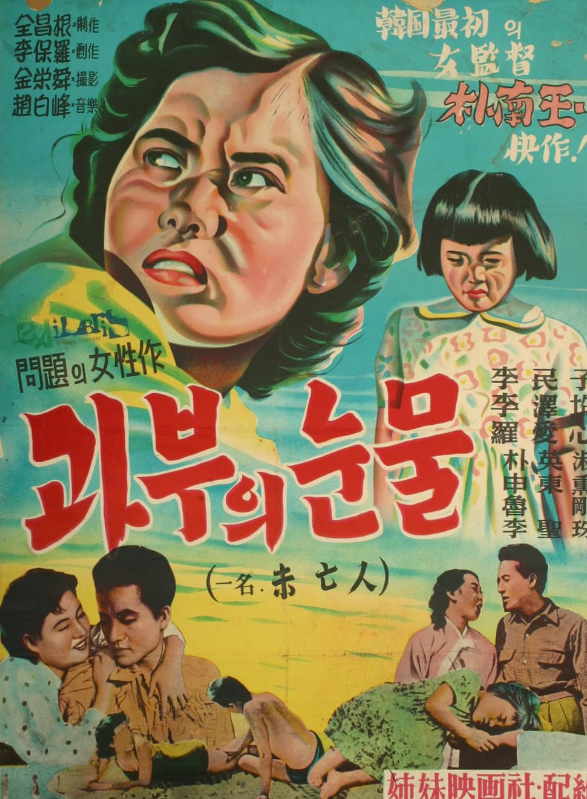
[Figure 1: The Widow poster. Image source: IMDb]
The film is anchored by Lee Min-ja’s subtly compelling and alluring performance as Shin-ja. The widow’s always calm and measured speech is belied by a face that says more than her words express. Her’s is an expression suspended between pained sorrow and happiness, stoic in the knowledge that promises and hopes for a better life—for personal and professional fulfillment—are only to be imagined, never realised. Catching her reflection in a mirror early in the film, Shin-ja appears hopeful yet measured when confronted with her own image, as though cautious and tentative, careful not to assign too much faith to the hopes by which she is soon to be enveloped. This is a face that wears resigned disappointment in anticipation.
This moment predicates Shin-ja’s steadfast prioritisation of her personal and professional desires, that which always requires navigation in relation to the dramas of those by whom she is surrounded. Nevertheless, Mrs Lee’s prying does not put a stop to Shin-ja’s romance with Taek, and her decision to entrust Jun’s care to a less-than-capable neighbour to allow her the space to advance her professional goals is no cause for doubting her unwavering love for her daughter. Yet matters are complicated with the sudden reappearance of Taek’s former lover, presumed to have died during the war.
As the film nears its conclusion, Shin-ja reads a passage of a book echoing the drama unfolding in reality. “She wanted to live happily ever after with him”, it reads, “while he just wanted today’s pleasures”. Images of Taek and Jun are overlayed with crossfades upon her ever-alluring face, deep in thought, her head resting on the pillow. Just as Shin-ja’s face foretold, her hopes and desires are indeed the substance of dreams, not the fabric of reality.
The Widow is a film that frays at its edges. Shortly after Shin-ja turns off the light for the evening the film’s sound evaporates like a short-circuited radio. The remaining ten minutes unfold in silence. The sound for the film’s ending has been lost along with the entirety of its ten-minute long final reel, meaning that The Window is a film without an ending. We watch and wonder what Shin-ja is saying as she sits talking with her friend, just as we are left to decipher that which unfolds between Taek and his lover, observing a series of contrasting expressions modulating between pained sadness and elation. Words are rendered secondary to the gravity of expression, just as the widow’s gaze toward her reflection in the mirror says more than her always-measured prose.
This is a film about the eponymous widow, but the passing of time has not been kind to Shin-ja. The absence of the final reel means the film’s ending is that of an image of Taek aimlessly wandering the streets, seemingly at pains to choose between Shin-ja and the woman he thought was gone forever. Circumstances have conspired to ensure that a film about the widow ends with an invitation for the spectator to interrogate the male character’s desires in a kind of cliffhanger. Ironically, the woman whose yearnings, aspirations and agency the film is centred on voicing is silenced. This is an especially cruel blow given the adversity Park faced as a woman directing this film, barred from entering the sound studio to oversee the recording of dialogue. Such are the difficulties that dissuaded her from continuing a career in filmmaking, meaning South Korea’s first female director made just one film, that which ends as the widow’s fate remains a mystery, buried deep within the film’s final, lost reel.
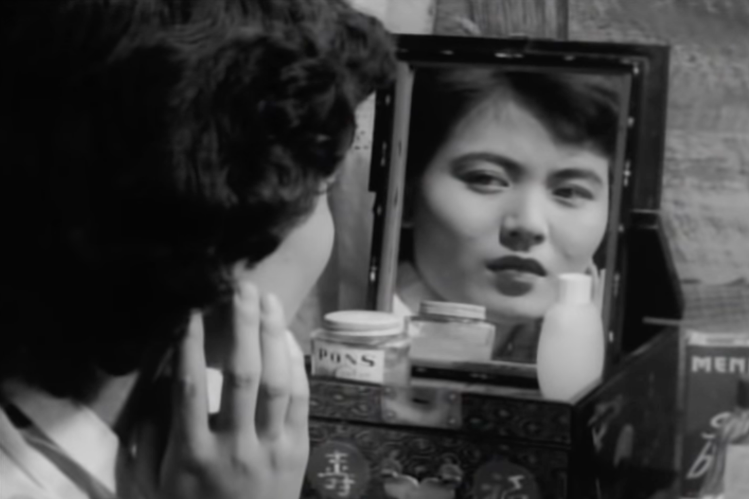 [Figure 2: Screenshot taken from the Korean Film Archive YouTube Channel. Image source: YouTube]
Reference list:
Paquet, Darcy. 2023. “The Widow.” Far East Film Festival, accessed 7 June 2024. https://www.fareastfilm.com/eng/film/the-widow/?IDLYT=7505