#16 - Holiday in Seoul (1956)
Written by Spencer Hines (PhD Candidate in the School of Culture and Communication, Faculty of Arts, University of Melbourne).
In Holiday in Seoul (Seo-ul-ui hyu-il, Lee Yong-min, 1956) the city is introduced hovering halfway between a mystery and a utopia. Crossfading from vista to vista, Seoul’s mountainous peaks are shrouded beneath a lingering haze, silhouettes of the neo-classical Japanese General Government Building and a gothic church steeple peeking through its misty skies. Panoramas of these grand, colonial and quasi-European styled structures give way to a forest bathed in shards of brilliant light, carving long, angular shapes of the mist breaking through holes in the canopy. Only a brief view from a bridge across a stream hints at that which occupies the city at ground level, though the lingering fog obstructs a clear view of the rickety buildings on the banks of the stream and all they house. The Seoul to which we are introduced is otherworldly and idyllic, ripe for a holiday.
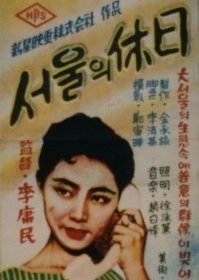
[Figure 1: Holiday in Seoul poster. Image source: MyDramaList]
Newlyweds Hi-won (Yang Mi-hie), an obstetrician, and Jae-kwon (No Neung-kyeol), a newspaper reporter, have planned an elaborate day out in their home city, a schedule for a summer’s day Jae-kwon announces is even busier than Princess Anne’s tour of the city. Such grand plans are swiftly derailed, however, when Jae-kwon receives a fake tip-off about a murder case from his practical joke-playing colleagues. Taking the bait after mistakenly believing he has witnessed a kidnapping, Jae-kwon is whisked away on a series of misadventures that include a bizarre encounter with a woman in a mysterious house in the countryside who believes Jae-kwon is her partner as well as a coincidental encounter with the actual criminal. Hi-won, meanwhile, cannot seem to escape work. Not only does she come to aid of her young, unmarried pregnant neighbour, she takes it upon herself to locate the unborn child’s evasive father whilst also navigating the anger of the woman’s drunkard father. She is also called upon by a child to deliver the baby of a complete stranger who turns out to be the partner of the criminal her husband encounters and ends up capturing. Things come full circle when Jae-kwon arrives at the criminal’s house and finds his wife having just delivered the baby.
Like Han Hyeong-Mo’s Madame Freedom released in the same year, Lee Yong-min’s Holiday in Seoul centres on the interpersonal dramas of the middle class. Yet Lee’s film contains little of the melodrama with which Han’s is infused. Where Madame Freedom addresses the plight of women and the difficulty of attaining self-realisation in the restrictive and conservative landscape of the 1950s, Lee treats this as all but a given. Similarly, Hi-won’s storyline diverges from the gravity of Han’s film and its heroine’s tragic ending. Her status as a working woman is never questioned. She is self-assured, largely unswayed by her friends’ and Jae-kwon’s colleagues attempts to convince her that her husband’s abandonment of their planned ‘holiday’ is proof of an affair.
This lightly comic, meandering and somewhat picaresque tale unfolds in Lee’s strangely foreign-come-utopian iteration of Seoul. Colonial and western form and design is relished and celebrated with languid framing, whilst local architecture and vistas of post-war destitution and fraught modernity are relegated to the sidelines. When Hi-won visits Deoksugung, for example, the neo-renaissance styled Seokjojeon Hall is presented like a proscenium framing the action in the foreground. Indoor settings are bright and vivid, matching the verve afforded the external shots. Taken out of context, their high ceilings, showy curtains, patterned wallpaper and 50s furnishings appear like the ornate Los Angeles homes from the Hollywood cinema of the era. This is most starkly realised when it comes to Hi-won and Jae-kwon’s wealthy neighbours’ residence, with its chequered floor, Greco-Roman statuettes and framed portrait of James Dean. Jae-kwan’s pursuit of the criminal through the mountainous countryside even resembles a noir-esq escapade into the Hollywood Hills. Lee would later be prominently remembered for his work in the horror genre, perhaps most famously with A Bloodthirsty Killer (1965). But in Holiday in Seoul, the expressive and gothic compositions that would come to define his visual trademarks are predicated by this unusual, foreign and spacious depiction of a post-war landscape.
A pan to the couple and their neighbours’ affluent houses across from their pregnant neighbour and her father’s decrepit shack depicts a contrast in socio-economic circumstances laid bare. Hi-won ventures to the domain of those less fortunate when she delivers the child of the criminal’s partner, but she does so in the elegance and brilliance of her striped summer dress. She neither judges nor aestheticises, but she does look out of place. Despite Hi-won and Jae-kwon’s ‘holiday’ not panning out as expected, Holiday in Seoul remains a kind of post-war fantasy preceding the increasingly destitute vision of the Seoul soon to be presented in the social-realist dramas of the decade-to-come. This is an urban space perhaps more suited to the continuing adventures of Audrey Hepburn and Gregory Peck from Roman Holiday (Wyler, 1953), the film to which the title Holiday in Seoul could be seen as paying subtle reference.
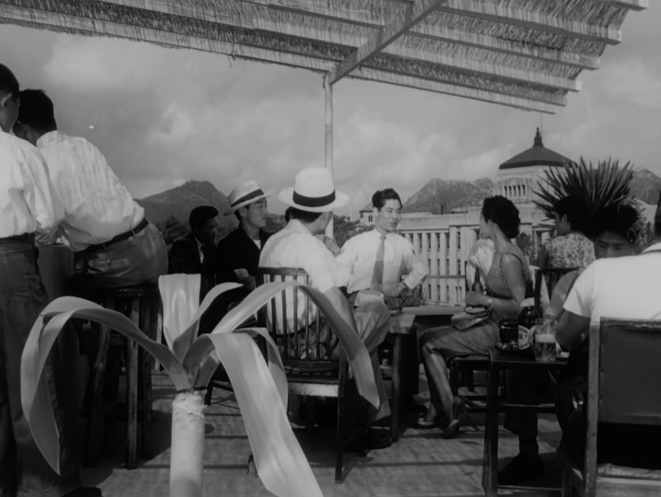 [Figure 2: Screenshot taken from the Korean Film Archive YouTube Channel. Image source: YouTube]
Reference list:
“Holiday in Seoul.” Harvard Film Archive, accessed 7 June 2024. https://harvardfilmarchive.org/calendar/holiday-in-seoul-2023-11