
#17 - An Empty Dream (1965)
Written by Spencer Hines (PhD Candidate in the School of Culture and Communication, Faculty of Arts, University of Melbourne).
Yu Hyun-mok’s An Empty Dream (Chunmong, 1965) makes a unique and unusual impression that might feel somewhat displaced upon learning the film is a remake. This chronicle of a trip-to-the-dentist-turned-nightmare is based on Japanese filmmaker Tetsuji Takechi’s Daydream, released in 1964, just a year prior to Yu’s remake. Perhaps ‘reimagining’, however, is a more appropriate term than ‘remake’. Daydream was the first widely released ‘pink film’, a subgenre of Japanese erotic cinema. Its Korean reimagining, however, does away with much of its predecessor’s explicit sex and violence, though a salaciousness with predatory undertones remains by way of voyeuristic cinematography that pushes the power of suggestion to its limits. Nevertheless, Yu’s attention is directed away from that which characterises the ‘pink film’, towards a surreal-come-expressionist journey through the territory of the unconscious.
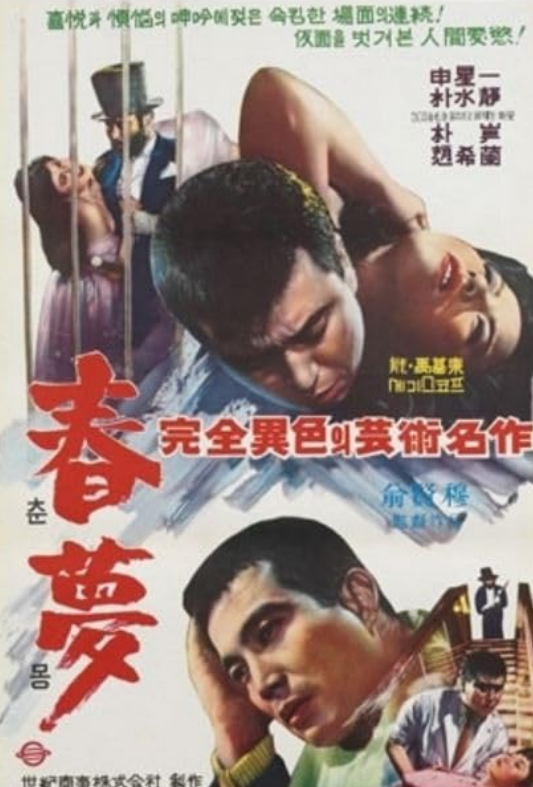
[Figure 1: An Empty Dream poster. Image source: IMDb]
Two strangers, a man, Jae-woo (Shin Song-il), and a woman, Mun-ja (Park Su-jeong), are simultaneously placed under general anaesthetic at a dental surgery. Jae-woo is beguiled by Mun-ja, an attraction depicted through longing yet predatory glances to complement the film’s voyeuristic gaze. A montage of barbaric looking dental equipment paired with close-up and point of view footage of wide-open mouths being assaulted by sinister-looking instruments foreshadow the derangement to come, treating audiences to an all-too immersive simulation of the ‘pleasures’ of dental work. With the imminent dose of an anaesthetic, Jae-woo’s desires become the fabric of his fantasy. The lens blurs as the camera is compelled to his face, drifting from consciousness as he lays in the dentist’s chair. With a fade to black we are transported into a dream world.
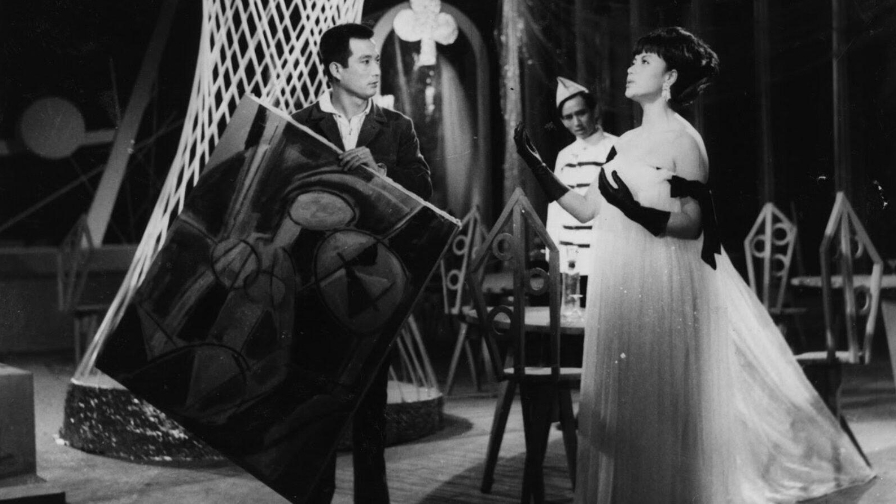
The first stop on this surreal journey through Jae-won’s unconscious is a nightclub. This extravagant setting recalls the chiaroscuro lighting and surreal sets designed by Salvador Dali for Alfred Hitchcock’s Spellbound (1945) or German Expressionist films of the 1920s. Yu’s admiration for Italian Neo-realism is commonly thought to have informed the stark realism of perhaps his most famous film, Aimless Bullet (1960), but with An Empty Dream he seems to have taken a leaf out of Federico Fellini’s book.
This is also where Yu’s film departs from its Japanese source material. Both films follow a similar plot trajectory; a male fantasy in which a helpless female patient must be rescued from the torturous clutches of a predator, an evil iteration of the dentist who wields control over his patients in the dream world, just as he does in reality. In Takechi’s original, production design plays second fiddle to the implicit promises of the ‘pink film’, with the world of the ‘daydream’ looking much the same as reality.
This is hardly the case in Yu’s reimagining. The apartment building where Mun-ja is tortured by the dentist compounds the surreal-come-operatic qualities of the nightclub’s production design, with windows shaped like Dali’s melting clocks. Journeying ‘outside’, we are treated with phantastic and phantasmatic variations of the soundstage-based streetscapes common to Hollywood musicals of the era, complete with miniature buildings with slanted facades. The maniacal dentist’s abuse is rendered more sinister by way of his disarming and surreal donning of a top hat and tuxedo. He is the master of ceremonies for Jae-won’s nightmare. Yu even contrasts maximalism with quasi-Brechtian minimalism, in a scene set in a cavernous empty space filled with sand and flanked by blank, pale walls. Jae-woo and Mun-ja seek refuge in an ‘oasis’, a cluster of cellophane-leaved palm trees set against this austere backdrop.
Yu’s film’s is more playful and lyrical. The score modulates from jazzy to operatic and the frequent use of match cuts and cutaways is both lively and disconcerting. Footage of a white rabbit is intercut with a prelude of a child’s visit to the surgery, perhaps foreshadowing an adventure to a parallel ‘wonderland’ to come. In ‘reality’, closeups of dental work, injections and patients’ reactions are matched with footage of jackhammering, welding and violent sawing. In the ‘dream’, the evil dentist whisks Mun-ja away from the nightclub in a car. Closeups of his white-gloved hand clutching hers and sliding down her leg are matched with intercutting footage of another gloved hand feeding the disembodied limbs of a mannequin into a circular razorblade, mirroring the closeups of the accelerating car’s wheels. Such are the allusions to the work of Spanish filmmaker and surrealist Luis Buñuel, to the infamous match cut of a razorblade to an eye and a whisk of cloud passing by the moon in Un Chien Andalou (1929). Yu’s ‘empty dream’ may be less explicit than Takechi’s ‘daydream’, yet it is all the more sinister and disturbing for the shift from explicit to implicit perversion, its experimental play with surrealist imagination.
 [Figure 2 Image source: Film at Lincoln Center]
Reference list:
Diffrient, David Scott. 2023. “Against Anaesthesia: An Empty Dream, Pleasurable Pain and the ‘Illicit’ Thrills of South Korea’s Golden Age Remakes.” In East Asian Film Remakes, edited by David Scott Diffrient and Kenneth Chan, 49-72. Edinburgh: Edinburgh University Press.