
#18 - A Day Off (1968)
Written by Spencer Hines (PhD Candidate in the School of Culture and Communication, Faculty of Arts, University of Melbourne).
A Day Off (Hyuil, Lee Man-hee, 1968) is a ‘modern classic’ in the truest sense of the term. Taking issue with what was deemed an overwhelmingly bleak portrait of 1960s Korea, censors proposed a revised ending in which the destitute male protagonist enlists in the military as a cure for his woes. Rather than compromising their vison by adhering to these demands, director Lee Man-hee and the producers opted for the film to remain unreleased. Only with the chance discovery of a film reel by the Korean Film Archive some 37 years later did A Day Off finally see the light of day in 2005. It is only fitting that the eventual theatrical exhibition of Lee’s film is temporally divorced from the era of its creation, so formally inventive and socially daring that it strikes as innately contemporary, ahead of its time.
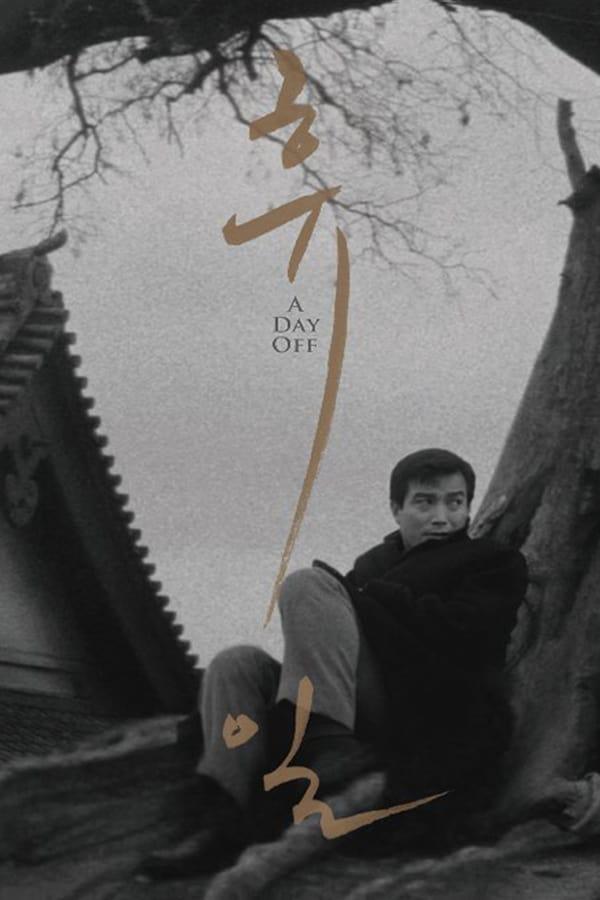
[Figure 1: A Day Off poster. Image source: IMDb]
On a winter’s Sunday in Seoul, Huh-wook (Shin Seong-il) meets his girlfriend Ji-yeon (Jeon Ji-yeon), who is pregnant with their child. The couple love each other and wish to start a family, but these are just dreams. Their reality tells a different story. They have no money and few prospects, in what the film paints as a bleak and barren landscape of Park Chung-hee era South Korea. They decide they have no choice but to terminate the pregnancy. As Ji-yeon’s undergoes the procedure at an underground clinic, Huh-wook meanders the city in search of funds for the abortion. He is drawn to desperate measures, to begging and stealing. All is ultimately in vain, however, as Ji-yeon does not survive the abortion and Huh-wook is left alone in despair.
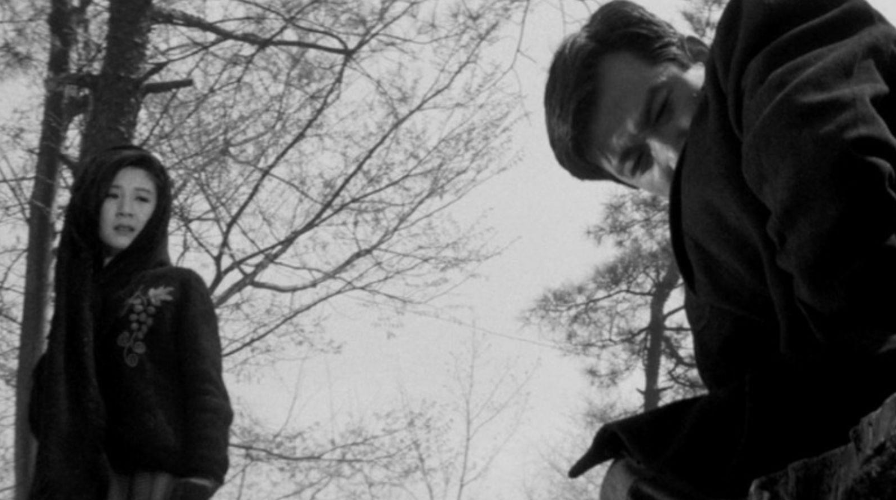
Lee’s is a desolate vision of Seoul. Urban and industrial vistas provide the backdrop to anguished romance and a vibrant and expressive mise-en-scene imparts subtly critical commentary on disenfranchisement in the wake of post-war modernisation. In a park overlooking the city, Huh-wook and Ji-yeon are relentlessly buffeted by a dust storm, bracing themselves against the assault of harsh winds overpowering their voices. The leaves have all but fallen. It is winter after all, and the empty branches carving through the various backdrops of the hazy sky underscore the stark and bleak nature of their situation. With Ji-yeon still at the clinic, Huh-wook’s affections stray in the depths of his distress, eventuating in a drunken dalliance with a stranger he meets in a bar in the depths of the night. They lie in embrace amidst the rubble of a decrepit building site, littered with broken timber and rife with unfinished concrete structures and dangerously protruding metal rods. Betrayal unfolds in a setting that epitomises the modernisation of the era—fraught, unstable and hazardous—framed as a symptom of the conditions by which this very space is emblematic.
A Day Off opens with a ringing of church bells set to a silhouette of a steeple framed with a dutch angle. Seoul looks gothic. The ringing of the bells alerts us to the passage of time, a recurring motif throughout the film that reminds us of its perpetual flow. Indeed, time passes differently on Sundays, that one day of the week which exists in a vacuum of its own. This is certainly the view of Huh-wook’s illicit rendezvous. A moment of passion is interrupted by the chiming of church bells, leading Huh-wook to a realisation he has forgotten and abandoned Ji-yeon. “You don’t have to keep your promise”, she says when he absconds to return to Ji-yeon, “you see, we met on a Sunday”.
To label this film oppressively bleak, as did the censors, is to miss the point. This is a tragedy, no doubt, but the nostalgia with which Huh-wook is enraptured is sweet. After learning of Ji-yeon’s death and fleeing a violent beating from a man whose money he stole, close-ups of Huh-wook sobbing profusely as he runs away are overlayed with a collage of images. The busy streets of the city in all its industrial chaos are paired with cutaways to flashbacks of Huh-wook and Ji-yeon at the height of their romance. The trees are laden with leaves, but with the onset of autumn they are beginning to fall as the turning of the seasons echoes the couple’s shift from whirlwind romance to harsh reality. Loving embraces are paired with the sounds of sobs and vistas of city lights, overlayed with dialogue from earlier in the film where they profess their love and dream of their future. Like Huh-wook, we are disoriented amidst a cacophony of thoughts and forces, all beyond our control.
This is the type of expressive and experimental style that saw Lee labelled as one of Korea’s first true ‘art cinema’ directors. Yet since his was a style partially honed in state-sanctioned anti-communist productions, A Day Off is ironically indebted to the creative confines of the government controlled industry which eventually saw the film barred from exhibition. Nevertheless, there is no redemption for Huh-wook in the form of military enlistment, as was intended by the censors.
 [Figure 2 Image source: Film at Lincoln Center]

Reference list:
Diffrient, David Scott. 2005. “‘Military Enlightenment’ for the Masses: Genre and Cultural Intermixing in South Korea's Golden Age War Films.” Cinema Journal 45, no. 1: 22-49.
Mun, Gwan-gyu. 2009. Korean Film Directors: Lee Man-hee, translated by Colin A. Mouat. Seoul: Seoul Selection.
Shim, Ae-gyung and Brian Yecies. 2016. “Film Pioneer Lee Man-hee and the Creation of a Contemporary Korean Cinema Legend.” Korea Journal 56, no. 3: 63-89.