#3 - Parasite (2019)
Review by Andrew David Jackson (MUKSRH).
Parasite is a film that appears to have squared the circle by proving to be a box office, critical, festival and global success. The film won the best picture award at the 92nd Academy Awards and picked up the prestigious Palme d’Or at the 2019 Cannes Film Festival for good measure. Parasite put South Korean film firmly on the world cinematic map, although the many aficionados of Korean cinema will take great umbrage with such a suggestion. Pockets of Bong Joon-ho, Park Chan-wook and Kim Ki-duk fans have existed all over the world for the best part of two decades. But the movie’s unprecedented international success meant that South Korean cinema has entered the collective imaginations of cinema-going audiences on a global level. The phenomenal global reception of the film made history in South Korea. Students from director Bong Joon-ho’s alma-mater Yonsei University unfurled banners on campus celebrating the director’s achievements. The President Moon Jae-in personally received the cast’s triumphant return from academy award glory, granting them a hero’s welcome worthy of the pioneering astronauts at the height of the space race. It is difficult to underestimate the importance of the film to the twenty-year mission of the South Korean government to put South Korean popular culture on the world cultural map. In less than a generation South Korea has gone from a net importer of culture to a global exporter, and achievements like Parasite, as well as the more recent success of K-pop idols BTS and the Netflix drama Squid Games stand at the zenith. But Parasite is more than a product of slick and dedicated governmental promotion, the film is emblematic of the phenomenal creativity that has emerged in South Korea since the demise of the dictatorship in the late 1980s.
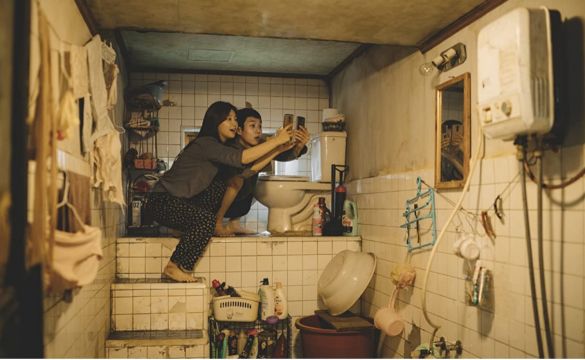
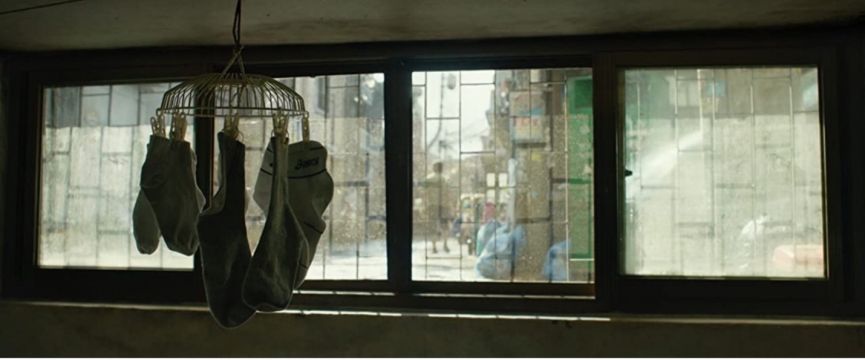
The film tells the story of a family of chancers, the Kims, who con their way into the lives of a privileged household, the Parks. Each of the Kims, from the family patriarch, played by Song Kang-ho, to mother, daughter and son are taken on as servants by their wealthy employers until they end up virtually seizing control of the entire household with brutal consequences. The movie combines some of the most popular elements of successful South Korean cinema of the last two decades. Bong mixes elements of murder-mystery, horror, comedy, household drama and adds in some serious social commentary for good measure. The two families whose lives intertwine represent the deep chasms of class that divide South Korean society. The Parks treat their team of modern-day servants with barely sealed contempt. Meanwhile, the canny Kims view their wealthy employers as opportunities to be exploited. The implication of the narrative is that the contrasting trajectories of the two families are a direct by-product of the South Korean economic success of the last half century. Nowhere is the disparity in wealth more evident than in the representation of the two families’ dwellings. The Kims live in a subterranean basement hovel, with drunks regularly urinating up against the half-sized windows. During the summer changma (monsoon-season) rains, the toilets overflow with effluence. The Parks by contrast live in a bespoke monumental concrete mansion high above the working-class districts of the capital. The living spaces are not a figment of Bong’s imagination either, but an accurate representation of the vast discrepancies of wealth within modern South Korean society. In the 1990s, I recall living in a Kim-type semi-basement residence while teaching English in a Park-style mansion to a family of the new elites. Bong’s achievement is in his visceral recreation of the extremes of poverty and wealth through the mise-en-scene. The whole film is made with Bong’s distinctive style, characteristic framing and eye for detail. In a key scene in the movie, the Parks realize that all the Kims give off an identical funky odor evidently emanating from their residence. Audience members in the cinema where I sat began visibly squirming in their seats as if they too could discern the Kims’ characteristic stench. The film’s ability to appeal to different audiences – festival and mainstream, domestic and international – is a sign of the strength of the director’s vision. Parasite is the product of a fecund imagination with a sharp critical eye and is destined to become a cult classic adorning top-ten lists for years after its commercial and critical success has faded.
Parasite is available on SBS on-demand https://www.sbs.com.au/ondemand/movie/parasite/1978469443595

[Images source: https://www.imdb.com/title/tt6751668/]