#7 - Hong Kil Dong (1986)
Review by Andrew David Jackson (MUKSRH).
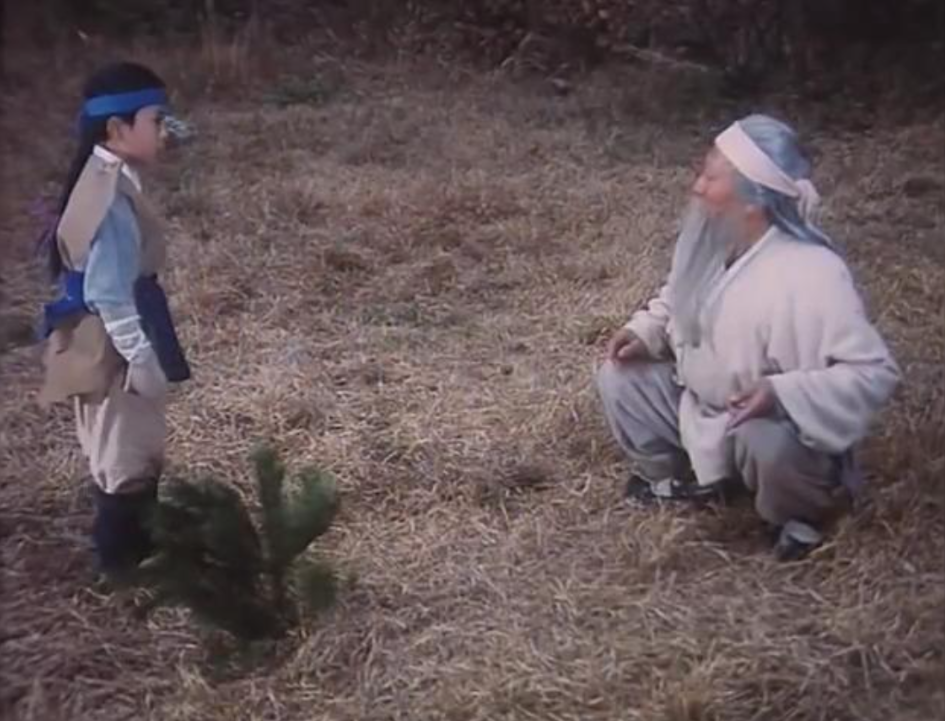 [Figure 1: Hong Kil Dong meets his martial arts master (screenshot from Hong Kil Dong)]
When we think of North Korea, the first words that spring to mind are probably not ‘funny’ and ‘entertaining’ –After all, North Korea is regarded as one of the last bastions of Stalinism on the planet. And neither Stalin’s Soviet Union nor the brutal dictator himself were renowned for their sense of humour. Stalin is reputed to have said: ‘in the future, the only laughter that will be the laughter of the victory of socialism,’ which doesn’t sound very humorous. Thus, when we think of films from Stalinist societies, words that occur to us are more likely to be: ‘boring,’ ‘propaganda,’ ‘ridiculous,’ maybe even ‘dangerous.’
Yet, in the early 2000s, when interviewed, North Korean defectors living in Seoul confessed that one film, in particular, deserved the accolade of the greatest North Korean film ever made: Hong Kil Dong. And the words the North Koreans used to justify their choice? ‘entertaining,’ ‘funny,’ even ‘gripping.’
Of course, the cynical might even say that Hong Kil Dong wasn’t a proper ‘North Korean’ film since it was made under the influence of a South Korean director – it even had foreign (Japanese) actors in it. However, the fact of the matter is that Hong Kil Dong was a picture produced in the DPRK, filmed and starring home actors, and it was widely shown amongst North Korean audiences – becoming a huge hit in the process. Hong Kil Dong is also one of those oddities of the country’s cinema since it became a massive hit outside the DPRK, achieving success all over the socialist world.
Hong Kil Dong is based on a well-known tale of the same name from the Chosŏn dynasty (1392-1910). It tells the story of a Robin hood type noble bandit Hong Kil Dong who steals the ill-gotten gain of rapacious magistrates and landlords and redistributes it to the poor. Over the years, it has been a favoured topic for cinematic adaptation in both Koreas. An animated film version was made in the South in 1967, and the tale was also televised in drama form in South Korea in 2008. The North Korean take on the tale begins with the birth of the hero Kil Dong into an extremely hierarchical and unjust world. Kil Dong’s mother is the mistress of an aristocrat or yangban, meaning that Kil Dong is born a sŏŏl or illegitimate or secondary son. Although born into a wealthy background, as a secondary son, Kil Dong is excluded from participation in many of the common occupations and pursuits of the Chosŏn elite. For example, secondary sons were not permitted to take the civil service examination – the key to political and social influence in Sinitic civilisation. The tale of Hong Kil Dong reflects a genuine source of discontent amongst Chosŏn people, which is why the satirical novel was popular at the time. The North Korean version has an interesting twist, however. The infant Kil Dong is taken in by a mysterious sage who trains him in martial arts and in sorcery and makes the infant swear to protect the people from tyranny and defend the country from invasion (figure 1).
In the rest of the movie, Kil Dong sets about righting the wrongs of Chosŏn society by redistributing wealth to the poor. He also forms a righteous band of warriors and defends the country against a band of foreign ninjas who infiltrate the court to steal loot and people. The martial arts sequences are created in the style of the famous 1970s Shaw Brothers Hong Kong flicks with flying ninjas and death-defying stunts. This type of martial arts action was a first in the DPRK, where martial arts were traditionally regarded as the bourgeois vestiges of feudal society (figure 2). The action sequences also proved to be a massive hit in the rest of the communist world of the time. Many audiences had seen nothing like it at the cinema. And DPRK films became renowned for their spectacular fighting choreography. So popular were movies like Hong Kil Dong that Pyongyang cinemas saw ticket scalpers for the first and perhaps last time in their history. Hong Kil Dong was no fluke, either. The film was part of a deliberate attempt by the DPRK leadership to engage culturally with the outside world. Most famously, as part of this attempt to popularise North Korean film, Kim Jong-il, the second ruler of the DPRK and son of the ‘Great Leader’ Kim Il-sung, had South Korean director Shin Sang-ok and his actress wife Ch’oi Eun-hee kidnapped and brought to Pyongyang. Before they defected back to the west in the late 1980s, the pair brought a touch of glamour and a great deal of excitement to DPRK cinema– and for a brief period, North Korean cultural products became hits around the (communist) world in what was perhaps the first Korean wave.
 [Figure 2: Kil Dong shows off his weapons skills (screenshot from Hong Kil Dong)]
Hong Kil Dong is available on You Tube with English subtitles.