#4 - Sopyonje (1993)
Review by Russell Edwards.
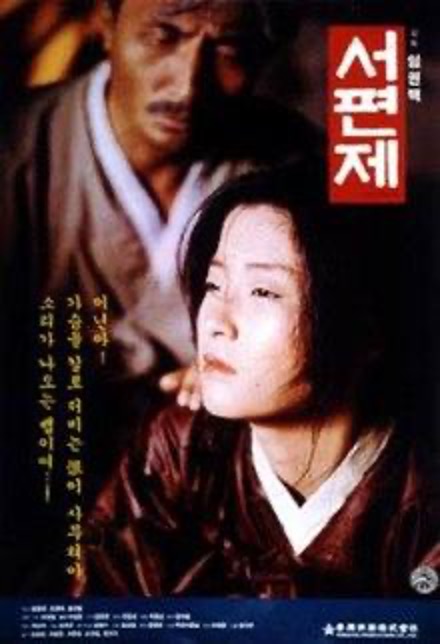
Occasionally, South Korea embraces a film with near religious devotion, and Im Kwon-taek’s Sopyonje is a case in point. Released in 1993, in one small art cinema in Seoul, Sopyonje tapped into the collective grief of South Koreans emerging from decades of dictatorship and became the most successful South Korean film ever (a feat superseded by Shiri in 1999 and several other films since). This was achieved despite Sopyonje never showing in more than three cinemas simultaneously.
Sopyonje begins in the 1960s with Dong-ho (Kim Kyu-chul) looking for his long-lost sister, Song-hwa (Oh Jung-hae). His clothing is from the modern age: a trenchcoat to cope with the harsh Korean winter while his moppish hairstyle betrays the pervasive, inescapable Western influence. Dong-ho’s search along muddy roads and shantytowns, leads him to storytellers often dressed in traditional garb, who trigger memories of his past. The towering figure amongst these recollections is Dong-ho’s and Song-hwa’s adoptive father, Yu-bong (Kim Myung-gon). While rearing his children single-handed, and instructing them in the art of pansori (Song-hwa on vocals and Dong-ho on the soribuk drum), Yu-bong is also tyrannical as he preaches adherence to this musical form.
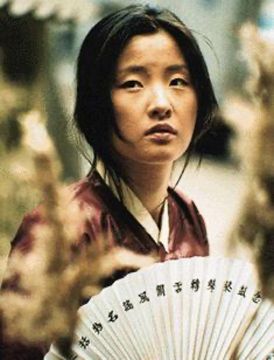 [Image source: koreanfilm.org]
The father figure, Yu-bong, has been interpreted as a symbolic stand-in for former Dictator Park Chung-hee. After his 1979 assassination, Park was superseded by Chun Doo Hwan’s even more brutal military regime, but South Koreans knew they were still living in Park’s societal template. However, as Park was also positioned as the architect of the “Miracle on the Han River” which set South Korea on its journey to become an economic powerhouse, Park, like many a father figure before him, was both admired and despised. Thus, in the early 90s as democracy became a political reality, there was a well of unexpressed emotion looking for an outlet and Sopyonje met that need. Im himself believes that Sopyonje – his 93rd film as director - would not have been as popular had it been released at a later time or in a different political climate. But the timeliness of a political parable alone would not and does not account for Sopyonje’s power.
Compared to the glossy, hallyu trailblazers of Park Chan-wook and Kim Jee-woon, Im’s work can seem antiquated, but his engagement with Korean history and arts (particularly from the pre-modern Chosun era) provides a clear pathway for audiences — experts and novices alike — to enter South Korean culture and appreciate its richness. The title Sopyonje comes from the name of the pansori sound renowned for its deep sadness that is native to the Western side of Korea. In Eastern Korea, the dominant pansori is dongpyeonje that is regarded as freer in style than the elaborate Sopyonje. The schism between the two forms is one of many divisions Im alludes to and encourages his characters and audience to overcome. Another division is the way that Korean everyman, Dong-ho is caught between modernisation and the ‘true’ spirit of Korea that has been left behind. To go further, there are the divisions between North and South Korea (as always), left and right-wing philosophies, and to bring it back to the universal, the film’s chief division is between father and child. Through the pansori, Im permits us, including international audiences, to connect our own losses with the pain — the han — of being Korean. It is both a wonderful and turbulent experience. Like all great art, Sopyonje puts us in touch with ourselves even as we connect with others. Hear the music. Feel the pain. Let your heart be touched. The sometimes gruelling nature of that emotional journey reflects Sopyonje’s identity as a spiritual road movie as well as a political one.
See the film here.
For a taster and an insight into Korean traditions, see the famous Jindo Arirang sequence.
 [Image source: Wikipedia]