
Eva and Sandy's Language Lab #5 - Restaurant Korean Part 1
One of the most common situations where you will need to use Korean is at a restaurant. Going to a Korean restaurant and ordering in Korean tends to be the first “도전” (challenge) for Korean language students. It’s also one of the first topics most Korean classes will cover. Of course, the language you learn in class might not sound exactly like what you hear in a restaurant scene in a movie or on TV.
In this series of Language Labs, we will introduce phrases you can use to seem more like a native speaker when going for Korean food! In this first post, I will talk about walking in and ordering.
In class you might learn to order menu items using counting nouns. This is grammatically correct, but you will often hear Korean speakers opting not to use them when ordering. This is one way to sound a little more natural. For example, the form you learned in class might look something like this:
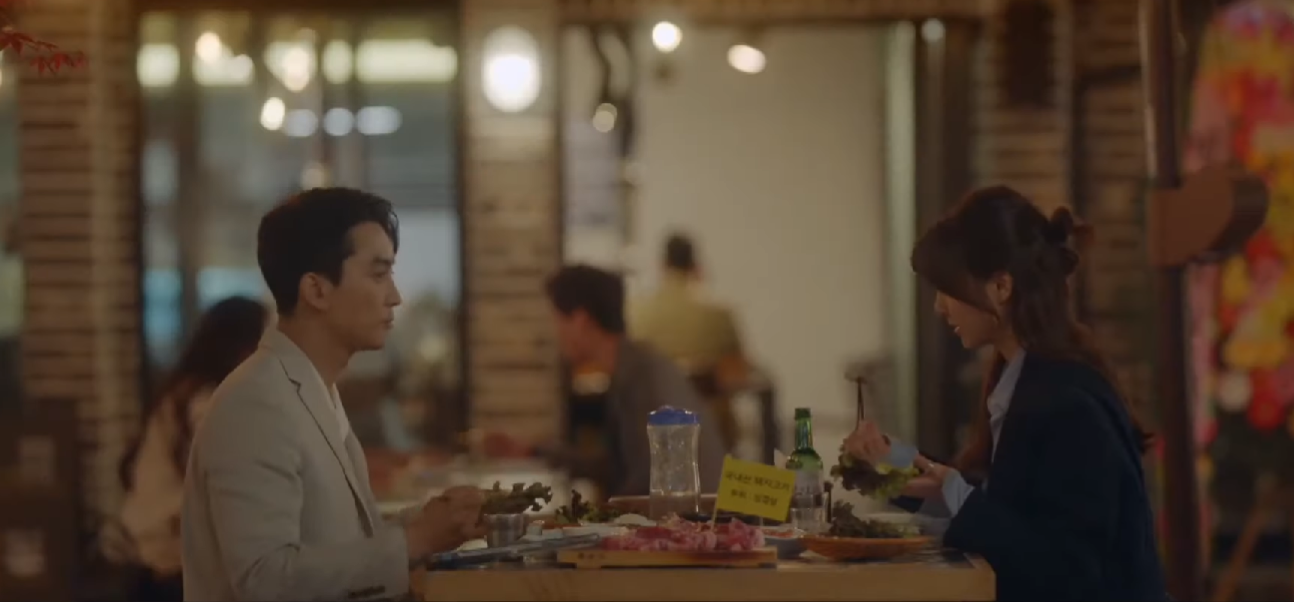
Dinner Mate K-BBQ Scene Ep 5 (screenshot). Image source.
Customer: 보쌈 하고, 콜라 한 갠 하고, 소주 한 병 주세요. (Bossam, one can of cola, and one bottle of soju please)
Waitress: 네! (Sure!)
This is totally correct. But, one might also say something like:
Customer: 보쌈 하고, 콜라 하나, 소주 하나 주세요. (Bossam and coke and soju please)
Or even:
Customer (while counting on their fingers or looking at the menu and pointing): 보쌈이랑, 콜라랑, 소주요. (bossam and coke and soju)
The above sentence seems to be missing a lot, and isn’t actually totally correct Korean grammar (lacks a verb, to start). But, in reality just like in English in this situation you’re often just listing items while the employee writes them. If you go to a Korean restaurant any time soon, you might want to try and hear if you can notice people ordering like this.
Now say you've ordered and you're enjoying yourself. You want to call the staff for one more bottle of soju. There are a few different ways to call and get the attention of the staff. No need to be shy! It's easier for them that you call out, than if you just try to make eye contact shyly.
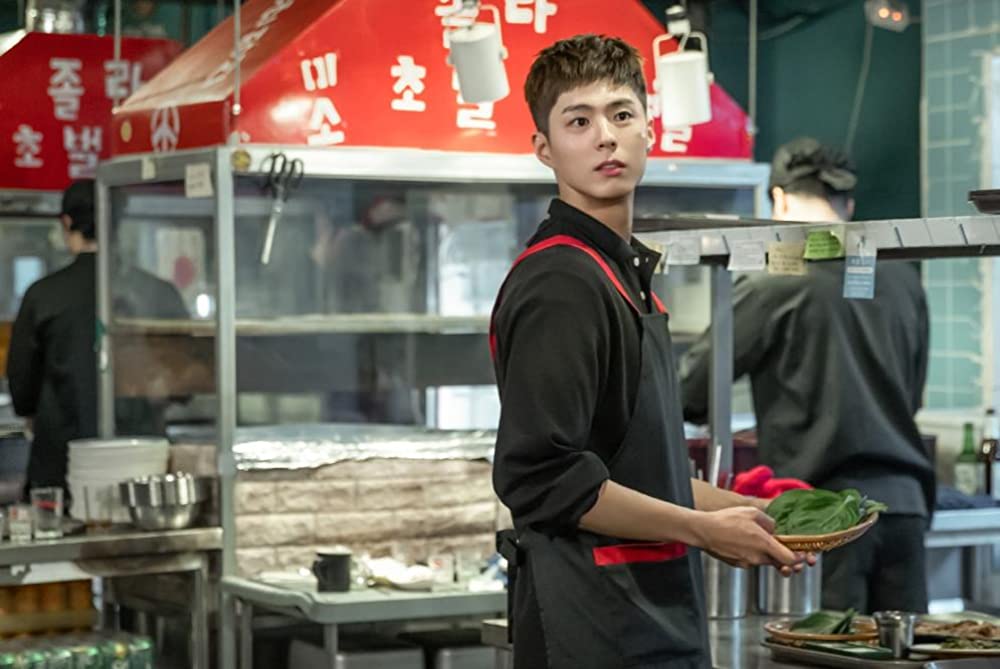
Park Bo Gum as waiter in Record of Youth Ep 1. Image source.
Call | Meaning/Explanation |
|---|---|
저기요! | Excuse me! This is the standard way to call for staff. |
여기요! | Over here! This feels similar to 저기요 in terms of level of politeness. Just saying to them, “Hi! Please help here!”. |
사장님! | Boss! You might think it strange to call for the boss when you can’t be certain the floor staff actually own the restaurant. But it actually doesn’t matter. This is a friendly way to call for the staff, but it might seem a little strange if the staff you’re calling is very very young. |
이모! | Aunty! This is a very friendly, and slightly cute way to call for an older woman (아줌마) running a restaurant. It doesn’t feel rude – it’s more affectionate and might be part of an appeal to get some 서비스 from an affectionate older store owner. But it should not be used on women who might not feel like they’ve reached aunty age yet – be careful calling a younger female employee this one. |
언니! | Older sister! This is an interesting one! It might seem overly friendly, but its normal to call a girl you don’t know in her 20s or even 30s 언니 in a service situation. Even if she is younger than you, once someone has reached adulthood and are at their place of employment they deserve a certain level of respect, but it’s complicated by age and gender hierarchies that don’t have specific words to respect a woman younger than you. By using 언니, you are being familiar and friendly while still being polite and respectful to the staff. You might find it strange to hear at first, but even much older women and men too will use this with a server! It might seem funny to see a man in his 60s call a girl in her early 20s “older sister”, but it’s a way for him to be a bit affectionate while still being respectful of her position as a worker. |
*Holding soju bottle above your head and gesturing a 1 with your finger* | If you’ve made eye contact with the staff from across a busy 술집 , and you only want one more bottle of something you already had, you can also just hold the bottle up and use body language to explain you want one more! This might seem a bit embarrassing in Australian restaurants at least, but I promise it is not strange in a Korean setting because it might be quicker for the waitress than coming back and forth to take the order of just one soju. |
Before you leave don't forget to thank the waiters and/or owner for their service, "감사합니다" (thank you). Also, when you are paying the bill at the counter let them know that you enjoyed your meal, "잘 먹었습니다" (I enjoyed the meal; lit. I have eaten well)~