
#5 - 4.16 The Sewol Ferry Disaster
Published on April 14, 2022
A tragedy that rocked the nation, helped sink a government and led many Koreans to question their political leaders
Disasters are often a moment for both mourning and national self-reflection and they are also catalysts for changes in legislation. The 1987 Herald of Free Enterprise’s sinking resulted in major reforms of cargo holding ferries. The 1912 Titanic disaster is another event that has captured the imagination of writers, filmmakers, adventurers for generations. More than other types of catastrophe, sea disasters seem to hold a great symbolic value in the mind of the public especially in view of the isolation and vulnerability of humans pitted against the fearsome might of the oceans.
The Sewol ferry disaster of April 16, 2014 is one such incident. The sinking of the ferry, the manner in which the emergency evacuation procedures were handled (or rather mishandled), the attempted salvage operation, the official local and national response to the disaster have been a source of anger amongst the victim-survivors, relatives of the deceased and the South Korean public in general. Despite the number of years that have elapsed since the tragedy, key questions about the sinking remain unanswered and public anger shows little sign of dissipating. The fallout from the disaster continues into the present. In a society and culture that has traditionally been governed according to strictly hierarchical practices, many ordinary Koreans have begun to question their acceptance of authority and expertise.
The tragedy occurred while the Sewol was making a routine trip between the city of Incheon (close to the capital) and Cheju Island, a popular holiday destination situated in the East China Sea between Japan and the southeastern coast of Korea. In addition to the goods and vehicles being transported, on board were 476 passengers, 325 of whom were high-school students from Ansan on a school trip to the island. 304 passengers lost their lives, and most of them were young school students. What was meant to be a joyous journey turned into a nightmare for those on board and those friends and family left behind.
The exact cause of the accident has never been fully determined despite investigations into the sinking. The particular stretch of water that the vessel was navigating is well known for its perilous currents. However, the navigator who was steering the ship at the time of the incident had experience of negotiating the route. A sudden and inexplicable change of course caused the ship to list heavily to one side. Later investigations showed serious structural flaws in the ship’s design which had been carried out by the ship’s owners without official approval. Cargo had not been securely lashed in exacerbating the list of the ship. As the vessel began to take on water its fate was sealed (figure 1).
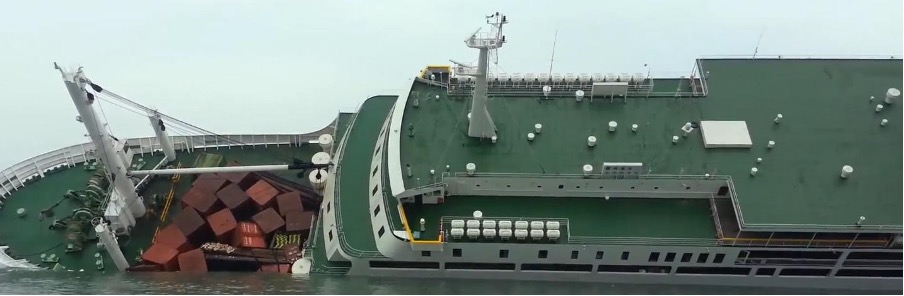
Figure 1: Screen Grab from In the Absence showing the list of the stricken Sewol.
Perhaps the most controversial aspect of the disaster was the response of the authorities to the disaster. Many of the victims perished while sitting in their cabins waiting for instructions about what to do. After the ship began to list, the captain ordered an announcement to be broadcast instructing passengers not to evacuate the ship, but to stay put. The order was not rescinded even while the captain and his crew were abandoning the ship 50 minutes later. There was an hour when passengers could have taken to lifeboats. Within a Confucian cultural context in which seniors have rigidly defined duties of pastoral care to people under their wing, the captain’s dereliction of duty was taken particularly badly. He was sentenced to life imprisonment. However, the failings did not end with the captain, they went to the very top of government. Many of the helicopters dispatched by the authorities were not equipped to evacuate passengers, but instead filmed the stranded ship so the authorities could decide what action to take. The coast guard’s response was severely criticized and most of those saved were rescued by fisherman responding to distress calls. The right-wing President Park Geun-hye – daughter of the dictator Park Chung Hee (1961-1979) seemed unaware of the seriousness of the crisis unfolding, and witness reports suggest she remained confined to her bedroom during the crisis. Offers for help from the Japanese Coast Guard and US naval forces were refused, while the Korean coast guard’s response foundered. Realizing they had failed to act decisively during the country’s worst disaster in a generation, Park’s government then went on a drive to shore up its fragile public support. With no hope of finding survivors, they ordered rescue teams to pump air into the hull of the vessel to ‘save’ survivors they claimed were trapped in air pockets. However, rescue teams used air pumps that contained lethal diesel fumes that would have killed anyone trapped inside the hull.
The political fallout was enormous. The sinking galvanized an opposition movement to Park. The victims’ families began a non-stop demonstration in central Seoul demanding answers to the causes of the sinking. Many Koreans began to argue that Park’s response to the disaster proved her rule to be inept and corrupt. These charges were confirmed when Park was impeached and then removed from office after the Choi Soon-sil corruption scandal in March 2017. Park’s popularity never recovered after her botched handling of the disaster. However, it also appears that the cause of the Sewol victims has been used as a political football by Park Geun-hye’s opponents in order to facilitate her removal from power. Victims' families still argue that Park’s successor, Moon Jae-in (2017-2022) deliberately covered up the full story of the ferry’s sinking to protect those who failed to rescue the victims.
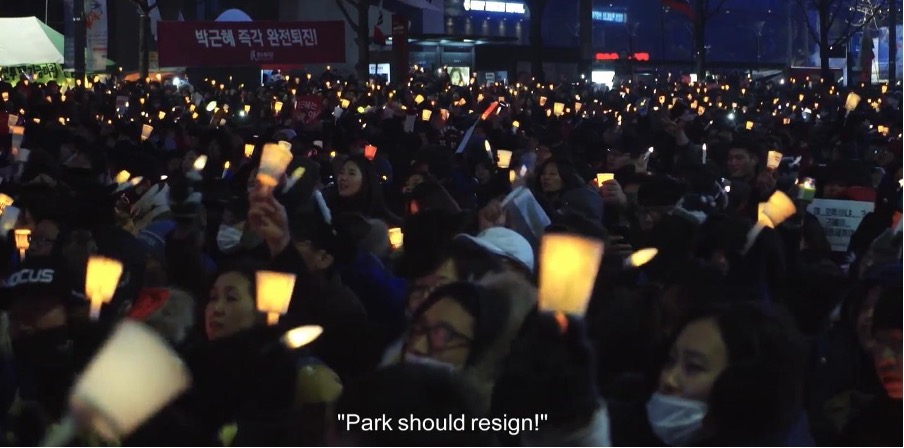
Figure 2: Screen grab from In the Absence showing demonstrations against President Park Geun-hye.
The mass demonstrations that followed in the wake of the Sewol disaster also provide evidence of the deep political rifts within South Korean society (figure 2). However, the implications of the Sewol tragedy go far beyond politics. For many Koreans – both young and old – the affair raises questions about trust in authority and hierarchical notions that are frequently used to justify social, political and cultural institutions that historically regulate Korea and Koreans. Essentially, young people had died because they had followed the orders of older Koreans in positions of authority.
See Yi Seung-jun and Gary Byung-seok Kam’s award-winning documentary In the Absence about the Sewol Ferry tragedy here.
Andrew David Jackson ©
Please do not reproduce without permission.