
#12 - "Dance in the Rhythm". Kim Wan Sun (김완선), 1987
A Story of the Song...Story behind the Song by Sarah Keith (Macquarie University)
현대 음률 속에서 너의 새로운 춤에 아름다운 불빛에 잃지 않는 매력에 | In the modern rhythm I lose my mind In the beautiful light Your enduring charm |
Kim Wan-Sun sang these lyrics as an 18-year-old pop sensation. She captivated television audiences with her energetic dancing and youthful charm, earning her the nickname “The Korean Madonna”. But what is the story behind Kim’s teenage pop hit, “Dance in the Rhythm”?
 Figure 1: Singer Kim Wan-Sun. Image source: Spotify
1987 was an exciting time for pop culture in Korea. Global music trends were gradually infiltrating a music landscape dominated by trot, disco, and ballads, as the country inched closer to democracy. While the seismic impact of Seo Taiji and Boys was still five years in the future, Kim Wan-Sun was a breath of fresh air compared to the cheerful dance songs of Hee Sisters, or Cho Yong-p’il’s slow, soulful tunes. Kim’s first album, Tonight, released in 1986, established her public image as a teen ‘dancing queen’; her second album, and its hit song “Dance in the Rhythm”, further burnished this image. Music critic Park Eun-Seok describes Kim as “a wind that shook the conservative society”, while a Hankyoreh columnist remembers being ‘blinded’ by her stage presence. She has even been described as Korea’s first ‘girl crush’. Looking at Kim’s performances of “Dance in the Rhythm”, it’s easy to see why she caused a sensation. Since the age of ten, Kim had been trained as an artist and dancer by her aunt, who was also the manager of Insooni. However, Kim’s demeanour and dance style was far from Insooni’s disco-funk stylings, and vastly different from other female artists of the time. Instead of greeting the audience with a smile, Kim stares directly at them and the camera with an expression bordering on insolence. She launches into a vigorous dance routine, and her voice, while tuneful, is not that of a trained singer. Instead of vibrato and chest voice, we hear the imperfect and guileless voice of a teenager; as columnist Kim Ji-soo describes it, “like a high-voltage electric current flying high into the sky”. But Kim’s entrancing dance moves and stage personality are only half of the story; there is also the song itself.
“Dance in the Rhythm” is a synth-pop song, featuring digital percussion, synthesisers, and a rather incongruous guitar solo about two-thirds of the way through. This is a clue to the song’s unusual provenance. “Dance in the Rhythm” was composed and lyrics written by Shin Joong-Hyun, an artist today better known as Korea’s “Godfather of Rock”. But what was a rock guitarist doing writing pop songs? A legendary songwriter and performer, Shin started out with the rock n’ roll group Add4 in the 1950s, then moved on to a prolific solo career in the 1960s. In the 1970s, Shin ran afoul of President Park Chung Hee’s 1975 politically motivated crackdown on musicians. Following his arrest and a subsequent ban on public performance, Shin’s opportunities were severely limited. He found work as a songwriter for artists such as Lee Moon-Sae and Insooni. Then, Shin was faced with another problem; the decline of ballads and rock music, and the rise of dance music. Accepting the challenge, Shin switched gears: as Kim recalls, “[“Dance in the Rhythm”] was the first song that Shin Joong-hyun wrote in this new genre.” Knowing this, the lyrics seem especially meaningful: “The dance in the rhythm, in the modern melody, in the moment, we are captivated by your new dance.” It is bittersweet to consider Korea’s rock pioneer, then in his late forties, learning to write dance music for the new generation. Musically, “Dance in the Rhythm” is characterised by its abrasive, two-note synth hook, which features throughout the song. While this might seem like a simple, almost naive melody, it shows Shin’s ability to adapt to a totally new musical idiom. And in another twist, the virtuosic guitar solo is played by Shin’s son, Shin Dae-Chul, himself the founder of heavy metal group Sinawe; the same group that Seo Taiji was a member of before shifting to hip-hop in the 1990s. Perhaps this rich lineage is why “Dance in the Rhythm” still stands up as a song today.
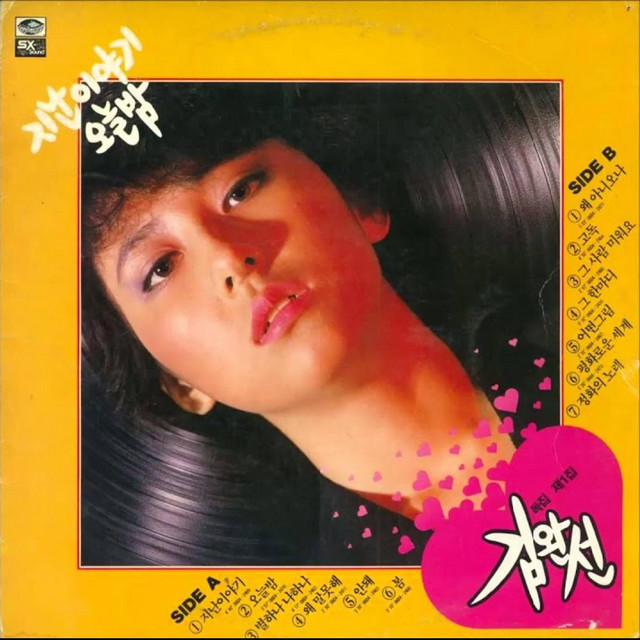 Figure 2: Tonight album cover. Image source: Spotify
The defiant personality that Kim shows in “Dance in the Rhythm” has continued throughout her career and personal life. After releasing her most popular album, Pierrot Smiles At Us, Kim abruptly retired in the 1990s to focus on visual art. Today, as a legendary artist and unmarried older woman, Kim has attracted a new generation of fans. Mamamoo’s winning performance of “Dance in the Rhythm” on Immortal Songs 2 brought further recognition to Kim’s career; and most recently, she has appeared in a reality show alongside fellow artists Lee Hyori, Uhm Jung Hwa, and Hwasa. Meanwhile, Shin Joong-Hyun’s career experienced a renaissance in the 1990s, and his contribution to popular music is now recognised around the world. “Dance in the Rhythm” is a song created at a transformational moment in Korea’s history; a moment that brought together a fierce young dancing queen, and a down-at-heel rock legend. To those who believe that K-pop started in 1992 with Seo Taiji and Boys; please listen to “Dance in the Rhythm”.
Watch Kim Wan-Sun perform “Dance in the Rhythm” here.
Find the lyrics to the song here.
Sarah Keith ©, please do not reproduce without prior permission.