
#1 - Squid Game (오징어 게임, 2021)
SQUID GAME (오징어게임)
Anticipating the new series by Sandy Nguyen (Monash University Korean Studies Research Hub Research Assistant)
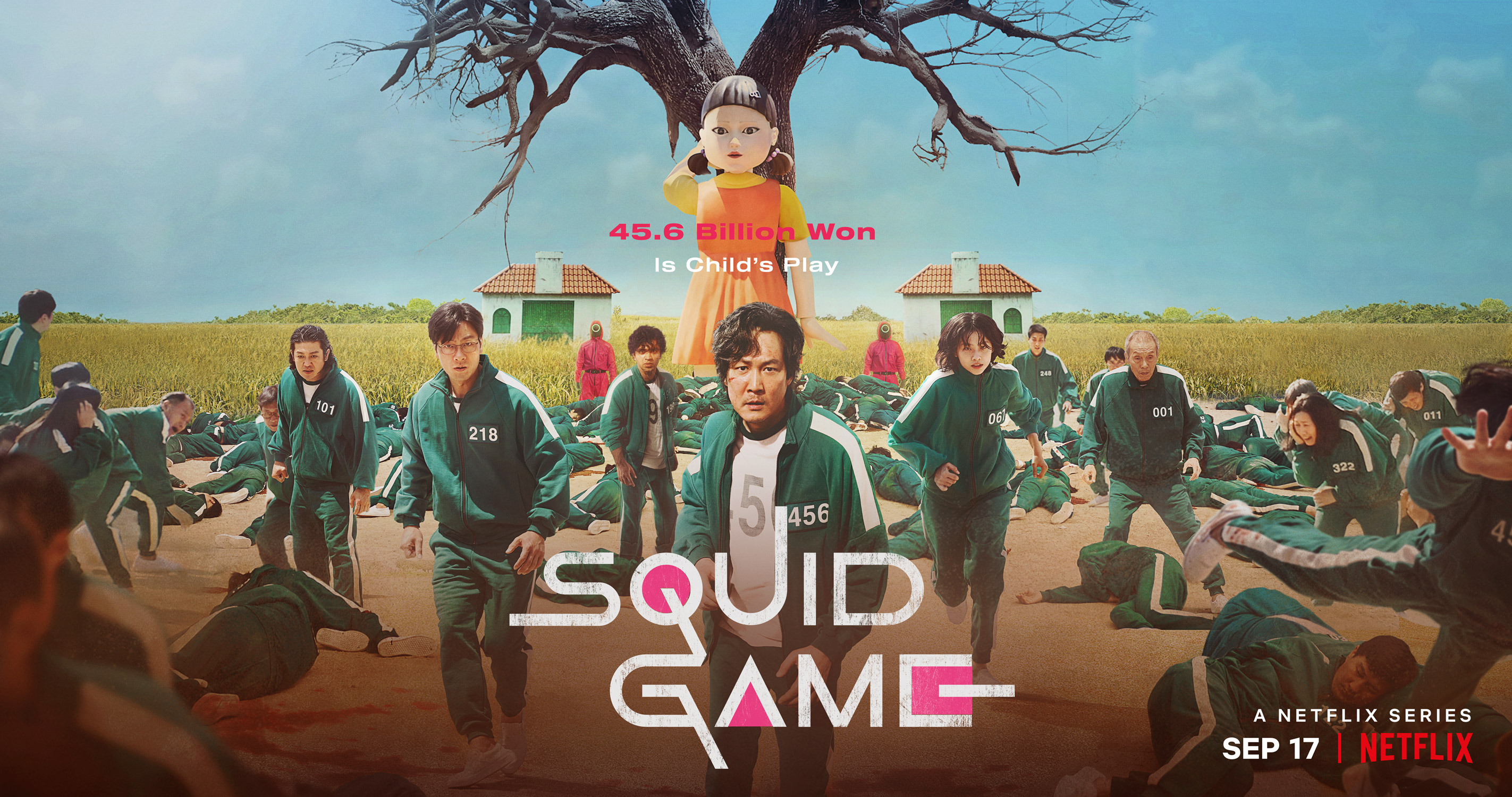 Figure 1: Squid Game season 1 special poster. Image source: Netflix
Red light, Green light… RUN!!!
Squid Game: Netflix’s mega hit Korean series, by writer-director Hwang Dong-Hyuk, which went viral with its global spread in 2021. The story involves 456 players competing in rounds of elimination games for an irresistible cash prize of ₩45.6 billion. Its suspenseful and captivating plot introduced an innovative approach of ‘deadly children’s games and mass slaughter’ to the survival-game genre, leaving viewers on the edge of their seats throughout the series. Moreover, the cast offered realistic portrayals of character personalities that are relatable to viewers on a personal level: Gi-Hun (Lee Jung-Jae) the empathetic fool, Sang-Woo (Park Hae-Soo) the ambitious betrayer, Il-Nam (O Yeong-Su) the free-spirited one, Sae-Byeok (Ho Yeon-Jung) the sceptical and charismatic one, Deok-Su (Heo Sung-Tae) and Mi-Nyeo (Kim Joo-Ryoung) the ruthless and chaotic scene-stealers, and Ali (Anupam Tripathi) the credulous foreigner. Viewers are taken on a rollercoaster ride of emotions as we witness different dimensions of relationships being established and distorted through bond, betrayal and sacrifices. (SPOILER ALERT!) We are also bewildered by the mind-blowing plot twist of the elderly man being the ultimate mastermind behind the games.
Squid Game is recognised as the most recent contribution to the Hallyu Wave with its cast rising to global stardom and receiving major awards in international events. Squid Game is more than mere entertainment. Its impact results from the critique and deconstruction of modern capitalism and realistic depiction of extreme (social) competition that resonates universally: the idea of power, social inequality which leaves people behind, desperate to succeed, and a society which offers no support for its most impoverished. Although the rules to Squid Game are harsh, the outside world is no different. Its underlying message is a wake-up call to a reality where there is no free money in this world because everything comes with a price; including relationships and happiness. The series attracted worldwide interests in K-culture (‘K” meaning Korea), boosting tourism, fashion trends, and the presence of K-culture on social media. Following its release, the number of Korea-related posts and videos increased by 30-fold at the end of 2021. Korea’s garment industry also attracted high demand for the green and pink tracksuits. Moreover, it stimulated tourism to locations featured and mentioned in series (e.g. Kyodong Elementary School and Jeju Island). Taking advantage of the spillover effect of season 1, the next milestone to maintain the global popularity of Korean pop culture will be Squid Game 2.
So where were we left from season 1? Gi-Hun is determined to stay in Korea to uncover more about those behind the new round of Squid Game. Anticipation about season 2 is likely to surround the return of Gi-Hun and the Front Man, the introduction of Cheol-Su (the creepy doll’s boyfriend), and unanswered questions from season 1. Will Gi-Hun join the new round of Squid Game? If so, as player, a guard or as a masked VIP? What is the Front Man’s backstory? Is his brother Jun-Ho (the police officer) dead or alive? Will there be any new games? We are left to speculate about the plot until its release over the next year. Anticipations for the next season will place immense pressure on the production crew and the new plot; whether the series will meet fan’s expectations and achieve the same or a greater victory than season 1. There is no doubt that another successful release will cause another global sensation, sustaining Korea’s cultural exports. In the meantime, Netflix is preparing to launch a real-life Squid Game competition casting US, UK and global participates for a cash prize of $4.56 million. How about you? Would you fancy having a go?
Squid Game is the latest instalment in an ongoing phenomenon known as Hallyu or the Korean Wave – or South Korean Wave to be more precise. South Korea’s media industries have achieved considerable growth and economic success since the mid-1990s. We have witnessed successive waves of K-Pop, K-dramas, movies, K-culture and entertainment entering the global market. The Korean Wave kicked off with the popularity of iconic groups like H.O.T in China, followed by the popularity of K-dramas like Winter Sonata in Japan. After this, movies like Swiri (1999), new generations of K-pop groups like Super Junior, Girl’s Generation gained popularity. Psy’s Gangnam Style caused a further stir in 2013, and then more recently the global success of BTS and the film Parasite (2020) and K-drama Crash Landing on You (2020) have brought new fans to Korean popular culture. The Korean Wave has contributed to Korea’s economic prosperity through the increased international consumption of media and lifestyle products. However, it is really in the diplomatic arena where the Korean Wave has had its greatest impact. The success of Korean popular culture has brought the country many new fans and friends. It has allowed South Korea to rebrand itself from a global economic producer of white goods and cars into an international cultural powerhouse. This explains why Seoul continues to provide its cultural industries vital economic and administrative support – to the extent that South Korea now serves as a model of cultural regeneration for other countries to emulate. Given the central role of the cultural industries within South Korean soft power, it is unlikely that the Korean Wave will burst any time soon. The main question is after Squid Game, what will the next instalment be?
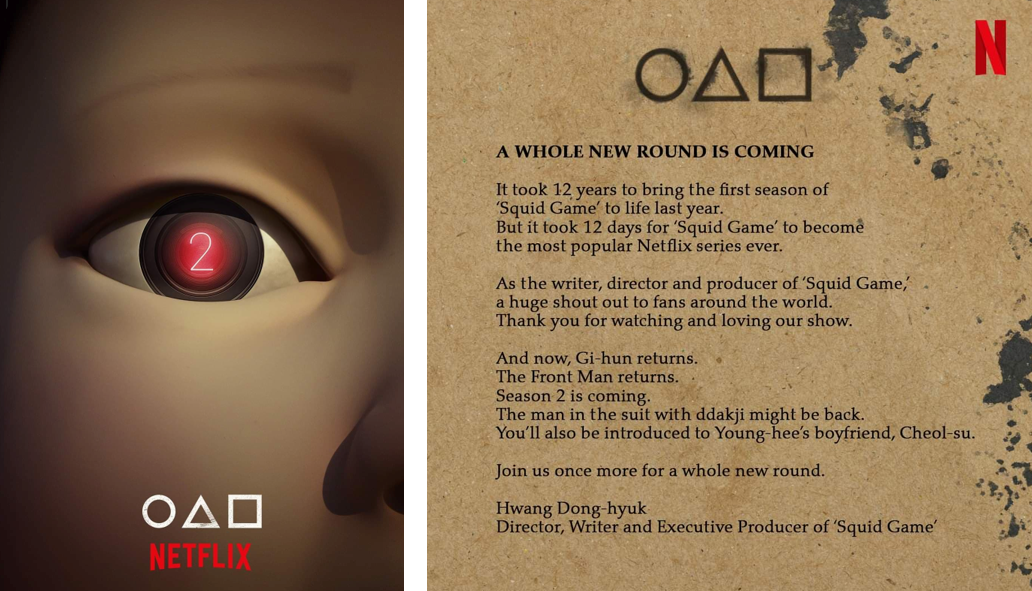
Figure 2 & 3: Squid Game 2 poster teaser and Director Hwang Dong-Hyuk's message to fans.
Image source: Squid Game twitter.
Check out the official trailer here and the series is available on Netflix.
Sandy Nguyen/Monash University ©, please do not reproduce without prior permission.
For details, contact MUKSRH andy.jackson@monash.edu