
New funding to build capacity for cancer care and research across Monash Partners
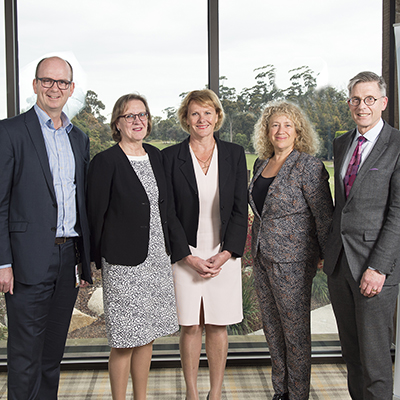
The Monash Partners Comprehensive Cancer Consortium (MPCCC) will advance collaborative programs outlined in its 2017 – 2021 Strategic Plan thanks to new funding provided by the Victorian Department of Health and Human Services (DHHS).
Aimed at building the capacity of the psych-oncology workforce to better service the needs of patients across Monash Partners health services, this pilot program will train and mentor community based psychologists to treat cancer-related depression and will establish a patient referral pathway from the acute hospital setting to community-based services, so that cancer patients can access these services close to where they live.
Monash Biomedicine Discovery Institute (BDI) group leader Professor Gail Risbridger is the MPCCC’s Research Director.
“We have worked closely with the DHHS, Monash Partners and the heads of oncology and research, to figure out where our collective activity is best focused to have the biggest impact for cancer patients,” Professor Risbridger said.
The funding from DHHS will include $219,000 to pilot a shared care model for cancer related depression.
“Clinical depression is the most prevalent psychological condition affecting cancer patients, but many patients do not receive treatment for their depression, due to a chronic shortfall in the hospital based psycho-oncology workforce,” project lead and Head of the Department of Psychiatry at Monash University, Monash Health and Cabrini, Professor David Kissane said.
“Community-based psychologists aligned with general practices need training to confidently counsel cancer patients who become depressed, creating a collaborative care model between psychologist, GP and hospital staff. This is a fantastic opportunity to improve supportive care services for patients utilising best-practice integrated models of care. If the model proves effective, we can use it to help cancer patients suffering with anxiety and adjustment disorders as well,” he said.
A further $315,000 will kick start the MPCCC’s Precision Oncology Program, with the first priority to establish a multidisciplinary Precision Oncology Tumour Board to guide the selection and sequencing of therapies in patients whose cancer is resistant to standard treatments.
“MPCCC’s Precision Oncology Tumour Board will provide a mechanism to integrate the considerable clinical, molecular and research expertise amongst MPCCC partners in a manner that supports excellence and innovation in patient care”, project lead and Professor Director of Oncology at The Alfred and Monash University, Professor Mark Shackleton said.
“At the moment MPCCC partners encompass areas of distinction in tumour profiling, but these are unevenly placed and inadequately integrated across health services and tumour streams”, said Professor Shackleton.
The MPCCC Precision Oncology Tumour Board will provide a central, comprehensive and co-ordinated multidisciplinary platform to ensure more patients get access to the best possible treatments”, he said.
In addition to seed funding for the MPCCC’s collaborative programs, DHHS will allocate $500,000 to the MPCCC Coordination Unit for governance, planning, program implementation and funding and communications activities.
“There is such great potential here. It’s just a matter of getting the resources to make it happen”, Professor of Oncology at Monash Health and Monash University and Acting Clinical Director of the Southern Melbourne Integrated Cancer Service, Professor Eva Segelov said.
Improving cancer care through better linkage and sharing of patients’ clinical data remains an important focus of the MPCCC, with a number of tumour stream based clinical quality registries currently collecting clinical data through the Monash Department of Epidemiology. Plans for a pilot program for collecting real-time patient reported outcomes are also well developed.
“The DHHS felt these proposals fell within the remit of the Victorian Agency for Health Information (VAHI) which is working on the development of a Victorian Clinical Outcome Registry Strategy, but we are hopeful of working with VAHI to consider a state-wide approach to these important activities,” Cancer and Blood Disease Theme representative, Professor John Zalcberg said.
For more information about MPCCC and its collaborative programs visit: www.monashpartnersccc.org or contact info@monashpartnersccc.org