What is AI-Protein Design
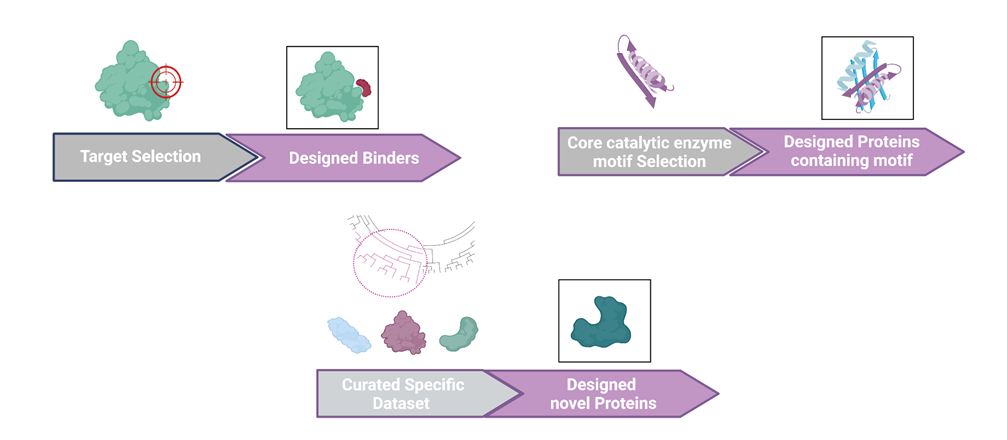
Artificial intelligence (AI) driven protein design leverages generative deep learning models, as well as unsupervised and supervised machine learning, to create new proteins with desired characteristics and functions. These may be proteins engineered to bind a specific target site or ligand, as inhibitors, agonists or antagonists, or engineered enzymes with improved activity and stability.
Traditionally proteins used for applications in medicine and biotechnology have been derived from nature and repurposed through rational design or in vitro evolution and selection. New methods in deep learning enable efficient de novo design of proteins with specific characteristics and functions, lowering the cost and accelerating the development of novel protein binders and engineered enzymes.
The innovative work of the Baker laboratory, using RFdiffusion to design new proteins to bind designated targets resulted in the award of the Nobel Prize for Chemistry in 2024, in recognition of the opportunities this created to develop an endless diversity of new proteins for human use.
Since then, the field has exploded with a wave of new tools and software that are being made available for researchers to use. Our team continually test, assess, and compare established and emerging systems, and tailor use to individual protein design problems, adapting workflows as software and project needs evolve.
If you want to learn more about protein design, consider these Resources.