
Monash BDI researchers secure funding to tackle superbugs and severe dengue
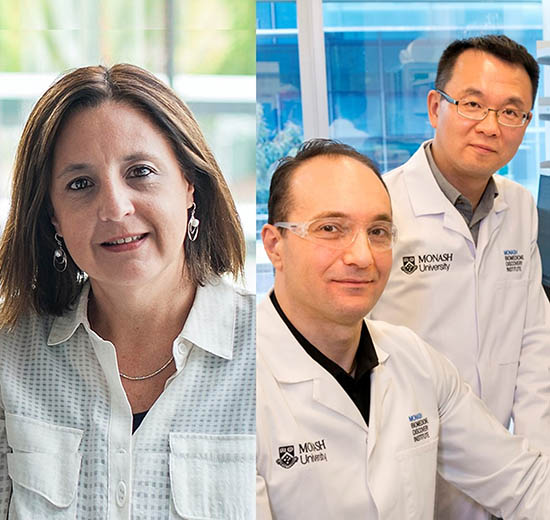
Two Monash-led research teams have secured nearly $1.5 million in NHMRC e-ASIA Joint Research Program (JRP) funding to tackle two major global health threats: severe dengue fever and antimicrobial resistance.
Professor Diana Hansen, Co-Head of the Monash Biomedicine Discovery Institute’s (BDI) Infection Program, will lead the first of these projects to apply systems immunology approaches to uncover biomarkers of susceptibility and immunity to severe dengue fever. In collaboration with Nagasaki University (Japan) and Padjadjaran University (Indonesia), the team will analyse patient cohorts to identify immune traits linked to disease severity. The findings will inform the design of safer vaccines and enable early detection of life-threatening dengue haemorrhagic fever using machine learning-based diagnostic tools.
Professor Hansen said: “This funding allows us to apply cutting-edge systems immunology to a major public health challenge in the Asia-Pacific. By identifying early biomarkers of severe dengue, we hope to improve patient outcomes and guide the development of safer, more effective vaccines.”
Professors Tony Velkov and Jian Li will lead the second of these projects to develop novel bacteriophage-antibiotic therapies targeting extremely drug-resistant Klebsiella pneumoniae. The project harnesses naturally evolved “super-phages” found in sewage and combines them with next-generation antibiotics to break the cycle of antimicrobial resistance. The research spans Australia, Singapore and the US, and will culminate in clinical trials at a Singaporean hospital. It is the first study to integrate host-pathogen-phage-drug interactions into a systems pharmacology model to optimise treatment regimens.
Professor Velkov added: “Antimicrobial resistance is one of the greatest threats to global health. This project brings together international expertise to develop a new generation of therapeutics that could transform how we treat deadly infections.”
These projects are supported under the NHMRC e-ASIA JRP, which fosters international collaboration in science and technology to promote innovation and public health across East Asia. The program aims to share knowledge, expand research utilisation and inform policy and interventions with science-based evidence. This year’s funding focused on infectious diseases, immunology and personalised nutrition.
Monash BDI’s success in securing these grants highlights its leadership in global biomedical research and its commitment to solving pressing health challenges through international collaboration.
GENERAL MEDIA ENQUIRIES
For more Monash media stories, visit our news and events site
Monash Media
E: media@monash.edu
T: +61 (0) 3 9903 4840
About the Monash Biomedicine Discovery Institute at Monash University
Committed to making discoveries that will relieve the future burden of disease, Monash Biomedicine Discovery Institute at Monash University brings together more than 120 internationally renowned research teams. Spanning seven discovery programs across Cancer, Cardiovascular Disease, Development and Stem Cells, Infection, Immunity, Metabolism, Diabetes and Obesity, and Neuroscience, Monash BDI is one of the largest biomedical research institutes in Australia. Our researchers are supported by world-class technology and infrastructure, and partner with industry, clinicians and researchers internationally to enhance lives through discovery.