
Monash BDI researcher, Dr Sue Nang, receives NHMRC Research Excellence Award
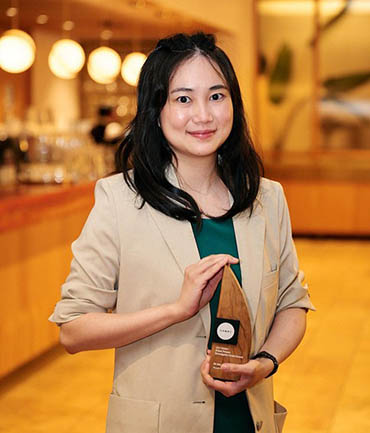
Dr Sue Nang from Monash University’s Biomedicine Discovery Institute (BDI) has received the 2025 Frank Fenner Investigator Grant Award for her research into how to manage antimicrobial resistance with bacteriophages (phages).
Dr Nang received the Award from the National Health and Medical Research Council (NHMRC) at a ceremony in Canberra.
The Frank Fenner Investigator Grant Award recognises the highest-ranked recipient in the Emerging Leadership Level 1 Investigator Grant category within the Basic Science or Public Health research areas.
The Award honours Professor Frank Fenner, a distinguished virologist who oversaw the global eradication of smallpox and the introduction of the myxoma virus to control Australia’s rabbit plague.
Professor Dena Lyras, Interim Director of Monash BDI, commended Dr Nang on this achievement.
“I’m delighted to congratulate Sue on this well‑deserved recognition of her outstanding research. Receiving the Frank Fenner Investigator Grant Award in such a competitive NHMRC grants scheme is a fantastic achievement,” Professor Lyras said.
Dr Nang is a research fellow of theJian Li Lab at Monash BDI, which aims to optimise antimicrobial use in patients and unravel the mechanisms underlying antibacterial activity, resistance and toxicity.
Dr Nang’s research tackles the global threat of antimicrobial resistance through strategic integration of traditional antibiotics and non-conventional phage therapies. Specifically, her research aims to accelerate the development of clinically adaptable phage-based therapies to treat life-threatening ‘superbug’ infections.
Antibiotic resistant bacteria are projected to cause 10 million deaths annually by 2050. Phages – viruses that infect and kill bacteria – could be a promising alternative but current phage therapies are limited by inefficient production and significant gaps in our understanding of phage pharmacology.
“My project addresses these challenges by developing a cell-free synthetic biology platform to enable high efficiency phage production and optimise therapeutic efficacy,” Dr Nang said.
“The approach aims to overcome the major bottlenecks that are holding back phage therapy, enabling scalable manufacturing and providing essential pharmacological data. The end goal is a clinically adaptable phage therapy system capable of treating the world’s most dangerous superbug infections.”
Dr Nang said the Investigator Grant project provides an opportunity for her to bring this vision to life by creating a proof-of-concept ‘one-stop’ platform that helps clinicians take a patient seamlessly from diagnosis to personalised treatment.
Dr Nang is one of two Monash University researchers to be recognised by the latest NHMRC Research Excellence Awards.Professor Arthur Christopoulos, Dean of the Faculty of Pharmacy and Pharmaceutical Sciences, received the 2025 NHMRC Peter Doherty Investigator Grant Award.
Dr Nang is also a recipient of a Monash 2026 Advancing Women’s Success Grant – further reinforcing the importance of her leadership and impact in antimicrobial research.
In April, she presented her research at ESCMID Global 2026 in Munich, Germany in April. The annual conference attracts around 17,000 international experts in infectious diseases and clinical microbiology and is one of the largest and most influential conferences in its field.
GENERAL MEDIA ENQUIRIES
For more Monash media stories, visit our news and events site
Monash Media
E: media@monash.edu
T: +61 (0) 3 9903 4840
About the Monash Biomedicine Discovery Institute at Monash University
Committed to making discoveries that will relieve the future burden of disease, Monash Biomedicine Discovery Institute at Monash University brings together more than 120 internationally renowned research teams. Spanning seven discovery programs across Cancer, Cardiovascular Disease, Development and Stem Cells, Infection, Immunity, Metabolism, Diabetes and Obesity, and Neuroscience, Monash BDI is one of the largest biomedical research institutes in Australia. Our researchers are supported by world-class technology and infrastructure, and partner with industry, clinicians and researchers internationally to enhance lives through discovery.