
Beyond Electricity: Advancing Bali's Village Solar Initiative for a Green Transition
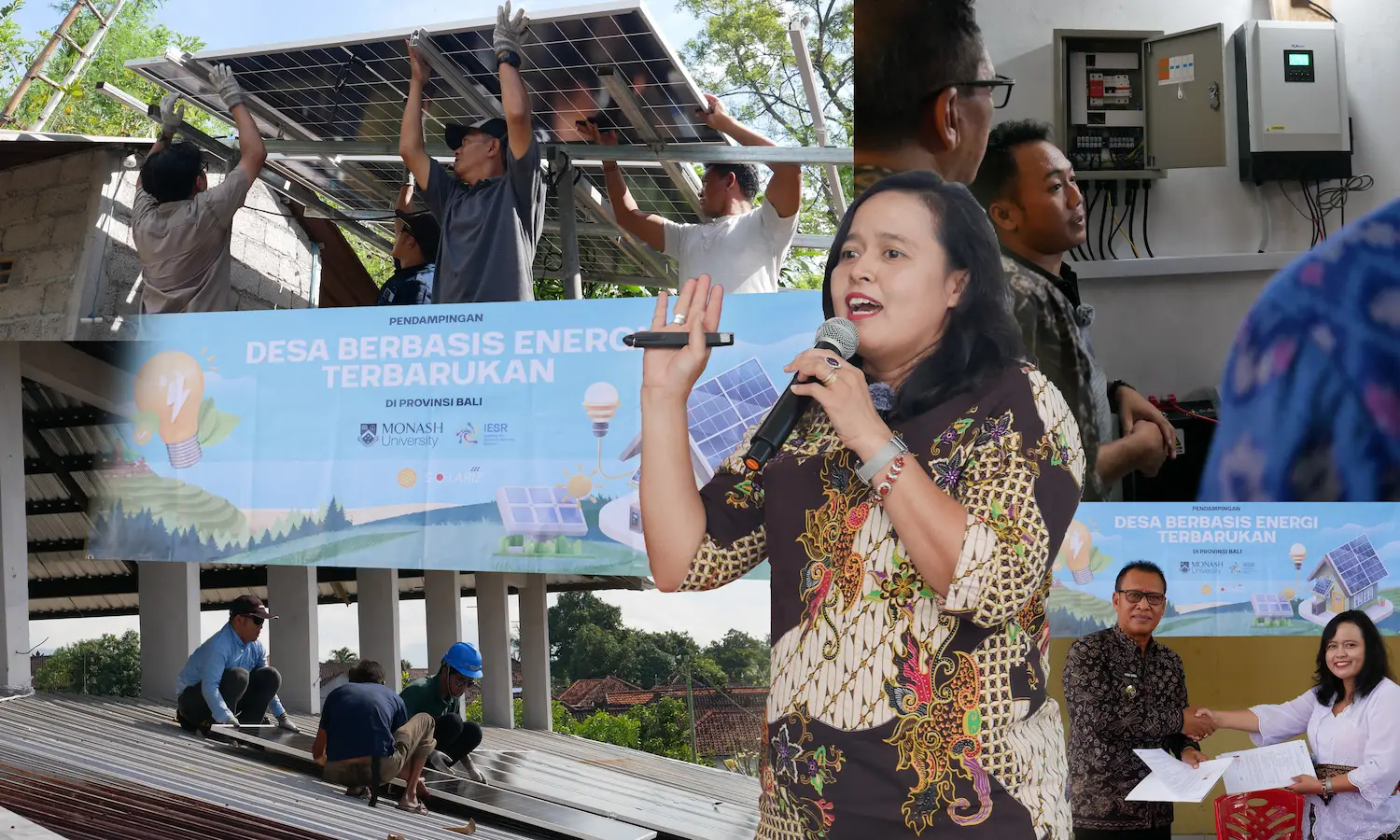 Highlight of the 'Community Assistance on Renewable Energy-based Village in Bali' project led by Dr. Eka Permanasari
Bali – In two coastal villages in northern Bali, sunlight now carries a new meaning. Rows of solar panels in Desa Baturinggit and Desa Banjarasem do not just generate clean electricity, they represent a months-long journey of trust, cooperation, and shared vision. Led by Dr. Eka Permanasari and managed by Gita Rama Mahardhika, M.P.W.K. of Monash University, Indonesia, with support from the Institute for Essential Services Reform (IESR), this initiative went beyond merely installing technology. It merely set out to empower communities and foster lasting change. It was about bringing the community into every step, from listening to their needs, mapping potential sites, and selecting locations together, to building local capacity and celebrating the results as one.
It All Began with a Conversation
Every successful technology deployment begins with communication, and here it was no different. Before any tools arrived or designs were drawn, the project began with people sitting together. Dr. Permanasari and her team reached out to the villages, first through online discussions and then through in-person visits. Meeting face-to-face allowed the team to hear villagers share their responses to the planned activity, express their aspirations for the future, discuss how renewable energy could make daily life more efficient, and describe how clean energy was something they envisioned as part of their community’s growth.
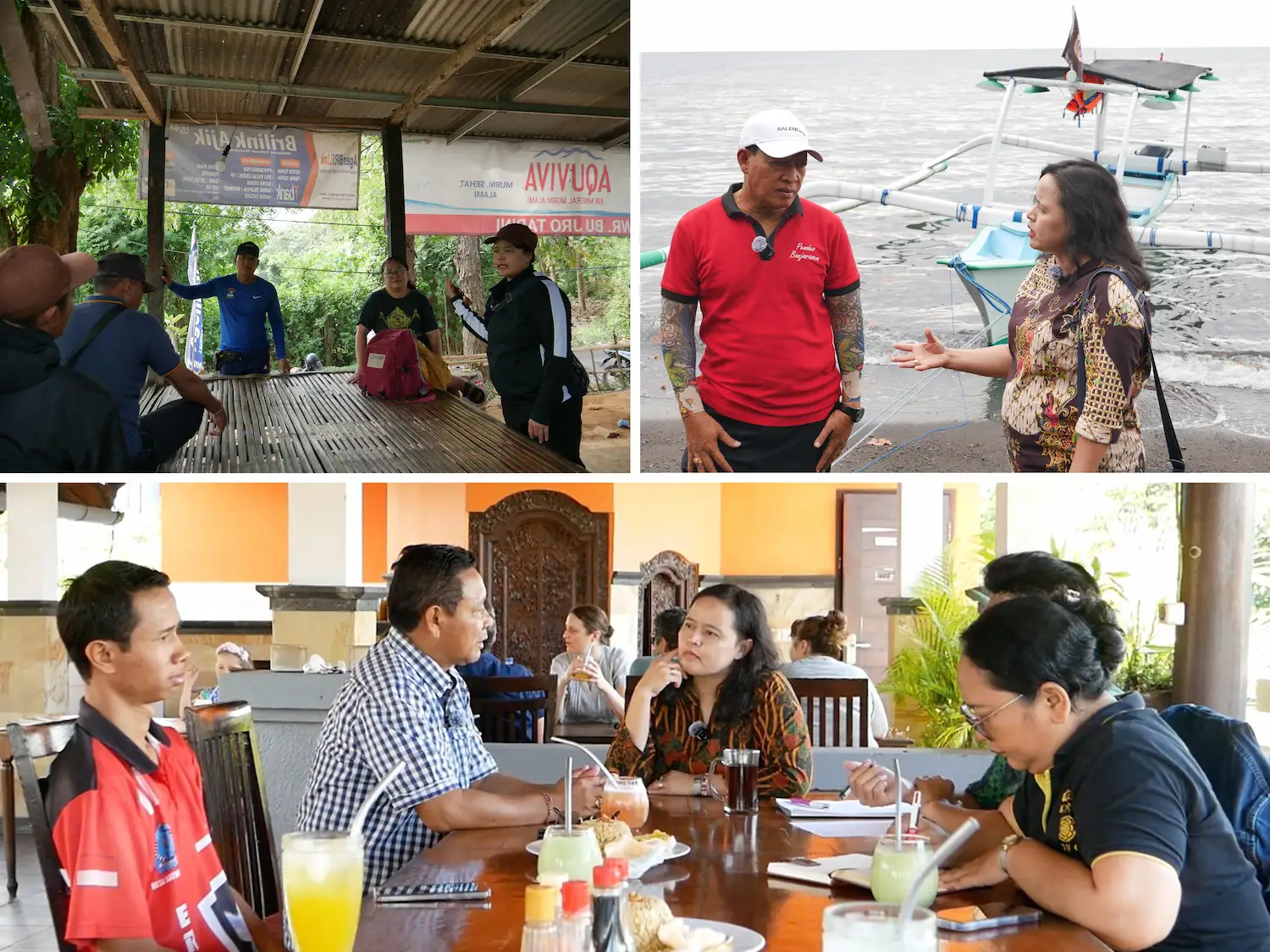 Dialogue to the local community of Baturinggit and Banjarasem Village
These early conversations were also about building trust. The team took time to listen attentively, using clear and open communication, acknowledging each person’s input, and showing genuine interest in the villagers’ stories. Small acts and small gestures helped make residents feel seen and valued.
This spirit of respect naturally carried into the matur piuning ceremony, highlighting that this cultural engagement respected local traditions and viewed the villagers as active partners rather than passive recipients. In Bali, cultural protocols are deeply respected, so the team participated in matur piuning, a traditional ceremony to ask permission from spiritual guardians for the project to proceed smoothly. The ritual set the tone: this was not an outside intervention, but a collaboration built on respect for local customs
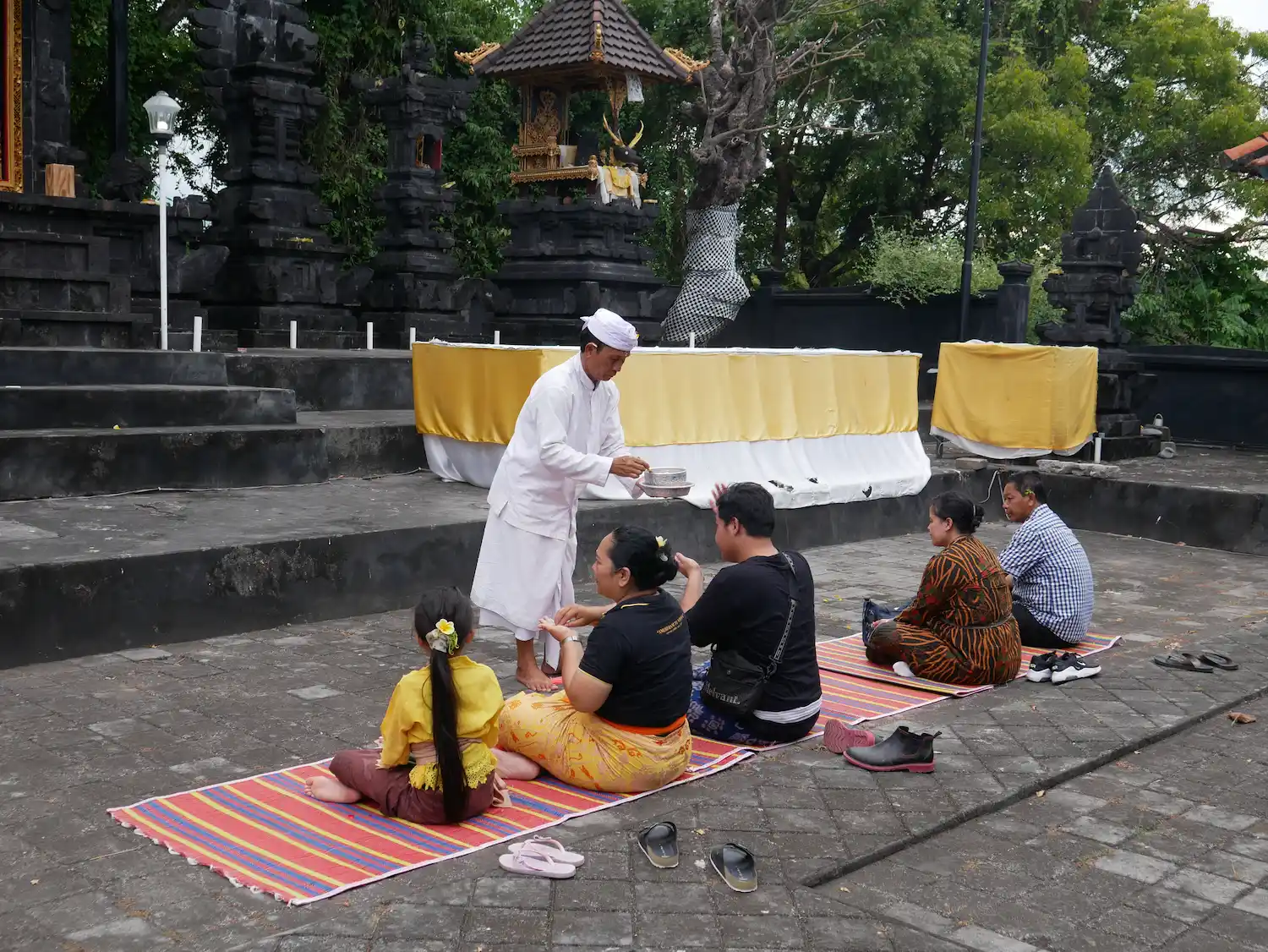 Matur piuning procession at Gerombong Temple, Karangasem Regency
From Vision to Blueprint
With relationships now firmly established, the team naturally progressed to the next step: mapping the potential. Accompanied by local guides, the team explored recommended locations while also discovering the diverse livelihoods that defined each village: traditional salt farming, arak-making, incense production, woodworking, turtle conservation, fishing, diving spots, fisherman community buildings, local schools, and traditional cemeteries.
These visits were not just technical surveys; they were moments to understand how energy could support daily life and economic activity. For example, a reliable supply could help fishermen store their catch longer, enable artisans to use tools without interruption, allow schools to power lights and fans during lessons, and support community buildings in hosting events without fear of outages.
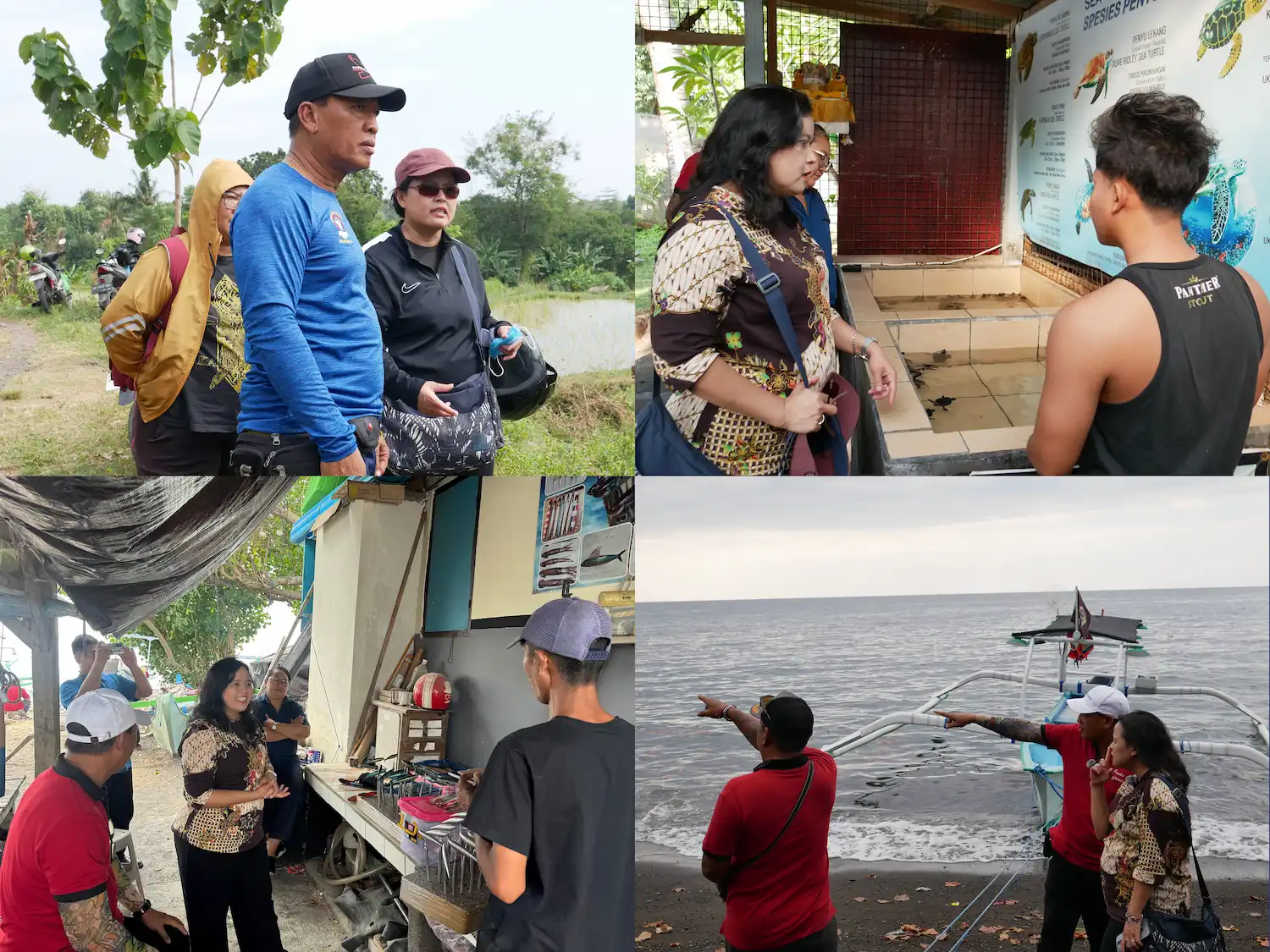 Dr. Eka Permanasari having a dialogue with the local communities
From these interactions, a long list of potential solar PV sites emerged. In Baturinggit, these included the Village Office, Adat Village Office, Pura and Gerombong Diving Site, Mina Labuan and Mina Segara fishermen’s groups, and the Community-Based Drinking Water and Sanitation Provision Program (PAMSIMAS) facility. In Banjarasem, options ranged from the Community Hall and temples to local schools, a cemetery, and multiple PAMSIMAS facilities.
Choosing the Right Spot Together
Instead of making the decision on their own, the team worked closely with local representatives to assess each site using clear, shared criteria agreed upon together. Technical considerations included direct sunlight without shading. Social benefits were just as important: sites needed to serve the wider community, such as public gathering spaces or productive enterprises, rather than only administrative offices.
 Building consensus through focus group discussions
To build consensus on the pilot project location, the team used focus group discussions as a collaborative tool. These sessions created a neutral space where villagers, local leaders, and the Monash University, Indonesia team could sit together and openly discuss options. In the FGD, the team began by giving a basic introduction to how solar PV works and what benefits it can bring, before presenting the proposed sites for the pilot project. Residents learned why certain sites were better suited than others, and how both social and technical factors were weighed. This wasn’t just a presentation; it was an interactive space for questions, debate, and shared ideas.
Some participants initially wanted the system installed at other locations. This difference of opinion required careful stakeholder engagement, where the team actively listened, acknowledged concerns, and patiently explained the reasoning behind the proposed sites. Through open dialogue and conflict management skills, they were able to turn differing views into a shared decision. In the end, the group reached a consensus: Banjarasem’s Community Hall, chosen because it serves as the heart of community life — hosting meetings between village officials and residents, gatherings for beneficiaries of the Family Welfare Program (PKH), socialization events, and youth activities, and Baturinggit’s PAMSIMAS facility, selected due to its critical role in addressing local drought issues, would be the pilot sites.
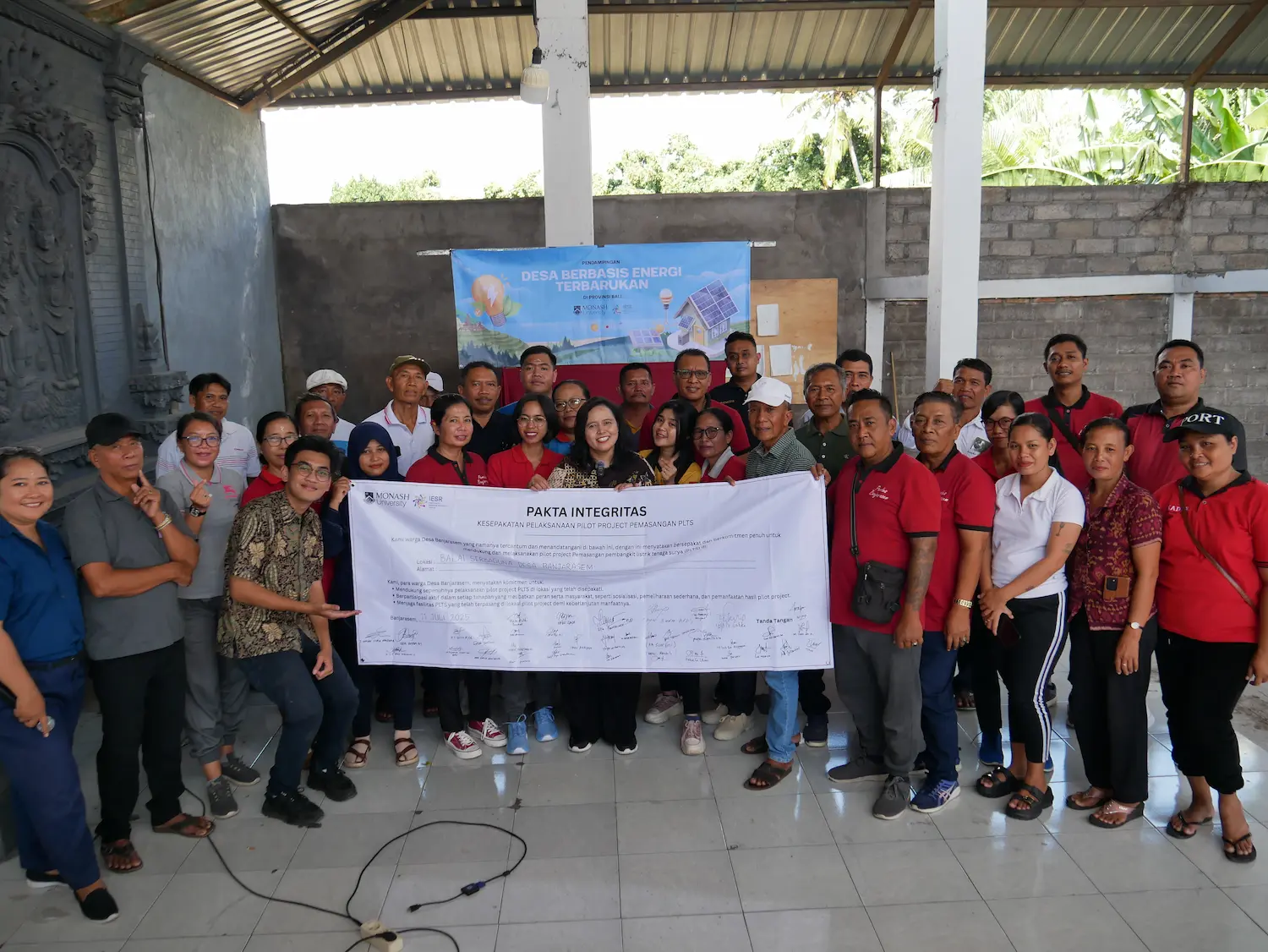 Group photo of Monash University, Indonesia team with local people after the pact integrity signing activity
Hand in Hand Preparing for Installation
With the sites confirmed, preparations began. In Banjarasem, the Community Hall rooftop required only minor adjustments. In Baturinggit, however, a dedicated mounting structure needed to be built, and some trees trimmed to ensure maximum sunlight. In response to these needs, the community took the initiative to contribute in a self-help manner by using available pipes and other resources to build the mounting structure, and trimming back trees that shaded the proposed panel area. These collective efforts fostered an early sense of ownership and strengthened community engagement.
When the solar panels finally arrived, the excitement was palpable. In Baturinggit, the installation involved the PAMSIMAS officer, the village officer, and local residents working side by side. In Banjarasem, the village officer joined with local people to take part in the process. Despite the scorching midday sun, the atmosphere was full of energy and pride. It was this very abundance of sunlight that had made these two locations ideal choices for the project in the first place.
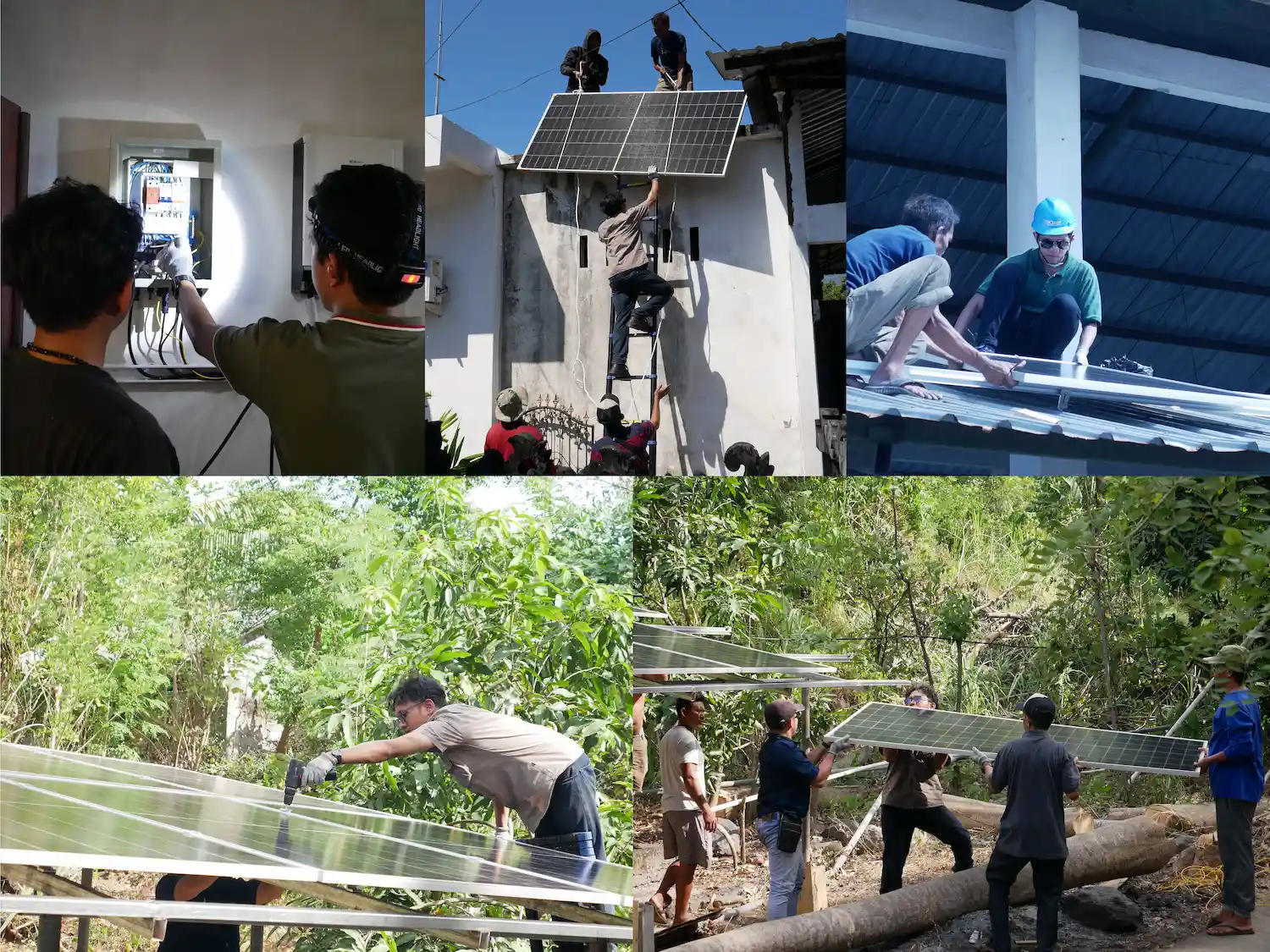 Community-assisted solar power plant installation process
Building Local Expertise
Installing the system was only half the goal. The real test would come in keeping it running for years to come. For that, the project invested in people. A group of residents became Energy Champions, the first responders for day-to-day operation and maintenance as a solar panel management team.
Training sessions covered how to start and shut down the system, clean panels without damage, spot early signs of technical issues, and perform basic troubleshooting. These were hands-on workshops, ensuring everyone could confidently handle the equipment.
A WhatsApp group was created to keep communication open between the local energy champions, the project team, and local authorities. This quick-response channel means that even small issues can be addressed before they grow into big problems.
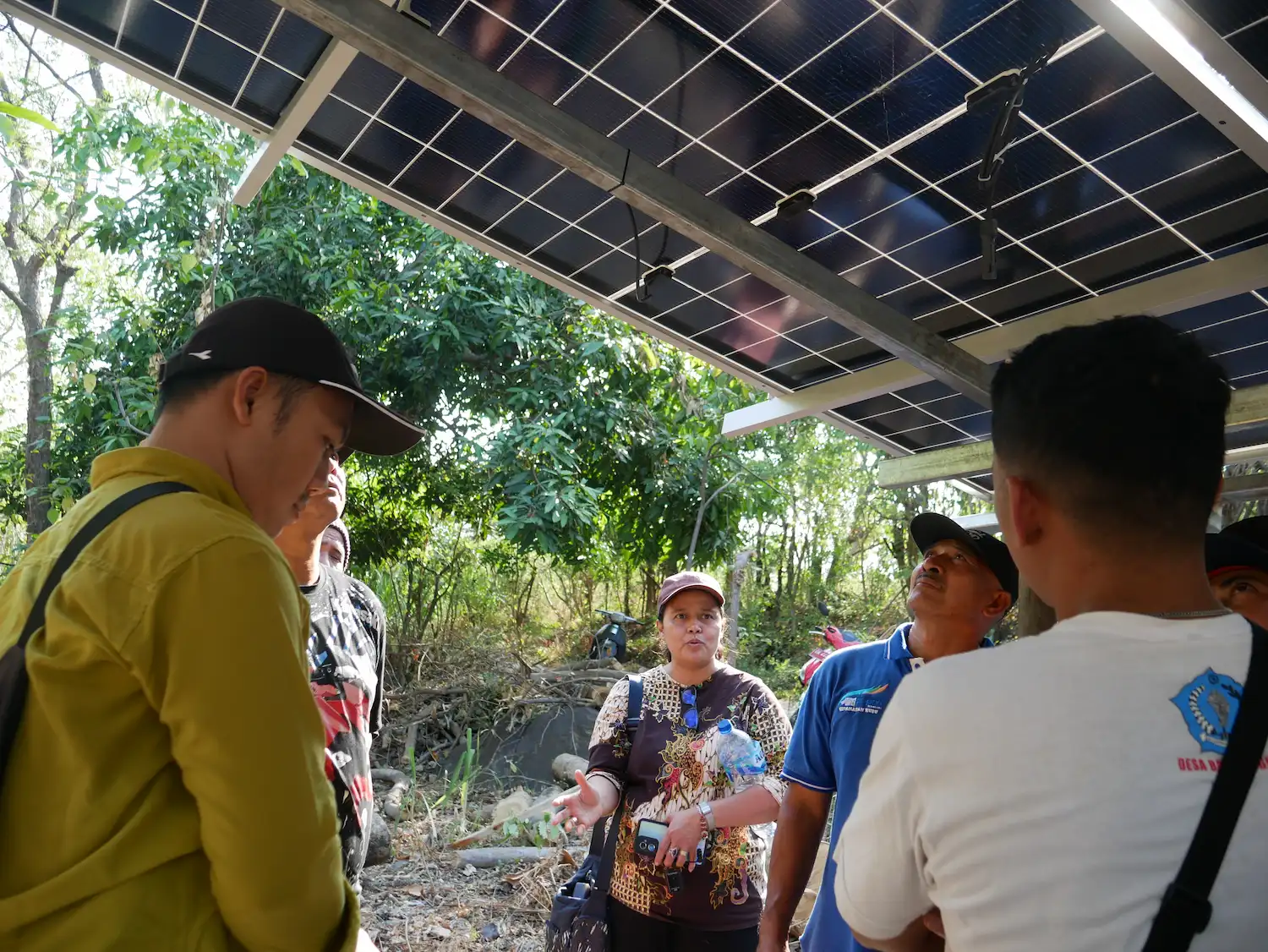 Capacity building to the local energy champion exploring ways to maintain the solar power plant for long-term benefit to the community
A Celebration Under the Sun
The day of the solar panel handover ceremony was filled with pride. As a symbolic gesture, the ceremony marked the official launch of the solar PV systems in both villages with the flick of a switch that lit up a bulb for the first time, signalling the start of their use for community benefit. For many residents, this wasn’t just about lights or pumps. It was about possibilities such as evening gatherings without worrying about outages, improved water access, and the chance to think creatively about future projects.
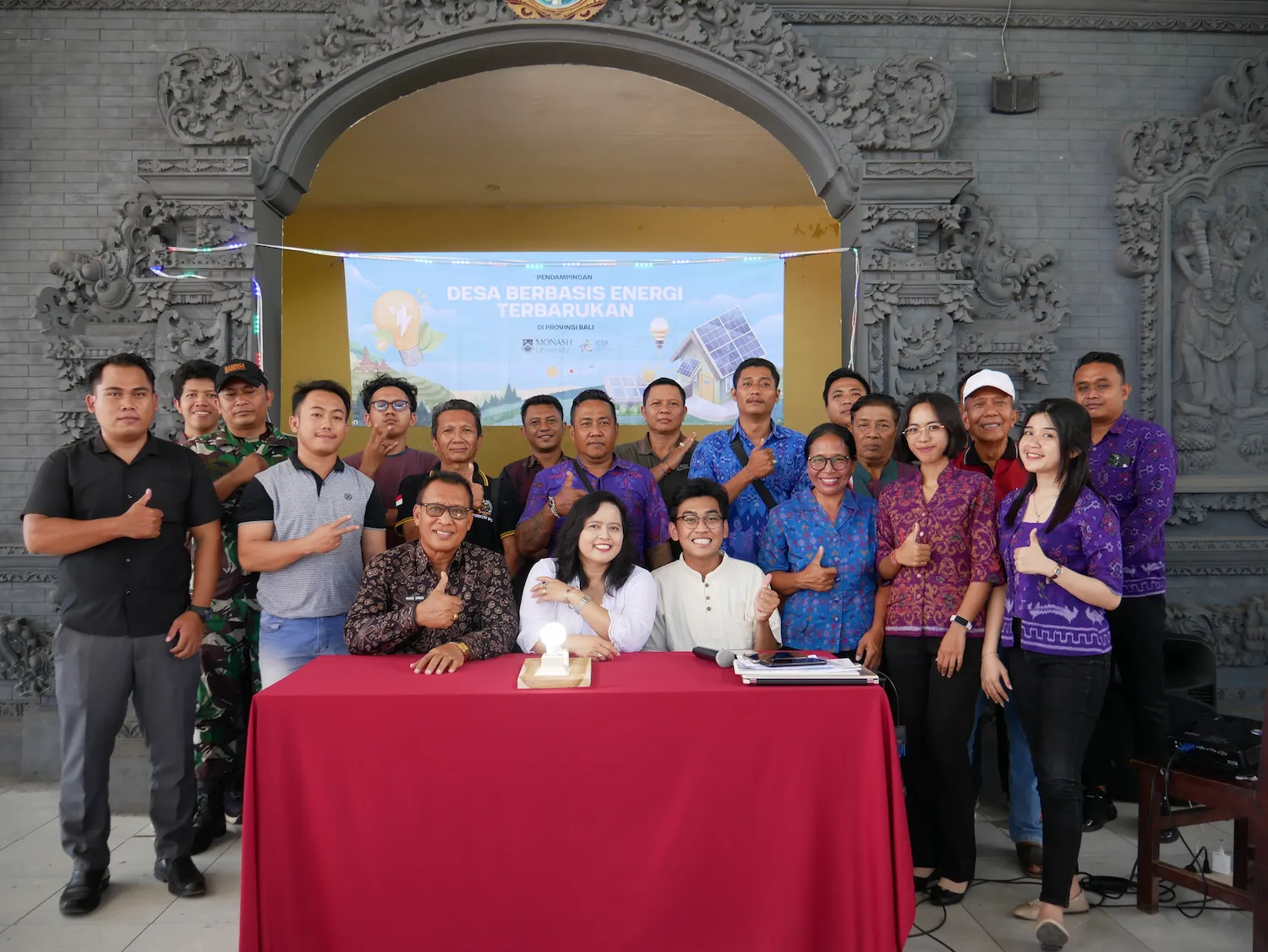 Solar power plant handover ceremony at Banjarasem Community Hall
Lighting the Way Forward
Now, the panels quietly do their work, powering essential services and bringing a steady source of clean energy to shared spaces. The pilot sites may be modest, but the impact is immediate: water flows more reliably, and community spaces stay active into the evening.
Just as importantly, the process has built confidence and skills within the villages. With trained Energy Champions and strong local involvement from day one, the system is more than infrastructure, it’s a community asset.
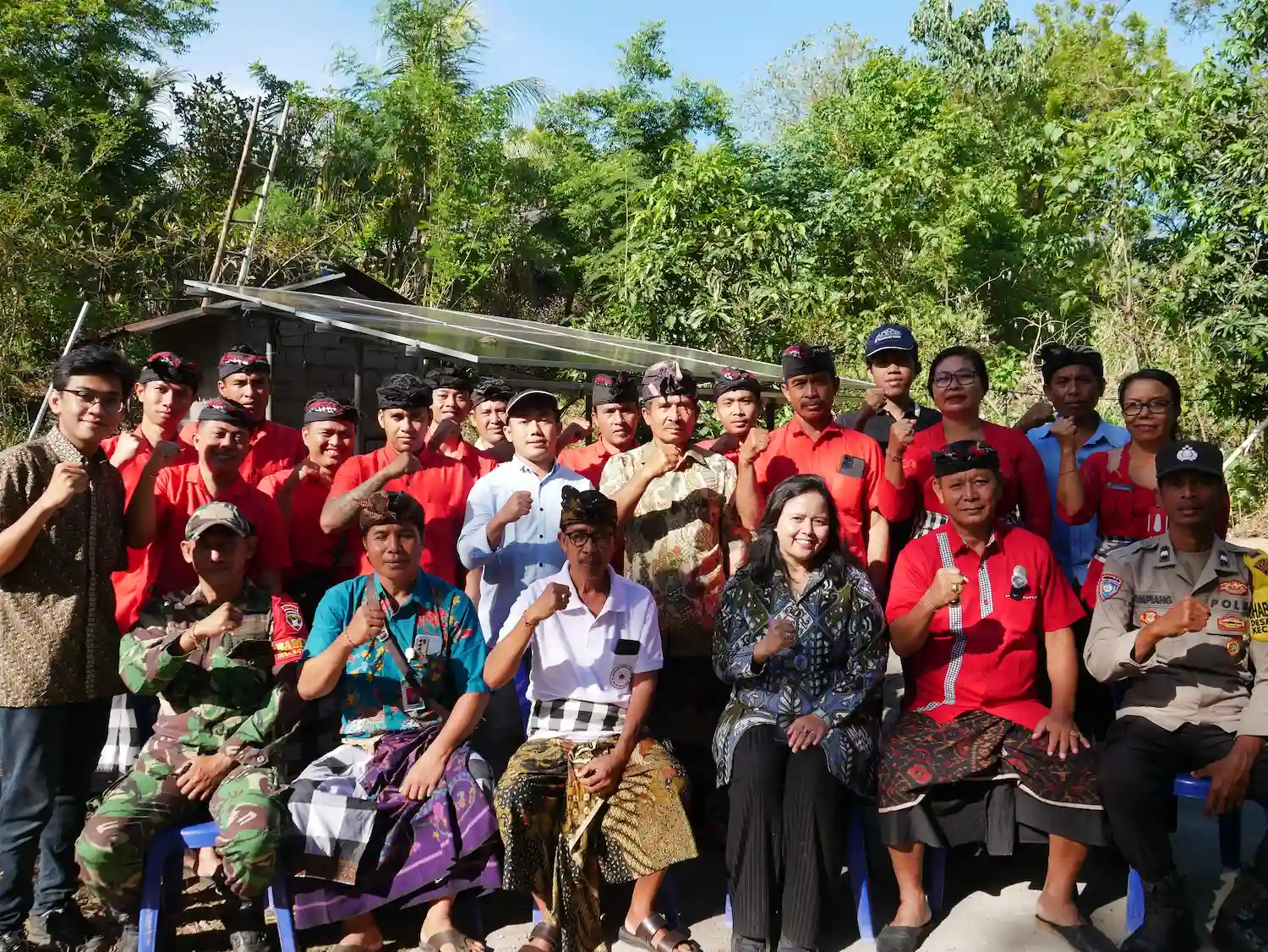 Solar power plant handover ceremony at Baturinggit
Looking back, the story of Baturinggit and Banjarasem is a reminder that technology alone does not drive change, people do. The solar panels are important, but it was the early conversations, the respect for cultural traditions, the shared decision-making, and the willingness to carry heavy panels under the midday sun that truly powered this project.
This community assistance project on renewable energy in Bali was funded by IESR, led by Dr. Eka Permanasari, with Project Manager Gita Rama Mahardhika, M.P.W.K. The initiative demonstrates that when communities are not merely beneficiaries but active participants, even a small pilot can illuminate the path toward a more sustainable and hopeful future.