
Monash University, Indonesia welcomes university leaders to exchange ideas on educational innovation and digital learning
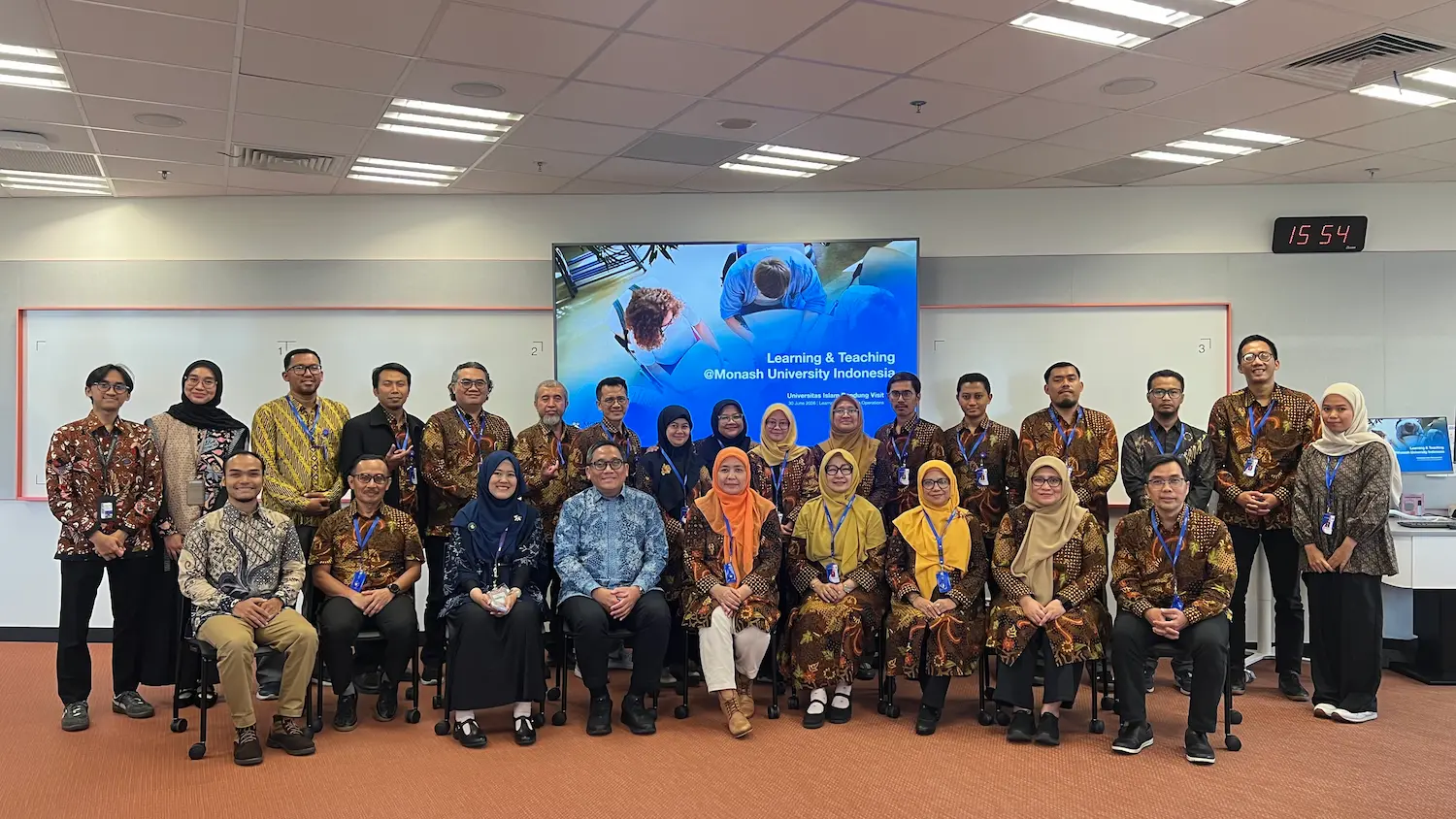 UNISBA academics and staff with Monash University, Indonesia's LTO team
BSD City, Tangerang – Monash University, Indonesia's Learning and Teaching Operations (LTO) team recently welcomed academic leaders from Bandung Islamic University (Universitas Islam Bandung/UNISBA) and Bakrie University (Universitas Bakrie) for two knowledge-sharing visits, reinforcing a shared commitment to advancing teaching excellence, educational technology, and innovation in higher education.
Held on 30 June 2026 and 9 July 2026, the visits brought together higher education leaders and learning and teaching specialists to discuss how universities can respond to the evolving needs of students through effective governance, technology-enabled learning, and collaborative innovation.
Strengthening partnerships through shared learning
The first visit welcomed a delegation of 20 staff members from UNISBA, led by Dr Asnita Frida, Vice Rector of Academic and Student Affairs, and Professor Ratna Januarita, Vice Rector of Alumni and Cooperation.
The second visit hosted four representatives from Universitas Bakrie, led by Dr Rizki Maryam Astuti, Head of the Centre of Academic and Teaching Innovation.
Although each institution had different areas of interest, both visits reflected a common goal: learning from good practices in educational innovation and exploring opportunities to strengthen learning and teaching within their respective universities.
Discussion on the university’s approach to educational innovation
During the UNISBA visit, discussions centred on three key themes that underpin Monash University's educational practices. Participants explored how educational technology is strategically integrated to enhance the quality and effectiveness of teaching and learning, how Monash operationalises transnational education across academic and institutional practices, and how inclusive education is embedded to promote equitable access, participation, and student success.
The visit featured more than two hours of interactive discussion and question-and-answer sessions, followed by a campus tour that showcased Monash University Indonesia's learning spaces and facilities.
The visit left a strong impression on the UNISBA delegation. Mr Iyan Bachtiar reflected that one of the most valuable lessons was seeing how closely academic and professional teams collaborate to create a seamless learning experience. He noted that these insights would be valuable in strengthening the management of UNISBA's international class programs, enhancing student services, and supporting continuous improvements in academic quality.
Similarly, Ms Wieska Sandra Dewi highlighted the practical insights gained from Monash University's approach to learning and teaching. As UNISBA continues to develop its Moodle platform, she shared that the visit provided valuable ideas on creating a more integrated learning ecosystem supported by thoughtful learning design, to increase student engagement through adaptive and interactive learning experiences.
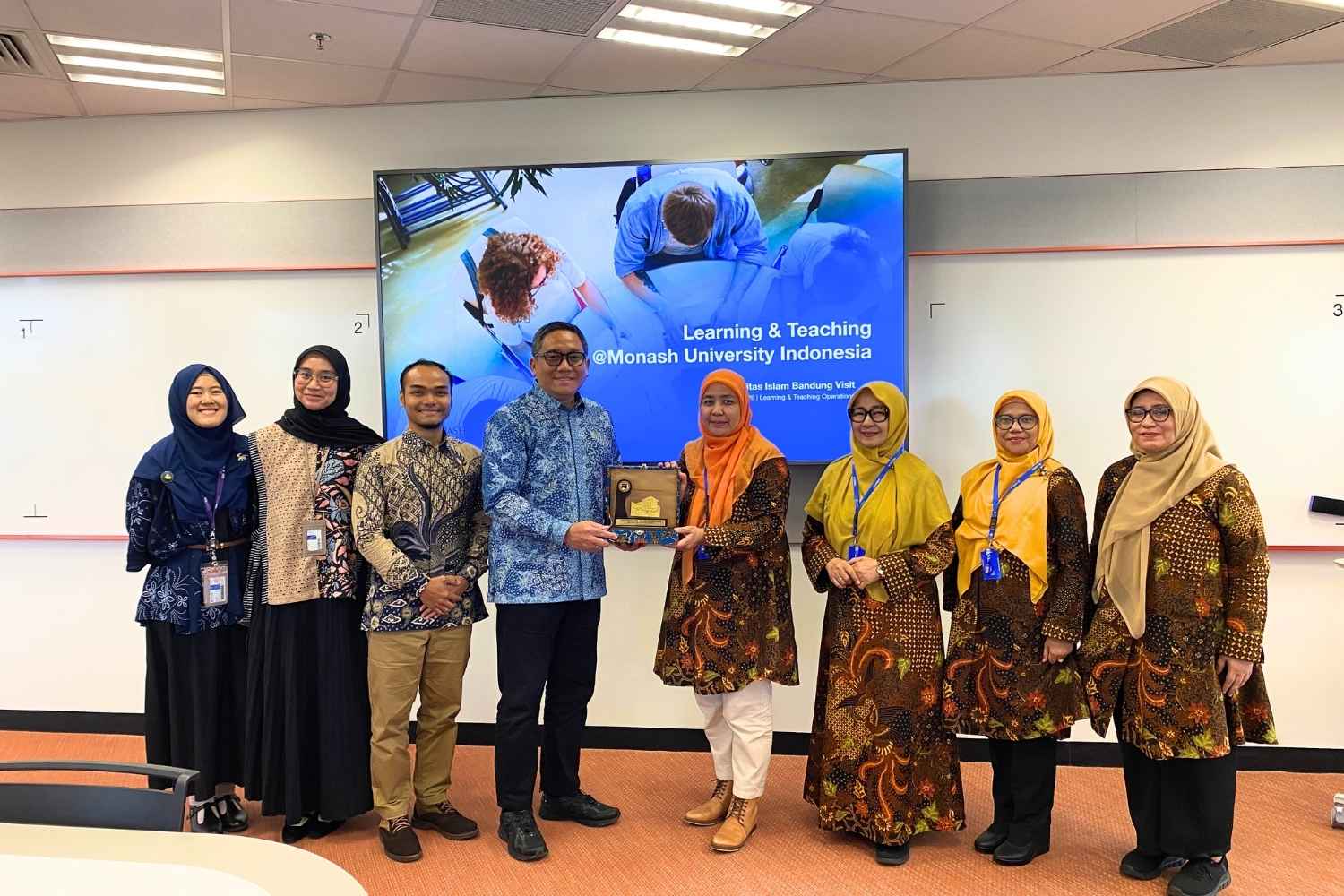 UNISBA delegation led by Dr. Asnita Frida, Vice Rector of Academic and Student Affairs, and Professor Ratna Januarita, Vice Rector of Alumni and Cooperation
Exploring Moodle governance and digital learning ecosystems
The visit from Universitas Bakrie focused on the governance of learning management systems and the strategic use of Moodle to support learning and teaching.
The discussions were organised into three sessions covering the governance and management of Moodle, strategies for maximising Moodle's capabilities through user experience, staff capability development and platform innovation, as well as approaches to encouraging LMS adoption and evaluating its effectiveness in supporting teaching and learning.
The two-and-a-half-hour visit concluded with a tour of the Monash Indonesia Microstudio, where participants explored how dedicated digital production facilities support the creation of high-quality learning resources and multimedia content.
Participants from Universitas Bakrie described the visit as an opportunity to better understand how Moodle can be managed as a strategic institutional platform rather than simply a repository for learning materials. They shared that the discussions inspired new ideas for improving the consistency and quality of online learning, increasing adoption among academic staff and students, and supporting future digital transformation initiatives. They also appreciated gaining practical guidance on the key steps required to implement and optimise an LMS to better support teaching and learning across the institution.
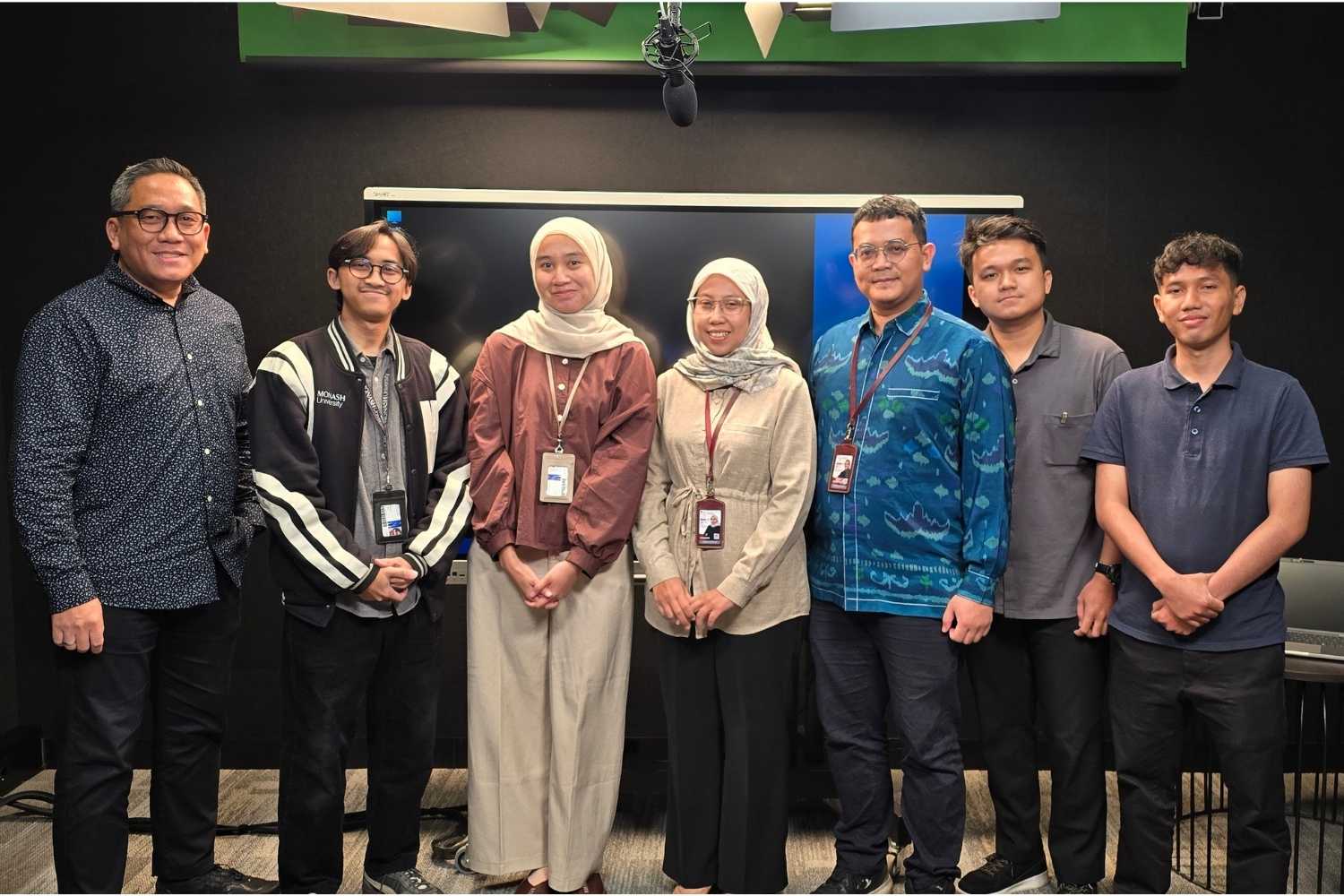 Bakrie University representatives visit Monash University, Indonesia's Microstudio
Advancing innovation through collaboration
Across both visits, several common themes emerged. Participants recognised that technology delivers the greatest value when it is supported by sound learning design, thoughtful governance, and continuous evaluation. They also discussed the importance of piloting new pedagogical approaches before scaling them institution-wide, allowing institutions to refine innovations based on evidence and feedback.
Another recurring message was that successful educational transformation depends on empowering educators and professional staff to lead change while fostering a culture of reflection and continuous improvement.
Above all, the visits reinforced that collaboration remains one of the most powerful drivers of innovation in higher education. By sharing experiences, exchanging ideas, and learning from one another, universities can accelerate the adoption of effective practices that enhance teaching, learning, and the overall student experience.
As higher education continues to evolve, Monash University Indonesia remains committed to building meaningful partnerships with universities across Indonesia. Through initiatives such as these institutional visits, the Learning and Teaching Operations team continues to foster collaboration, share expertise, and contribute to the development of innovative, inclusive, and future-focused higher education.