
Faculty Bridging Postdoctoral Fellowships
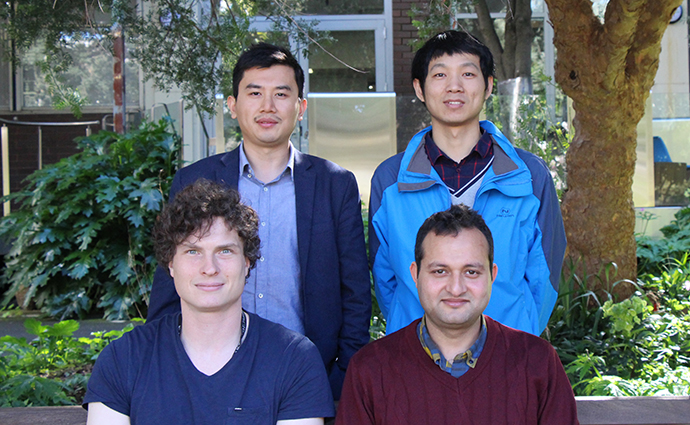
Congratulations to four researchers from the Monash Biomedicine Discovery Institute (BDI), who have each received a Bridging Postdoctoral Fellowship from the Faculty of Medicine, Nursing and Health Sciences (FMNHS).
The Bridging Postdoctoral Fellowships (BPF) support the career development of promising newly-qualified postdoctoral researchers and final year PhD students. They are intended to provide initial support for recent PhD graduates and final year PhD students while they apply for externally-funded fellowships.
For Ethan Liu, a postdoctoral candidate from the Polo lab, the fellowship to support his work on early embryonic development. The team he works in recently revealed that early embryonic developmental programs are involved in nuclear reprogramming. Further research could help them to develop novel therapeutics to treat infertility and developmental disorders in humans.
“This fellowship will allow me to continue our exciting work into understanding the sophisticated control of cell fate determination of early embryonic development in the physiological context,” Mr Liu said.
Dr Michael Uckelmann is a research fellow in the Davidovich lab. He investigates a group of proteins called ‘Polycomb Repressive Complexes’, which imprints structural changes on certain areas of the genome to keep these parts switched off. Dr Uckelmann researches how structural changes of the genome facilitate a genetic ‘off-state’, and tries to identify novel interactors that affect the off-on balance of genes.
“The BPF is a stepping stone in building my career in Australia. If offers me the opportunity to expand on my initial results and build a stronger profile in order to be competitive in national fellowship schemes,” Dr Uckelmann said.
Dr Ram Bhusal is a research fellow in the Stone lab, which focuses on the functions of chemokines and their receptors in regulation of leukocyte trafficking. This is a central aspect of inflammatory responses.
“My project involves characterising a novel family of tick proteins, called evasins, which target chemokines to suppress inflammation. This fellowship will help to characterise these potential anti-inflammatory proteins, as well as it will help me to generate solid preliminary data, which will increase my competitiveness towards national fellowships including an ARC Discovery Early Career Research Award,” Dr Bhusal said.
Dr Xukai Jiang is a research fellow in the Li lab who researches polymyxins, the last line of therapy to treat infections cause by Gram-negative ‘superbugs’. With polymyxin resistance in the rise, the Li lab has employed all-atom molecular dynamic simulations and systems pharmacology to investigate how polymyxins interact with and damage the bacterial and human renal cell membranes. This atomic-scale information will help to build quantitative structure-activity-toxicity relationship models for polymyxins, and facilitate the smart design of new-generation polymyxins.
“The fellowship will help me to elucidate the exact interaction of polymyxins with different lipids in bacterial and mammalian cells at the atom level using cutting-edge computational biology. Hopefully, my work will facilitate the discovery of novel polymyxins to combat life-threatening infections globally,” Dr Jiang said.
About the Monash Biomedicine Discovery Institute
Committed to making the discoveries that will relieve the future burden of disease, the newly established Monash Biomedicine Discovery Institute at Monash University brings together more than 120 internationally-renowned research teams. Our researchers are supported by world-class technology and infrastructure, and partner with industry, clinicians and researchers internationally to enhance lives through discovery.