
Monash BDI researchers awarded $9.2m in NHMRC Investigator Grants
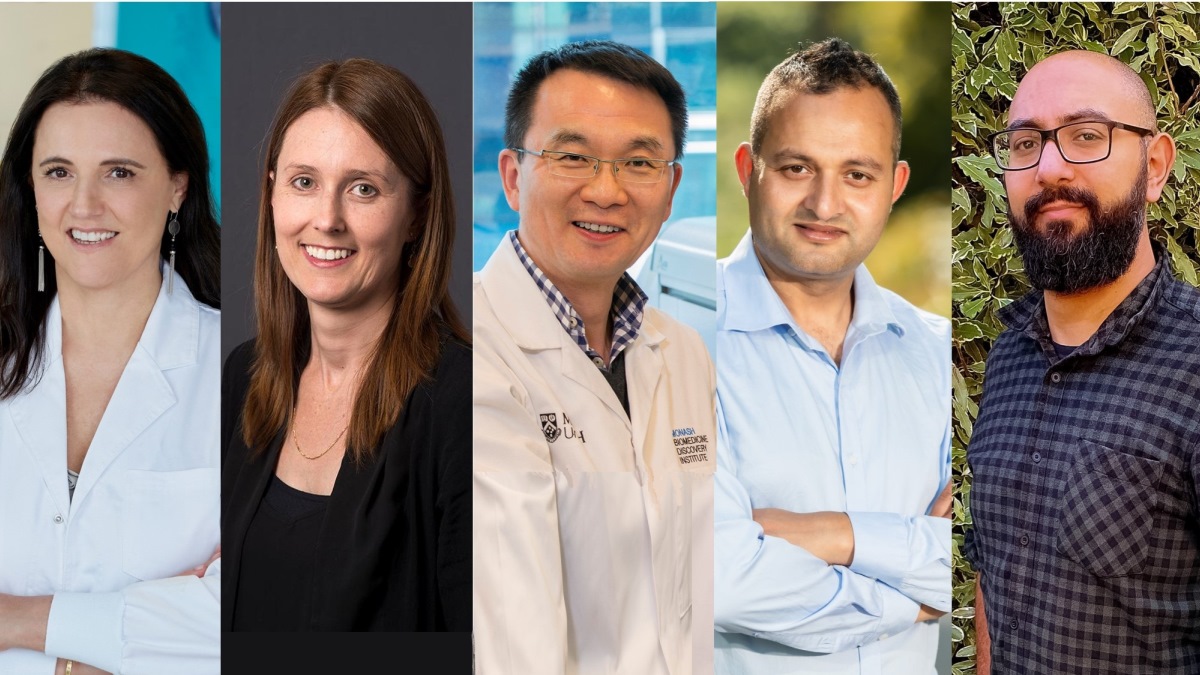
Five Monash Biomedicine Discovery Institute (BDI) researchers have been awarded $9.2 million in National Health and Medical Research Council (NHMRC) Investigator Grants, announced today by federal Minister for Health and Aged Care, Mark Butler.
The NHMRC Investigator Grants scheme provides high-performing researchers with salary and program funding to support research across biomedical, clinical, public health and health services areas.
The highly competitive funding will support researchers at the Monash BDI to continue their outstanding discovery research programs: ranging from understanding how immune responses are regulated; protecting eggs from damage during chemotherapy treatment; combating antimicrobial resistance; using strategies from ticks to develop therapies for inflammatory diseases; through to understanding how our immune system functions to recognise and clear the tuberculosis pathogen.
Offering his congratulations, Director of Monash BDI, Professor John Carroll said that these awards are incredibly competitive. "I am delighted about the recognition and support they will provide to our exceptional emerging and established research leaders. Securing this funding is testament to the talent of each of these scientists and to the many years they have dedicated to research," Professor Carroll said.
"The awards reflect our researchers' drive to discover the fundamental mechanisms underpinning human health. It is only with this understanding that we can effectively discover remedies for disease and dysfunction. I warmly congratulate each of our Investigator Grant recipients.”
The five Monash BDI researchers to receive funding were:
Professor Mariapia Degli-Esposti FAA FAHMS: ‘Harnessing the immune system to treat viral infections and their complications.’ Awarded $2.75 million (Leadership 3).
Immunological processes are responsible for fighting infection and cancer, but if not limited can result in inflammatory diseases and autoimmunity. Understanding how immune responses are regulated is key to striking the balance that ensures protection from infection but prevents deleterious inflammation (i.e. optimal immunity). This program will fundamentally advance knowledge of how the immune system is regulated so it can be harnessed to treat chronic viral infections and their complications.
Associate Professor Karla Hutt: ‘Protecting the ovary from damage to optimise fertility and endocrine health in women.’ Awarded $2.17 million (Leadership 1).
Cancer treatments and infections can damage the ovary, leading to infertility and premature menopause, which negatively impact on the health and well-being of women. What goes wrong in the ovary remains poorly understood. This study will advance fundamental knowledge around precisely how cancer treatments and infections damage the ovary, and then use this knowledge to design protective strategies.
Professor Jian Li FAA: ‘Combating antimicrobial resistance: From bedside to bench and therapeutics.’ Awarded $2.95 million (Leadership 3).
Bacterial ‘superbugs’ and the lack of new antibiotic drugs have caused an unmet need of global significance. This research will generate and translate new knowledge to improve the clinical use of antibiotics worldwide; develop international dosing guidelines; and discover and commercialise novel therapeutics against bacterial ‘superbugs’. This multidisciplinary program will address the global health priority of combating antibiotic resistance and have a far-reaching impact on clinical practice worldwide.
Dr Ram Bhusal: ‘Harnessing ticks’ tricks to develop therapies for inflammatory diseases.’ Awarded $662,000 (Emerging Leadership 1).
Inflammatory diseases are caused by the release of chemokines at the affected site. Chemokines attract immune cells to the site, leading to inflammation and tissue damage. Blocking the activity of chemokines is a promising approach to suppress inflammation. This research proposes to modify “evasins”, natural chemokine-binding proteins from ticks, so that they effectively block the activity of chemokines involved in various inflammatory diseases. This could lead to new anti-inflammatory treatments.
Dr Adam Shahine: ‘Lipid antigen mediators of T cell responses against Mycobacterium tuberculosis infection.’ Awarded $643,000 (Emerging Leadership 1).
Mycobacterium tuberculosis (Mtb), the causative agent of tuberculosis, remains one of the top 10 causes of death in humans globally, resulting in 1.6 million fatalities annually. The human immune system is crucial in the protection against Mtb through complex interactions between immune system components. By better understanding how the immune system functions to recognise and clear this pathogen, we will be better equipped to develop new therapeutics that will reduce disease burden.
View the full list of Monash's Faculty of Medicine, Nursing and Health Science's grant recipients here.
Read the full list of national recipients on the NHMRC website.
About the Monash Biomedicine Discovery Institute
Committed to making the discoveries that will relieve the future burden of disease, the Monash Biomedicine Discovery Institute (BDI) at Monash University brings together more than 120 internationally-renowned research teams. Spanning seven discovery programs across Cancer, Cardiovascular Disease, Development and Stem Cells, Infection, Immunity, Metabolism, Diabetes and Obesity, and Neuroscience, Monash BDI is one of the largest biomedical research institutes in Australia. Our researchers are supported by world-class technology and infrastructure, and partner with industry, clinicians and researchers internationally to enhance lives through discovery.