
A safe, secure, and affordable home is essential for healthy ageing. Housing instability and homelessness leads to poor health from an earlier age, hospitalisations, greater chronic disease burden, and reduced life expectancy. 122,000 Australians are experiencing homelessness, including almost 20,000 older people aged 55 years or older.
The Deep End Living Lab is tackling this crisis head-on. The project - originally funded by the National Centre for Healthy Ageing (NCHA), a partnership between Monash University and Peninsula Health, and supported by Launch Housing and Bolton Clarke - is working to create a more inclusive, integrated health and social care system for people experiencing or at risk of homelessness, ensuring housing is treated as a vital part of health.
Since its inception, the Deep End Living Lab has already made a significant impact. The team led by Professor Suzi Nielsen, Professor Elizabeth Sturgiss, and Nilakshi Gunatillaka, has identified barriers to healthcare access, developed a screening algorithm to identify housing instability, and shaped policy and partnerships that connect health, housing, and social care.
Too often, older people experiencing or at risk of homelessness fall through the cracks of our health system. Their complex needs - mobility challenges, comorbidities, social isolation - collide with hospital settings built for acute care, not for life’s harder edges. For these patients, conversations about housing, safety, or future stability are rarely part of clinical care. That’s about to change.
Philanthropy powering change where it’s needed most
The Deep End Living Lab team has been awarded a $575,000 Bold Futures Grant from The Jack Brockhoff Foundation to transform how hospitals support older Australians experiencing homelessness. Starting January 2026, the Deep End Living Lab: Transforming how Australian hospitals support older people experiencing homelessness project will embed screening and support for homelessness into mainstream health care.
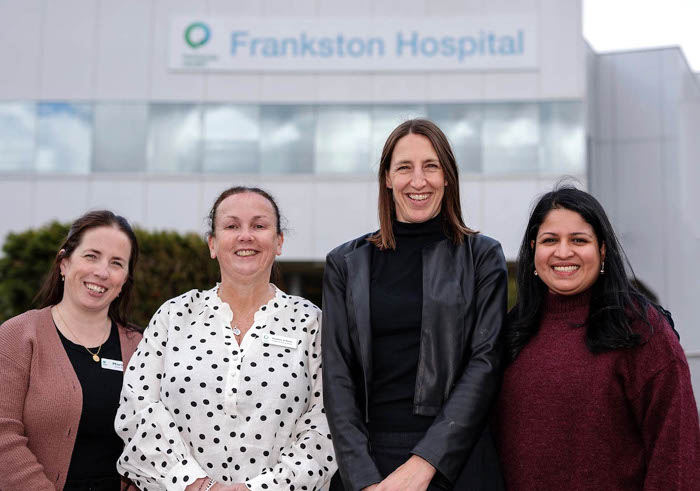
As Professor Suzanne Nielsen explains: “We know there can be barriers to raising sensitive topics in healthcare settings. Our early work has already mapped these challenges, and we are excited to now be able to develop the tools to change this.”
For Research Program Manager Nilakshi Gunatillaka, the grant is more than funding, it’s a validation of purpose: “The investment by the Jack Brockhoff Foundation in our new project is so exciting because it reinforces the positive role that research can play in changing health outcomes and practices… We have always placed the voice of lived experience at the centre of our decision-making on research design and data collection, and this boost in funding support will build on that outreach with this community.”
Gunatillaka also acknowledged the essential role of the NCHA: “We couldn’t have accomplished this [Jack Brockhoff Foundation grant] without NCHA’s outstanding support and initial funding … NCHA Living Lab’s pivotal role … laid the foundation for this success.”
NCHA Director Professor Velandai Srikanth congratulated the team: “The Deep End Living Lab team exemplifies the excellent work underway in our Living Labs Research Program … tackling some of the most complex challenges in healthy ageing.” With this funding, the research team will shift from simply documenting problems to designing concrete solutions: training, tools, and systems that allow clinicians to speak about housing, adapt care plans accordingly, and refer patients seamlessly to social support.
From Lab to life
The next phase of the Deep End Living Lab Initiative will focus on three interconnected strategies that bring research to life.
First, the team will develop a training and resource package that equips clinicians with the language, confidence, and practical tools to discuss housing - something many currently feel is “outside their remit”. They will then trial these resources in real hospital environments, partnering with Peninsula Health to embed them into care workflows and patient journeys. Finally, they will expand this work across Victoria, paving the way for national adoption.
Critically, this work is co-created with people who have lived experiences of homelessness. Their voices shape every stage, from design and testing, to evaluation, ensuring solutions are grounded in reality.
One participant’s story captures why this work is so crucial. Discharged without safe access to water, he was tasked with cleaning a wound while living on a beach. The wound became infected, leading to serious complications and readmission. As Gunatillaka reflects: “If at the initial contact point someone had asked about his housing… they would have been able to link him in with an outreach nurse… and avoid complications”.
Stories like his are a rallying cry for change. Home is health, and through the generous support of The Jack Brockhoff Foundation, the Deep End Living Lab is redefining what it means for hospitals to care not only for bodies, but for homes. This is the power of philanthropy: transforming research into real-world change by empowering Monash researchers to deliver better health outcomes for all.
To learn more about the research and impact of the Deep End Living Lab, please contact Nilakshi Gunatillakam at nilakshi.gunatillaka@monash.edu. If you’d like to explore how you can partner with Monash to support transformative research like this, please contact Amber Skehan, Acting Deputy Director (Health Science), Monash Advancement, at amber.skehan@monash.edu.