
Rethinking Urban Growth: Urban Transformation Talk #11 Tackles Indonesia’s Sprawling Cities
 Group photo of Urban Transformation Talks Series #11 speakers and participants
South Tangerang – Monash University, Indonesia, in collaboration with the Directorate of Local Development of the Ministry of National Development Planning (Bappenas), successfully held the Urban Transformation Talks series#11. This event, titled "Rethinking Urban Growth: Addressing Urban Sprawl through Governance, Innovation, and Inclusive Planning in Indonesia," brought together scholars, practitioners, and government representatives to explore how Indonesia can tackle the growing challenge of urban sprawl through integrated policy, technological innovation, and inclusive design.
Urban Transformation Talk is a recurring platform established in 2021 to foster multi-stakeholder dialogue on urgent urban challenges. This year’s discussion focused on Indonesia’s urban sprawl which creates challenges by driving congestion, degrading the environment, raising infrastructure costs, and limiting access to services—while also heightening social vulnerability, especially for women and children. These problems are compounded by fragmented planning, limited land, and weak interregional coordination in rapidly growing cities.

Eka Permanasari, PhD convenor of Urban Transformation Talks open the seminar
Eka Permanasari, PhD opened the session with an insightful discussion on urban sprawl in Southeast Asia, with a particular focus on Java and the Greater Jakarta area (Jabodetabek). She highlighted how urban sprawl presents both opportunities and challenges, ranging from pressures on spatial planning and infrastructure development to the need for a more integrated transportation backbone. Additionally, she emphasized the implications of population concentration in peri-urban areas, calling for more adaptive and inclusive urban governance to ensure sustainable growth.
The Event featured three prominent speakers, each providing a unique lens on the issue. Agung Mahesa Himawan Dorodjatoen, PhD, Urban Affairs Coordinator of Local Development at Bappenas, emphasized the urgency of redefining how urban areas are delineated. He introduced the Degree of Urbanization methodology as a more accurate approach to mapping and managing urban growth. He also discussed the role of upcoming national development frameworks, such as the RPJMN 2025–2029 and RPJPN 2045, which aim to foster sustainable, inclusive, and resilient urban systems through integrated planning, improved urban governance, and cross-jurisdictional cooperation.
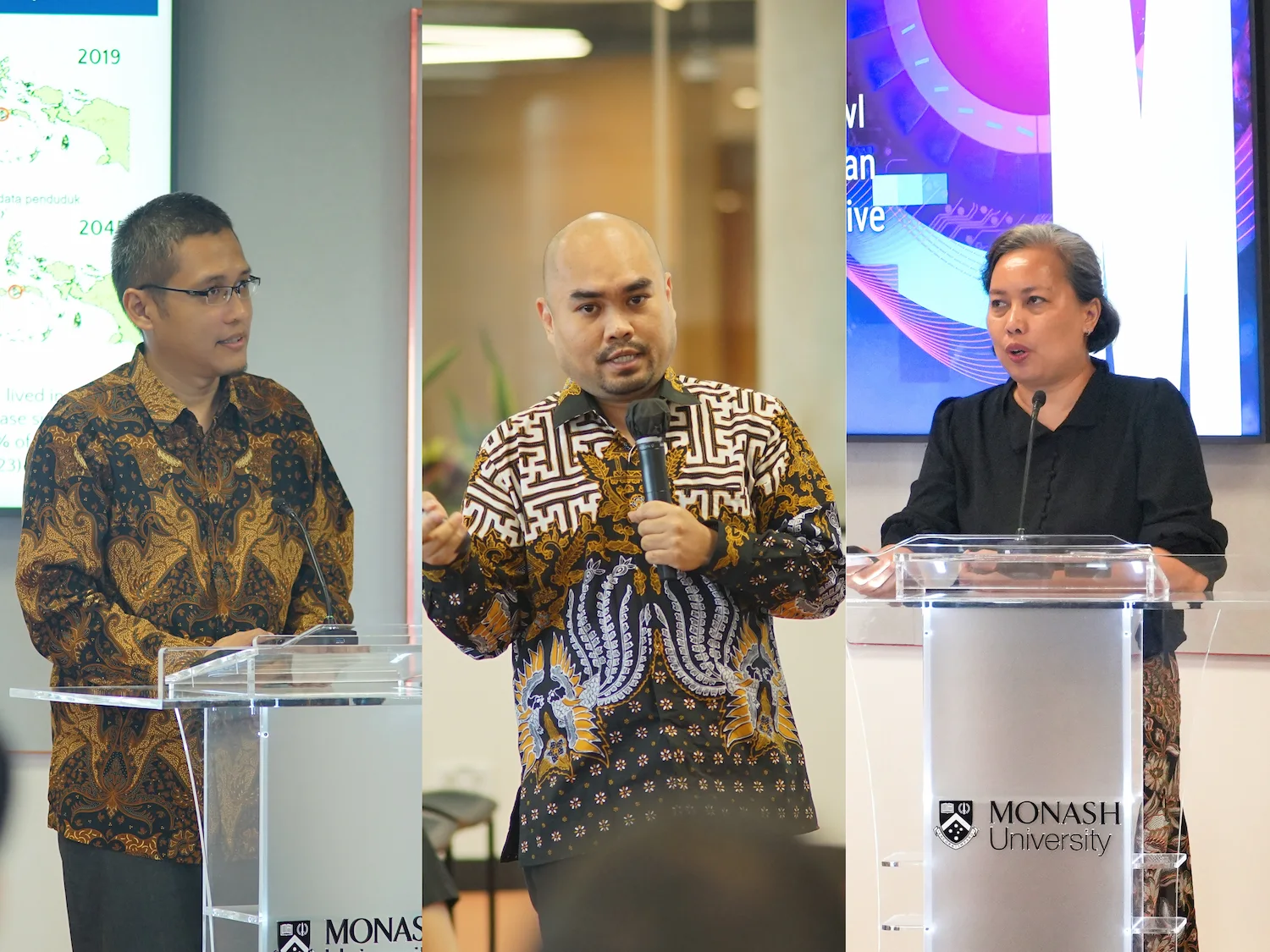
Agung Mahesa Himawan Dorodjatoen (left), Arif Perdana (center), and Rini Suryantini (right) sharing insights at Urban Transformation Talks
Arif Perdana, PhD, Associate Professor of Data Science at Monash University, Indonesia, highlighted how digital tools and data-driven policymaking can transform urban governance. Through the example of Safetipin—a technology platform that uses geospatial and community data to assess urban safety—he illustrated how subjective experiences can be translated into actionable insights. His presentation underscored the importance of combining community input and data analytics to support Regulation No. 59/2022 on urban development, particularly in ensuring safety and inclusivity for vulnerable populations.
Dr. Rini Suryantini, a lecturer at the University of Indonesia’s Department of Architecture, offered a micro-perspective on urban transformation. She discussed how outdated zoning policies have resulted in monofunctional urban areas that no longer align with current demographic and spatial needs. Advocating for "dynamic functionality" in urban spaces, she introduced the concept of green acupuncture—small-scale ecological interventions that enhance biodiversity, maintain spatial connectivity, and promote a more sustainable and inclusive urban environment.

The participants of Urban Transformation Talks
The discussion sessions raised critical issues including mismatches between housing and employment locations, data accessibility for urban policymaking, and institutional barriers in managing cross-regional urban areas. Speakers also addressed the need to rethink transit-oriented development (TOD), promote inclusive land management, integrate data science into planning, and adopt more adaptive, community-driven approaches to urban growth.
Urban Transformation Talk #11 reaffirmed the need for collaborative efforts across disciplines and institutions to reshape the trajectory of Indonesia’s urban development. By merging policy, data, and design, the event highlighted a shared commitment to building cities that are not only efficient and resilient, but also equitable and reflective of the needs of all urban residents.
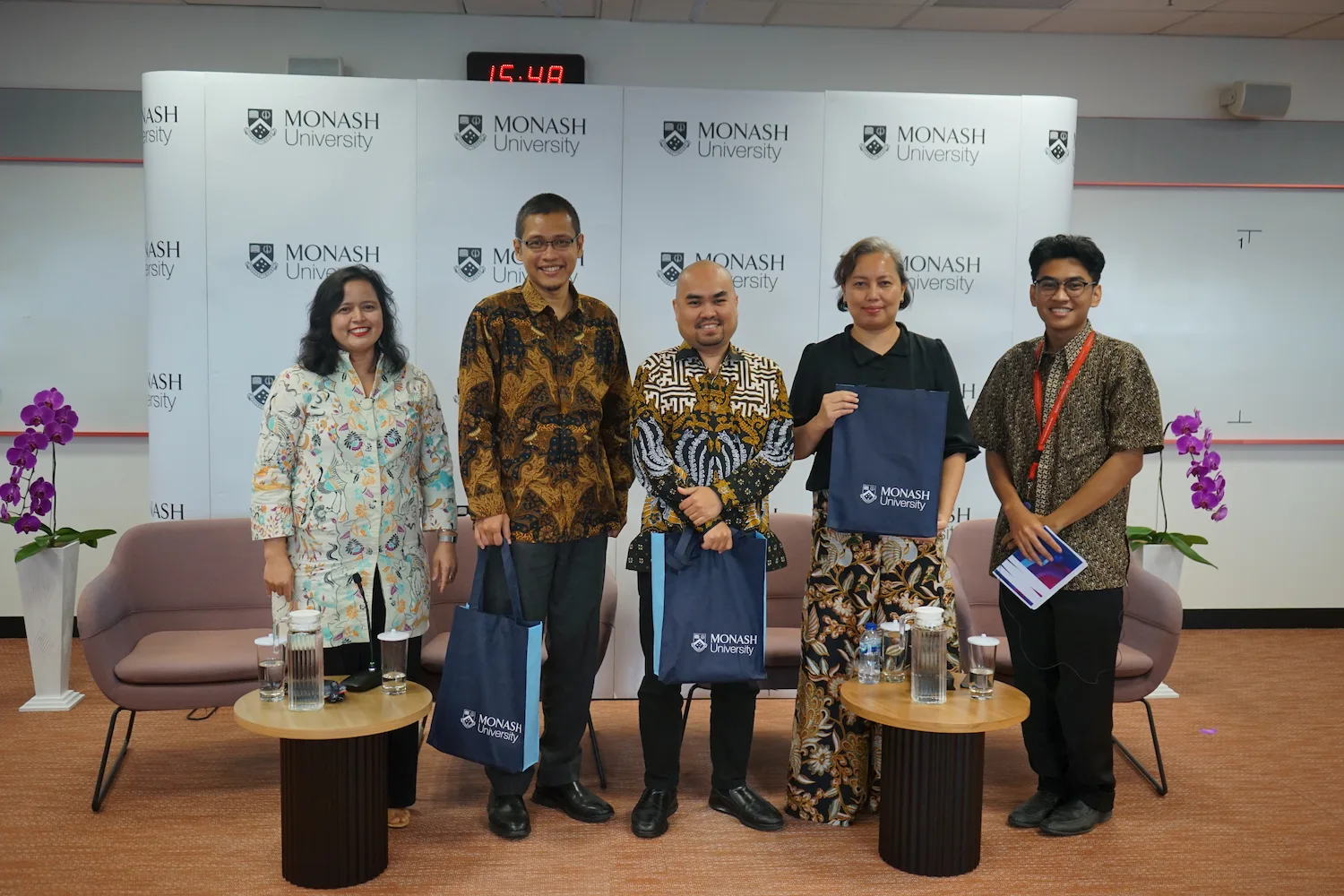
Token of Appreciation given by the convenor of Urban Transformation Talks to the distinguished speakers