
Support students with open educational resources (OERs)
What is an OER?
Open educational resources (OERs) are teaching, learning, and research materials in any format that are either in the public domain or released under an open licence. This means they can be freely accessed, reused, adapted, and shared at no cost. (see: UNESCO definition of OERs)
OERs come in many forms – open textbooks, instructional videos, audio, quizzes, and interactive activities. The Library can help you adopt existing OERs or create your own, including open textbooks enriched with multimedia and interactive elements.
Adopt OERs in your unit
As an educator, you can either find and use an existing OER, or create a new one to address a specific need for your subject.
Once you’ve sourced a suitable resource and integrated it into your unit, add it to your Leganto reading list. We have easy-to-follow instructions and dedicated help for teaching staff creating or updating their reading lists.
When you choose to replace expensive textbooks with similar, high-quality OERs, you:
- Reduce financial barriers for students
- Enable recognition of groups or individuals often excluded in the academic sphere
- Boost access to resources for students enrolled in short courses or micro-credentials
- Support inclusion of underrepresented voices.
Learn more:
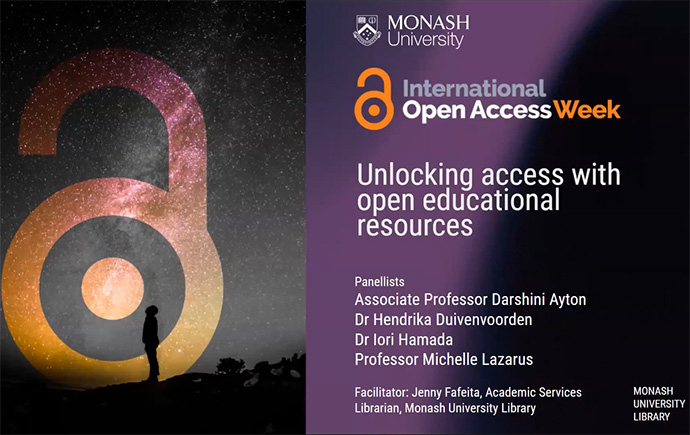


We can support you in sourcing, using or adapting quality open educational resources. Book one-to-one support with a librarian, or apply for a grant.
Find existing OERs
Open textbook collections, directories and repositories
Use these collections, directories and repositories to help you find open educational resources suitable for your teaching needs.
Australasian
- Australian Open Educational Resources (OERs) via Monash Search Australian Tertiary OER Repository (OER Commons)
- Australian Tertiary OER Repository (OER Commons)
- Find Australasian OER (Australasian Open Educational Practices Special Interest Group)
Global
- Mason OER Metafinder (George Mason University, Virginia)
- MERLOT
- OAPEN (Open Access Publishing in European Networks)
- OASIS (Openly Available Sources Integrated Search) (SUNY Geneseo's Milne Library)
- OER Commons
- Open Textbook Library
- OpenStax (Rice University)
- Pressbooks Directory
There are also many discipline specific OER collections available for you to search. Some of these listed on the Discipline specific OER for Academics (Deakin University) page.
You can use generative AI tools such as Gemini to find OER texts similar to commercial textbooks or textbooks with particular characteristics.
OER evaluation checklist
As you consider the suitability of an OER for your unit, remember the following:
- Free for anyone to read
Is the resource free-to-use in the public domain or under a Creative Commons licence, without registration or payment required? - Suitable for your students or audience
Is the resource aligned with course objectives, appropriate and up-to-date for the discipline, and also suitable for the academic level of your students? - Up to your quality standards
Check that the creator or author is identified and reputable, the content in the resource is accurate and/or peer-reviewed, and any audio, video, or images are of high quality. - Easy-to-use
The resource needs to be clear, easy to understand and easy to navigate. - Accessible
The resource must be accessible to students of all abilities. Check that audio and video resources have a transcript or subtitles with alternative formats available, such as a Word document or PDF.
Create new OERs
If you haven't been able to find an appropriate OER for your unit, consider creating your own. This could involve adapting content from existing OERs as well as creating original material. It will benefit not just your students, but boost access to quality educational materials all around the world.
Copyright considerations when modifying OERs
- Licence type
Check and abide by the Creative Commons (CC) licence being used. It needs to allow for derivative works. See the CC Licence Compatibility Chart. - Attribution
Always credit the original creators. - Derivative works
Indicate what changes were made and provide a link to the original. - Non-OER content
If you add material from other sources (e.g., images, case studies), ensure those additions are properly licensed. - Commercial restrictions
Some licences prohibit commercial use, which matters if your adaptation is used in a paid course.
If you need to adapt a resource – for example, by adding Australian case studies or incorporating more diverse perspectives into an existing textbook to meet your curriculum needs – there are important copyright considerations to keep in mind.
We can help you create your own open educational resource. Take a look at our OER grant program.
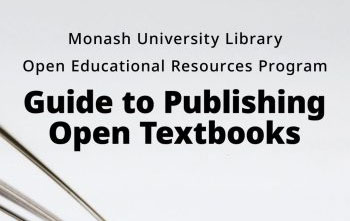
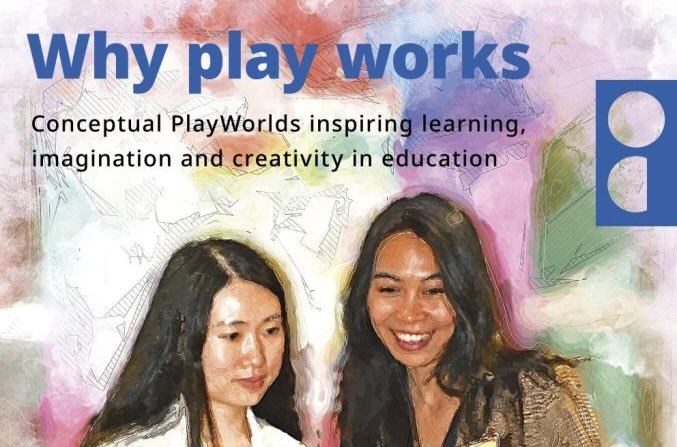
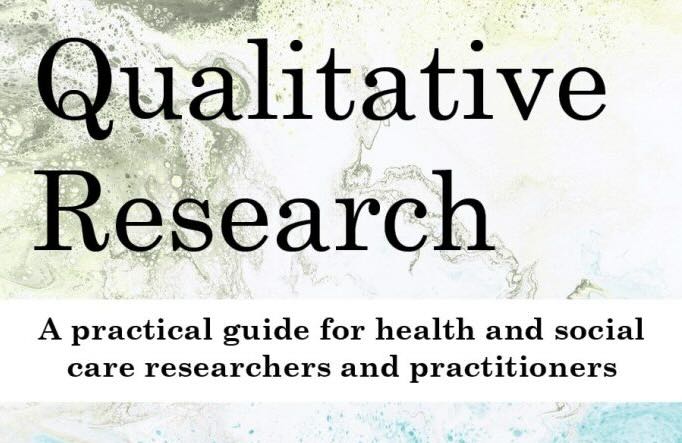
Examples of Monash-created OERs
Get help

Book one-on-one support to speak with one of our expert librarians.

Email librarians@monash.edu for expert support via email.
Email copyright advisor for specialist advice regarding copyright.