
2025: A year of urban innovation, human experience, emerging tech and Indigenous leadership
This year, Monash Art, Design and Architecture (MADA) has been reshaping the way cities are imagined, built and experienced, with research teams breaking new ground from Sydney to Jakarta to Milan.
At the heart of this work are researchers from the Future Building Initiative and the Monash Urban Lab, who are developing innovative approaches to social housing delivery using Modern Methods of Construction (MMC). In partnership with Homes NSW and the Building 4.0 CRC team, our teams are testing how digitally enabled manufacturing can accelerate housing delivery while maintaining the quality and flexibility vulnerable communities need.
Their momentum continued when Monash Urban Lab, together with Neeson Murcott Neille, Finding Infinity and Sue Barnsley Design won the international NSW Housing Pattern Book competition led by Government Architect NSW—an effort set to influence the future shape of medium-density housing across the state.
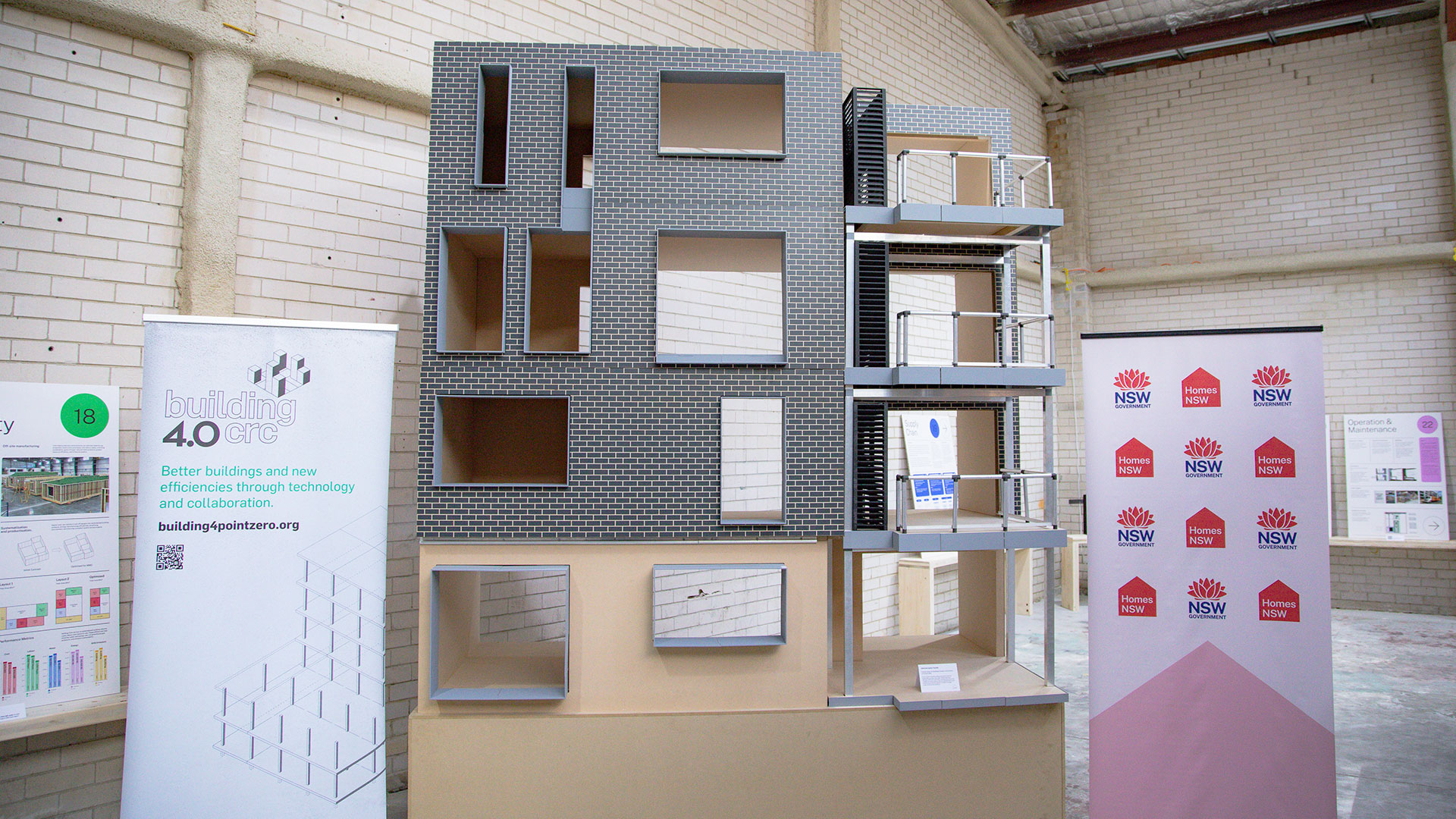
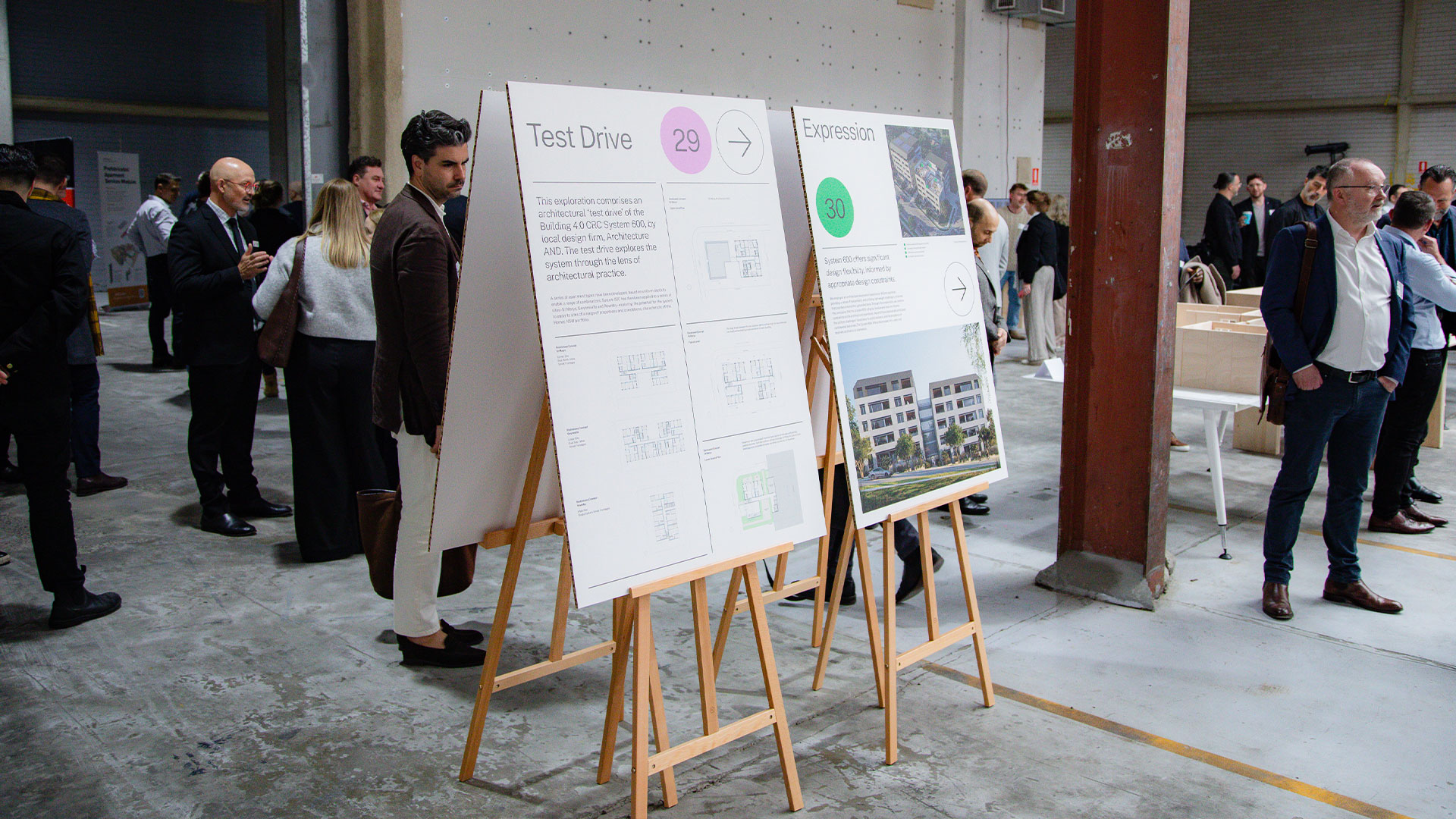
Homes NSW, in collaboration with Building 4.0 CRC, presented the future of social housing at the Modern Methods of Construction (MMC) Showcase in Mascot, NSW. Visitors saw firsthand how our innovative ‘Kit-of-Parts’ system is transforming housing delivery.
MADA’s reach this year has also extended well beyond Australia. The Informal Cities Lab helped deliver water-sensitive urban design training for Indonesia’s new capital city, Nusantara, working alongside the Asian Development Bank and DFAT to embed resilient design principles from the start.
Meanwhile in Italy, the 24th Triennale Milano hosted Australia: Land Use Inequality, an exhibition curated by Monash Urban Lab with Baracco + Wright Architects. The exhibition cast a critical eye on Melbourne’s expanding fringes, revealing how inefficient patterns of development threaten ancient ecosystems and offering alternative models for more sustainable growth.
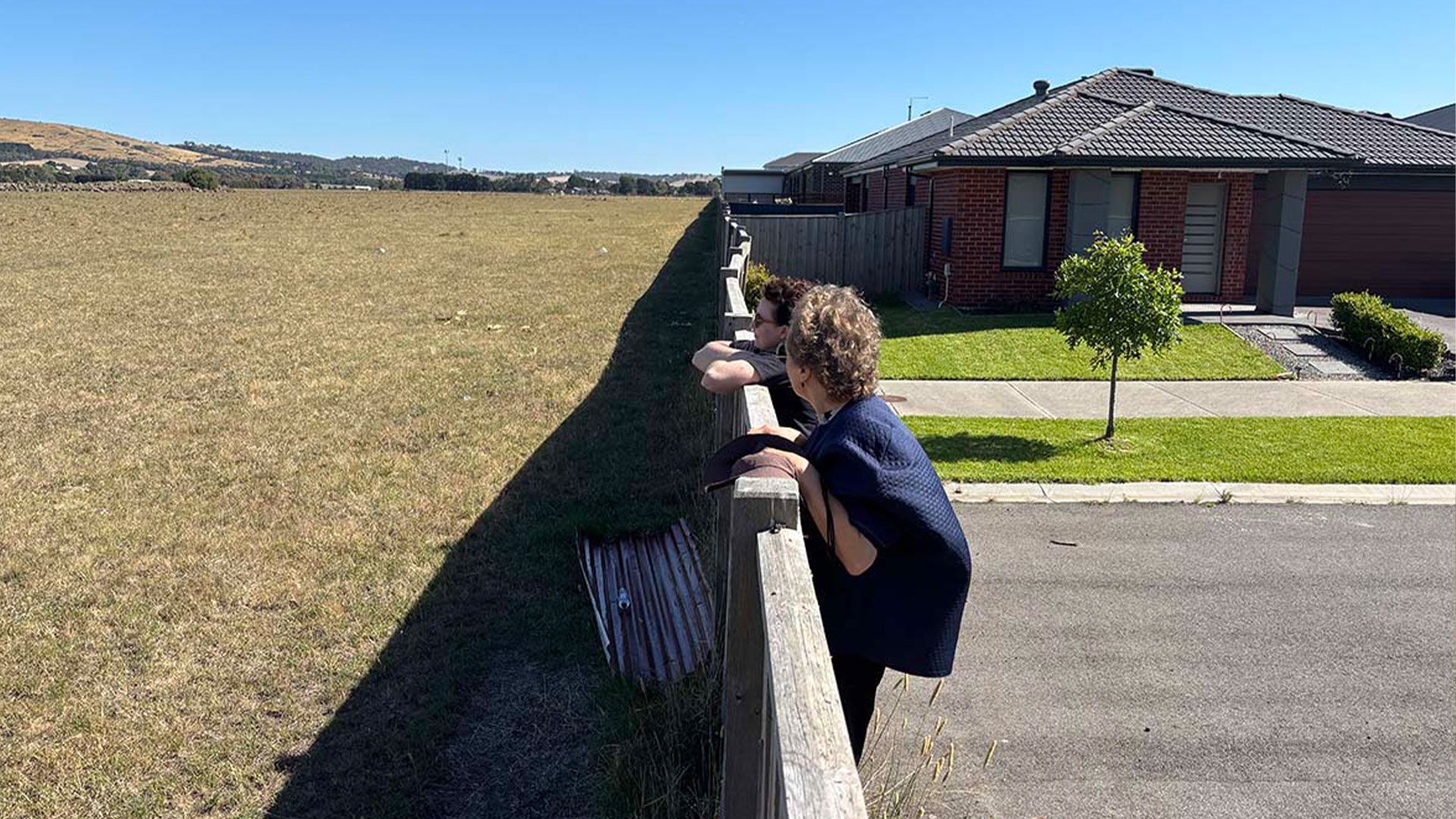
Monash experts Professor Louise Wright and Associate Professor Catherine Murphy (pictured) say Melbourne’s urban sprawl has come at a great cost to habitat and biodiversity. Photo: Nigel Bertram
Closer to home, a landmark project was brought to Australian audiences for the first time. The Playground Project opened in the southern hemisphere at the Incinerator Gallery with MADA as the educational partner, sparking vibrant public conversations about the future of play, specifically, how communities can reclaim public space, embrace healthy risk-taking, and reimagine recreation areas for a new generation.
Individual achievements also shone through: recent graduate Rebecca Mallaby won the AIA National Student Award for her project ‘Common Space’, while MADA researchers earned commendation from the Planning Institute of Australia for advancing more inclusive, circular urban economies.
And in the arena of public art, Professor Callum Morton’s striking installation ‘The Underneath’ at Gadigal Station helped secure its place on a global list of the world’s most beautiful train stations.
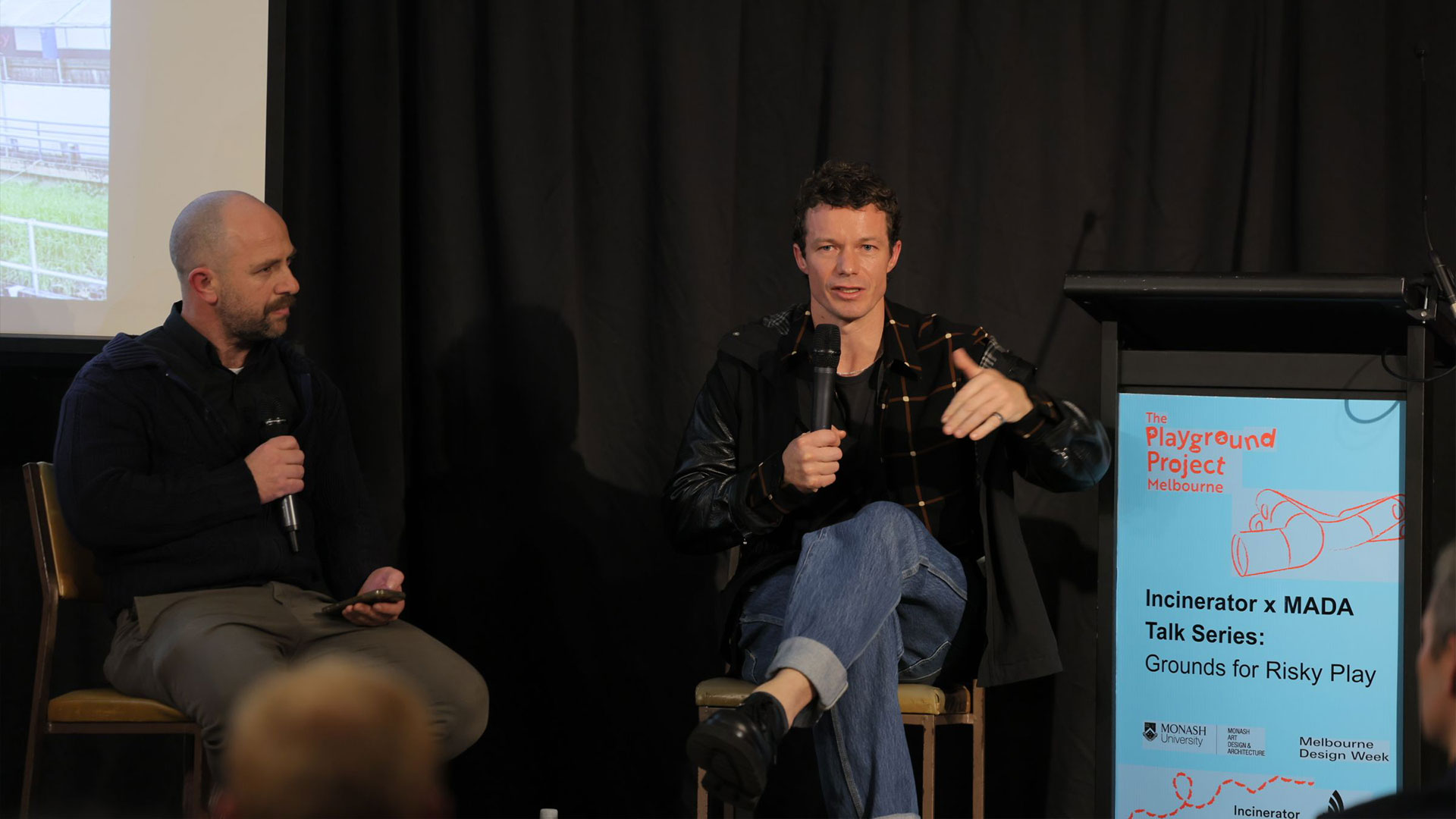
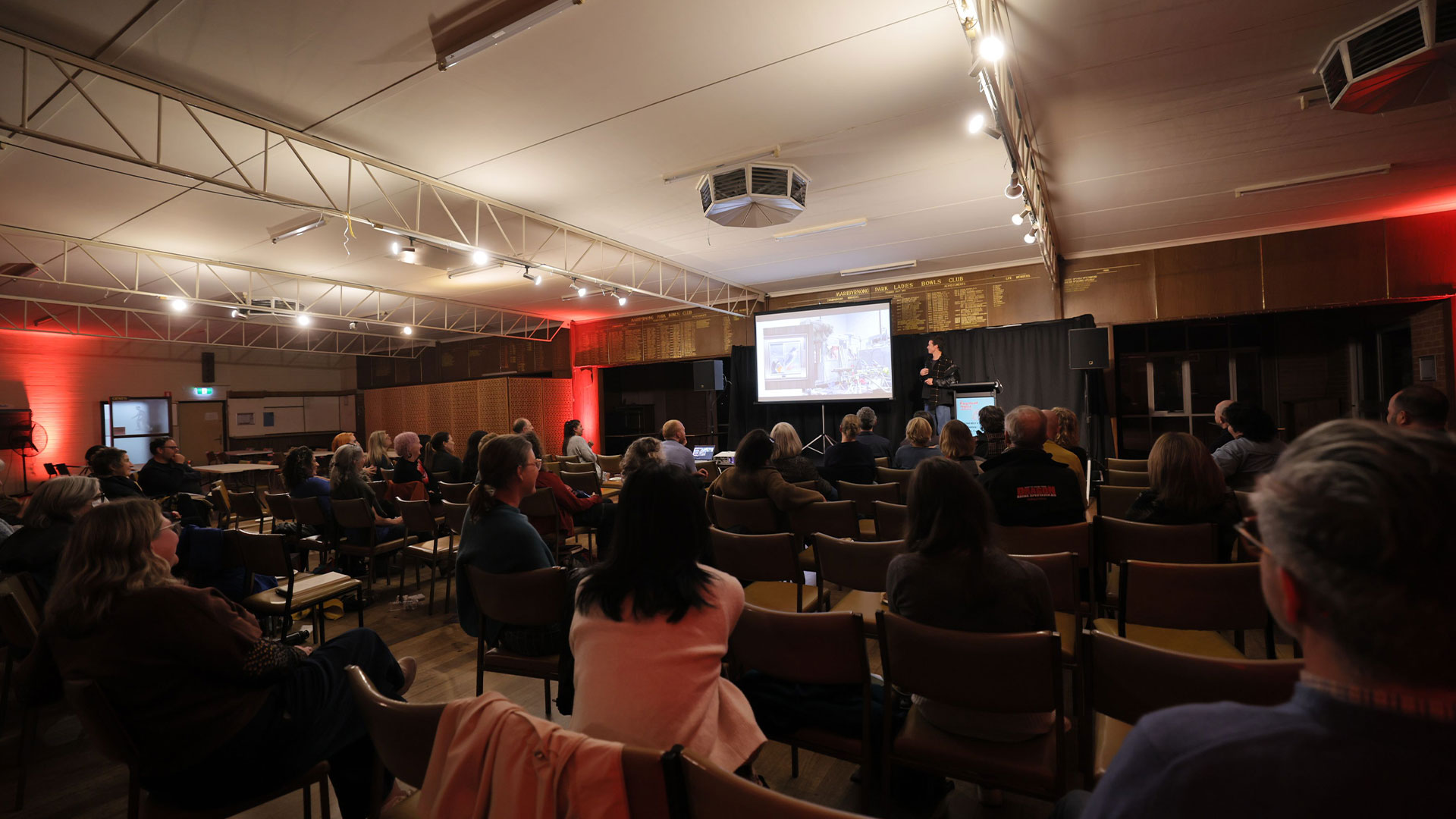
Discussion between Mike Hewson and Spiros Panigirakis at the first in our three-part Incinerator x MADA Talk Series.
Where art, design, health, and human experience intersect
MADA’s work at the intersection of art, design, health and human experience has been equally ambitious. In a major breakthrough for rural and remote healthcare, Design Health Collab has joined forces with Micro-X and Johns Hopkins University on a new ARPA-H–funded initiative to develop mobile CT scanners capable of travelling to underserved communities. Recognition followed at the 2025 Good Design Awards, where Dr Dion Tuckwell was honoured for research empowering teachers and learners, and Associate Professor Leah Heiss and her design team were celebrated for co-design initiatives that support frontline healthcare workers.

Illustration of full body CT mounted in PARADIGM vehicle
The Australian Institute of Architects also acknowledged MADA’s leadership in social equity. Professor Nicole Kalms received the AIA Equity and Diversity Award for her sustained advocacy and research into safer, more inclusive built environments for people of all genders.
In art, alumni Beth Maslin (BFA Hons), Callum McGrath (PhD), Jakharli Romanis (PhD) and Tommaso Nervegna-Reed (BFA Hons) secured coveted places in Gertrude Contemporary’s studio program, building on earlier successes including Gian Manik’s residency at Monash University’s Prato campus in Italy, Ebony Maurice-Wilmott and Marcus Payne’s inclusion in Perth Institute of Contemporary Art (PICA)’s ‘Hatched’ showcase, and curator Madeleine Steer’s contribution to MAMA’s nginha: gathered here.
Design graduates also excelled on the international stage: Decha Wigneshwara was named the Design Institute of Australia (DIA)’s 2025 Graduate of the Year, while Hanze Wang collected multiple global design awards for work centred on sustainability and wellbeing.
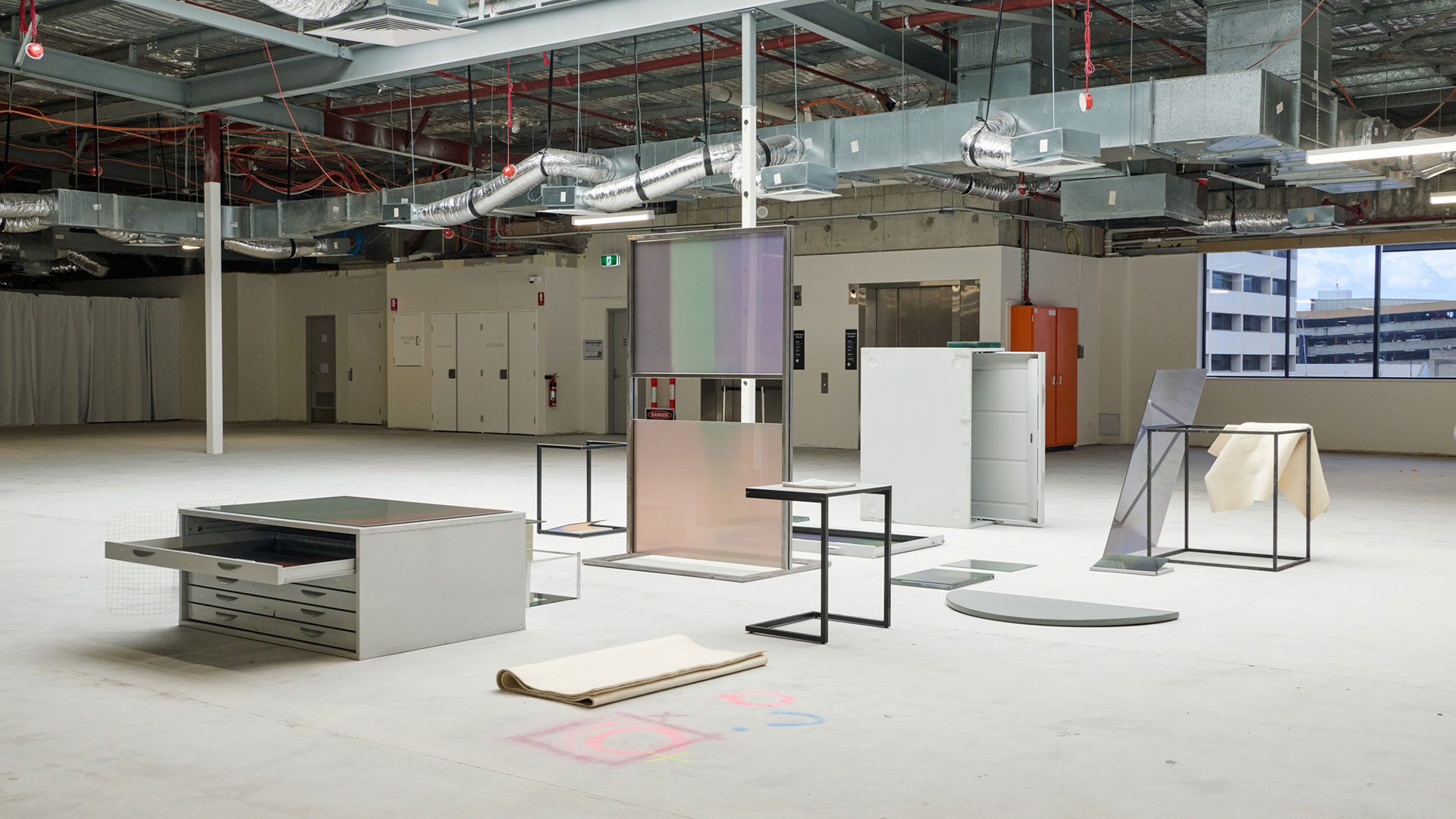
Ebony Maurice-Wilmott's installation at Perth Institute of Contemporary Art's ‘Hatched’ National Graduate Show 2025.
Anticipatory futures and emerging technologies
MADA’s growing attention to anticipatory futures and emerging technologies underscored another theme of the year. Associate Professor Leah Heiss led the development of a regionally informed vision for an AI-enabled living evidence platform, designed to ensure real-time health research across South-East Asia and the Western Pacific reflects local needs.
Professor Shanti Sumartojo’s work highlighted the need for co-designed policy to manage robots in public spaces, while in architecture, a partnership with Jackson Clements Burrows Architects, led by Associate Professor Duncan Maxwell and Dr Camilo Cruz, will allow an embedded PhD candidate to examine how AI will transform practice and the skills needed for its adoption.
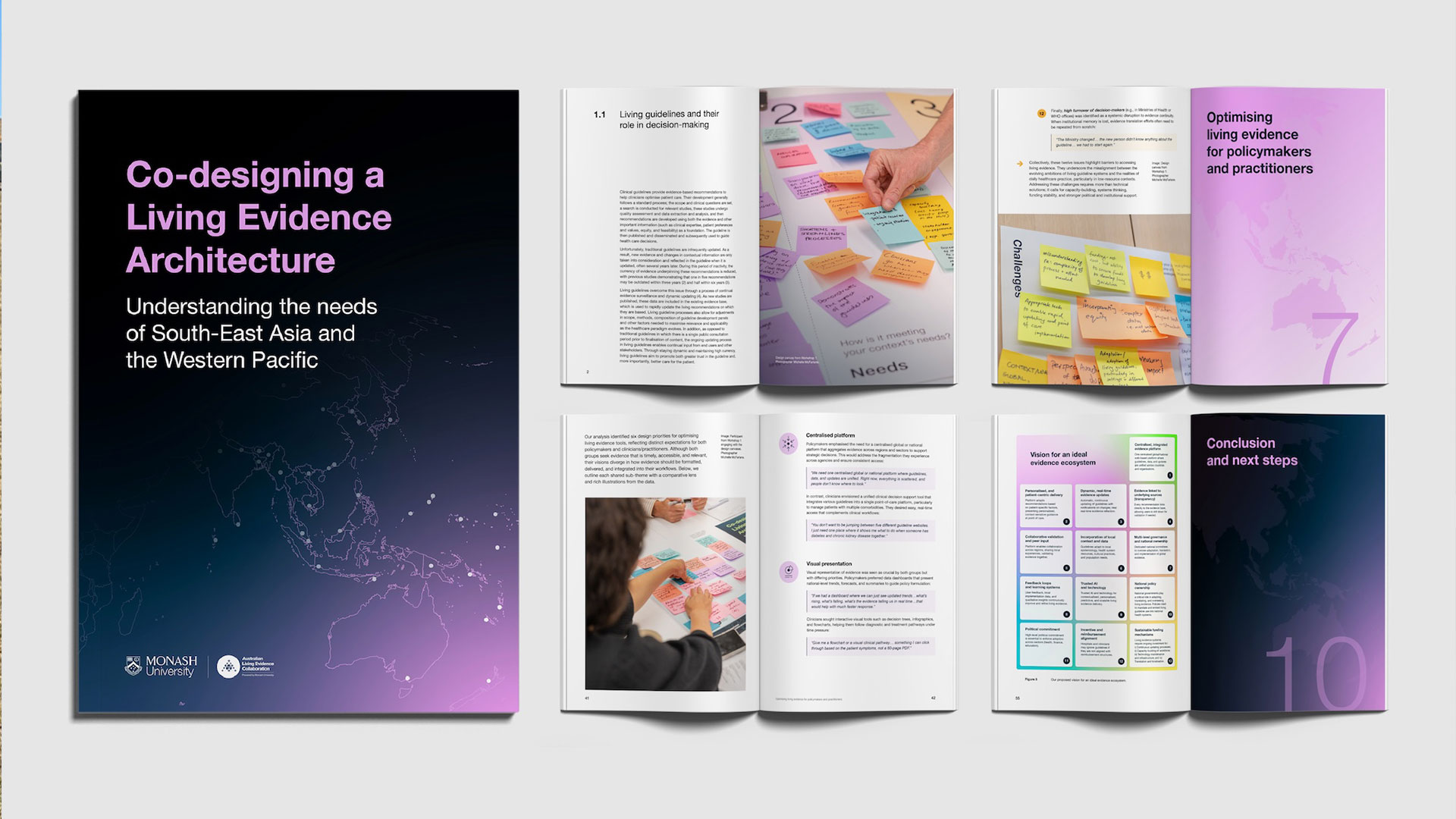
Living Evidence Architecture Report
Indigenous knowledge and leadership
Central to all these achievements is MADA’s commitment to elevating Indigenous knowledge and leadership. Quandamooka and Wurundjeri man, architect Bradley Kerr, contributed to the first Indigenous-led Australian pavilion at the 2025 Venice Architecture Biennale, creating a participatory installation that reimagines the idea of home through the lens of Country.
Professor Brian Martin and the Wominjeka Djeembana Research Lab launched Relational Return, an initiative focused on the repatriation of cultural materials .
Dr Desirée Hernandez Ibinarriaga also part of the Wominjeka Djeembana Research Lab, released her groundbreaking new book, Decolonising and Indigenising Design, offering a powerful reimagining of how Indigenous futures can be centred across creative disciplines.
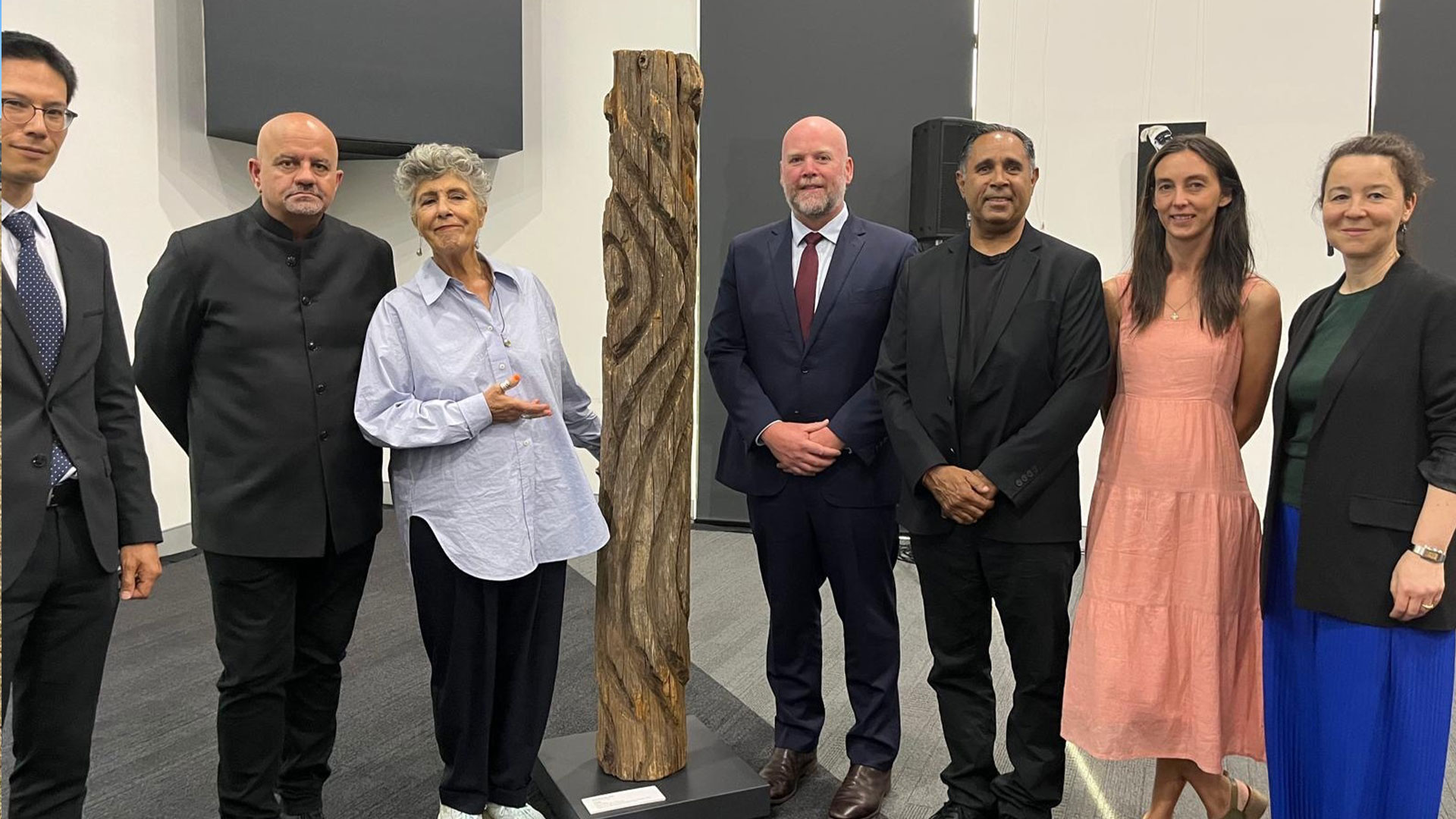
Left to right: Swiss Ambassador to Australia Nikolas Stürchler Gonzenbach, Professor Brian Martin, Professor N’arweet Carolyn Briggs AM, Professor Tristan Kennedy, Dr Brad Webb, Director of Indigenous Research Ebony Henderson, and curator for Oceania at the Museum der Kulturen Basel Beatrice Voirol.