
Financial Decision Making
Making financial decisions is an essential part of everyday life, and a strong grasp of financial mathematics provides the foundation for making informed choices. This includes selecting the most suitable purchasing method, determining which products provide the best value for money, or identifying the best options for loans and investments.
Use this page to revise the following concepts of financial decision making:
Purchase options
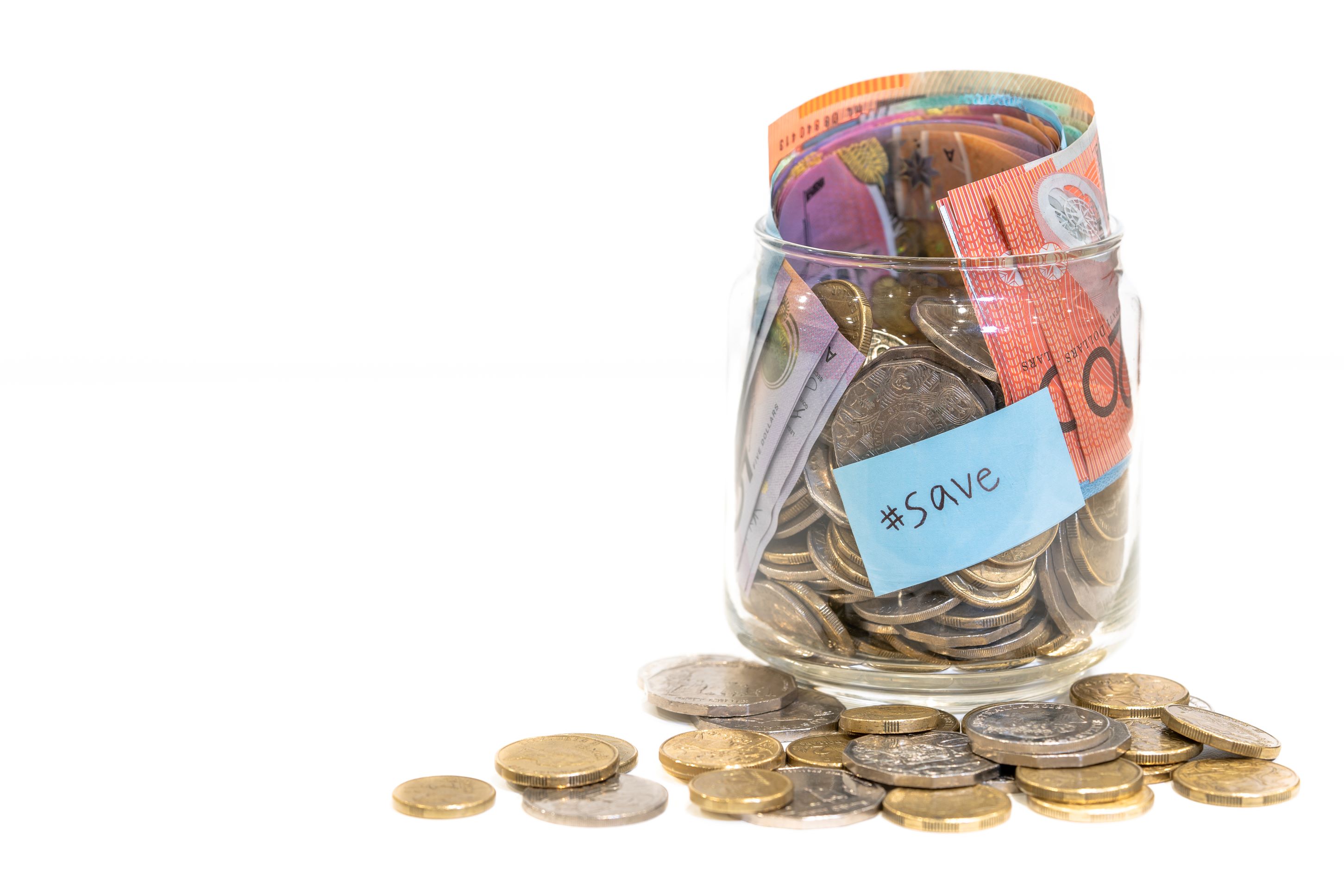
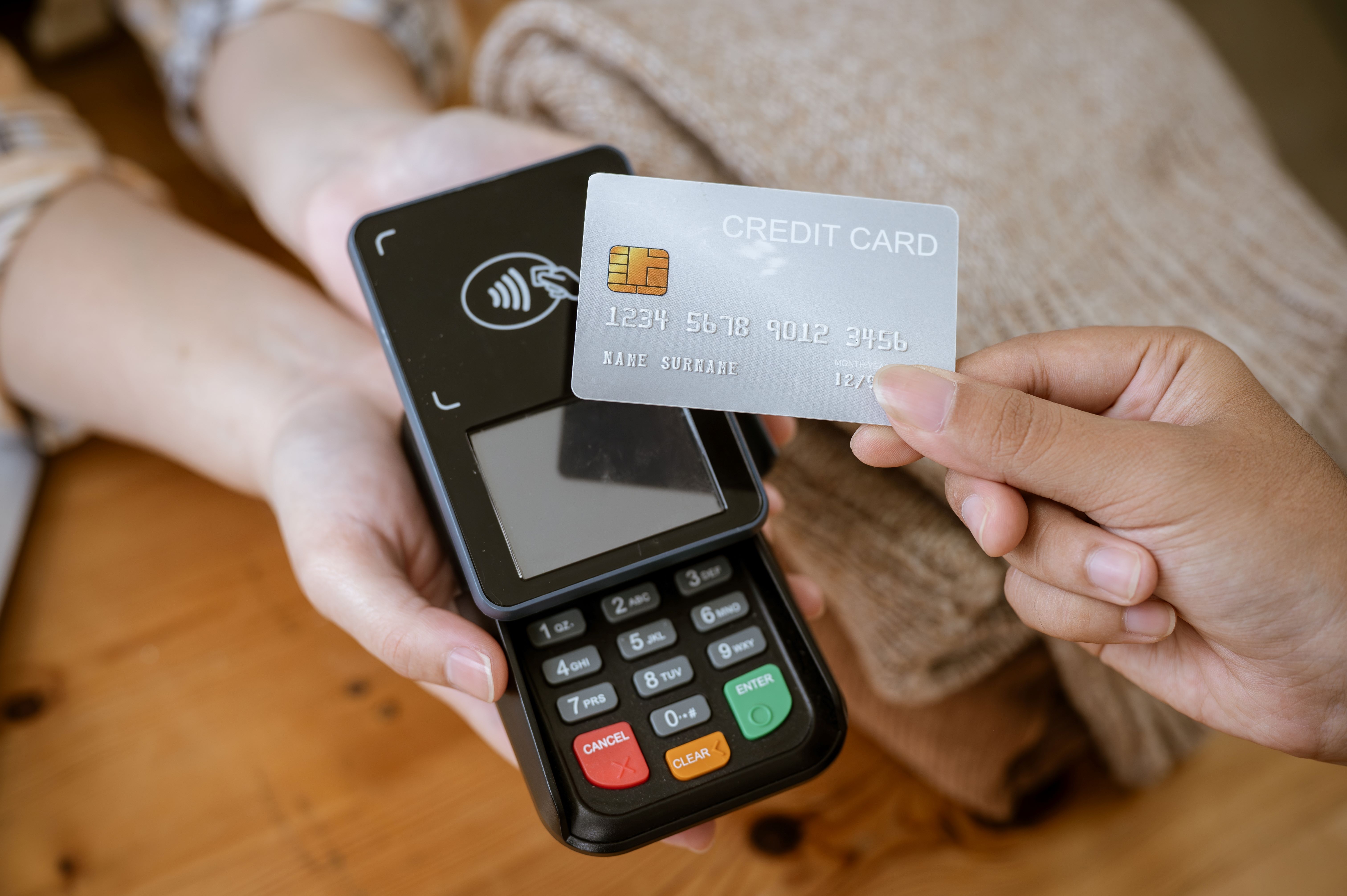
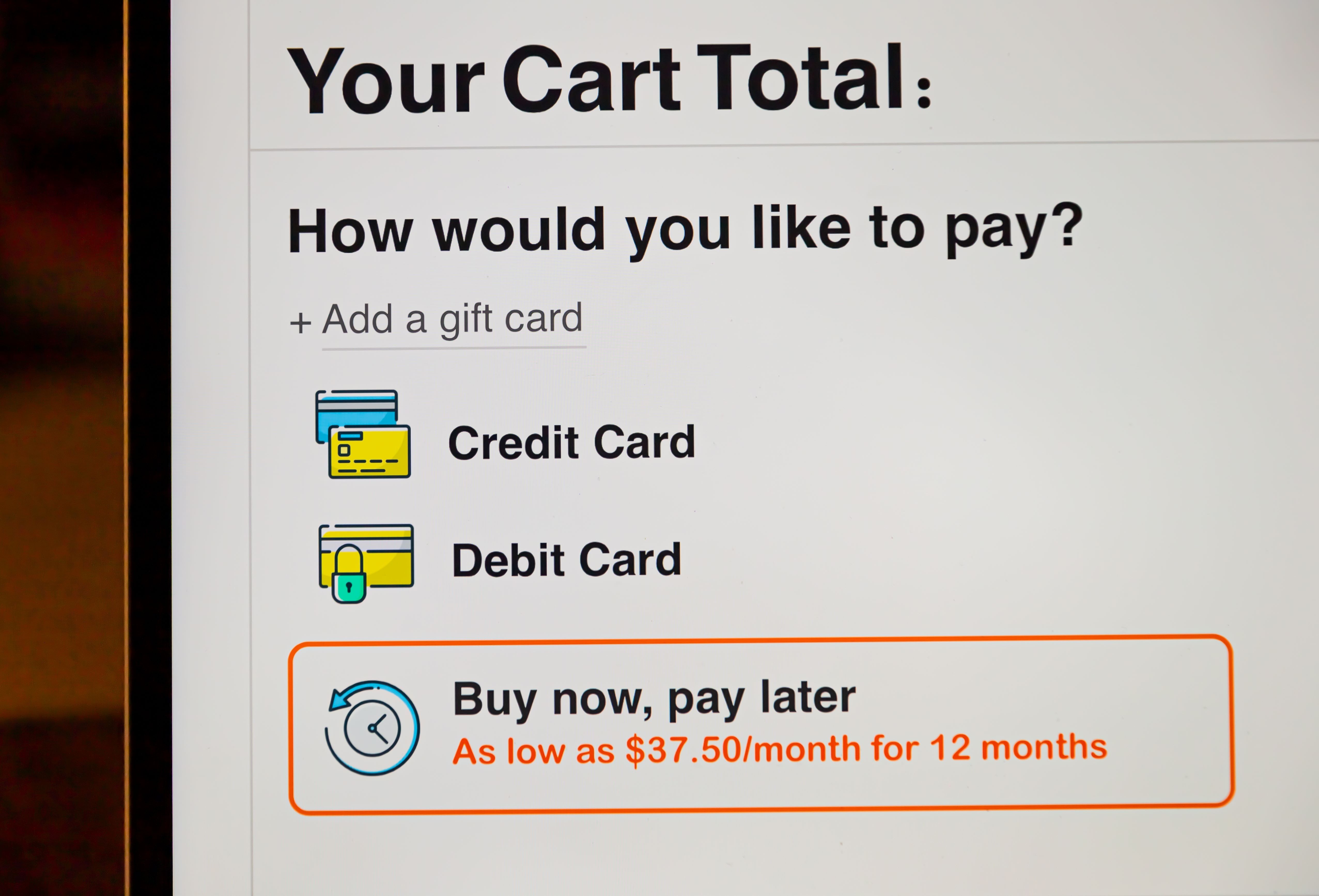
In the modern world, an ever-increasing number of purchasing options are becoming available. Some of the most common purchasing options include cash payments, credit and debit cards, personal loans and buy now and pay later schemes. Other specific purchasing options such as mortgages for financing the purchase of a house or leasing arrangements can be explored further independently for a deeper understanding.

Unit cost
Unit cost refers to determining the cost or value of a single unit of a purchase. It provides a way to assess the relative cost-effectiveness of a product or service. The form of the unit can depend on the type and purpose of the purchase. For example, when purchasing coffee beans:
- For a home consumer, the unit cost may be expressed as the price per gram. This allows for the comparison between different coffee beans, especially when packaged in varying amounts. For instance, comparing \(1\mathrm{~kg}\) for \(\$50\) with \(750\mathrm{~g}\) for \(\$35\).
- The unit cost for a coffee shop may be the price per cup of coffee. This may be more relevant in determining the profit margins.
To calculate the unit cost of a product or service, we can use the following formula:
\[\text{Unit Cost} = \frac{\text{Total cost}}{\text{Number of units}}\]
Worked Example
Determine which of the coffee beans provides better value for money by calculating the unit cost:
- Coffee bean 1: \(1\mathrm{~kg}\) for \(\$50\)
- Coffee bean 2: \(750\mathrm{~g}\) for \(\$35\)
Determine the units to compare – could be grams, \(100\) grams, kilograms. For this instance, grams will be used as the comparison.
Calculate the unit cost of coffee bean 1
\[\text{Unit cost} = \frac{50}{1000} = 0.05\]
Calculate the unit cost of coffee bean 2
\[\text{Unit cost} = \frac{35}{750} = 0.047\]
Coffee bean 1 costs \(\$0.05\) per gram, and coffee bean 2 costs \(\$0.047\) per gram. Therefore, coffee bean 2 provides the better value for money option.
Check your understanding
View

Nominal and effective interest rates
Nominal interest rates refer to the stated interest rate per year without considering the compounding effects. Effective interest rates refer to the true annual interest rate incorporating the compounding effects. The effective interest rate can be thought of as the equivalent simple interest rate that would yield the same amount of interest as the compounding interest rate.
The effective interest rate can be calculated from the nominal interest rate using the following formula:
\[r_\text{eff} = \left(\left(1 + \frac{\frac{r}{m}}{100}\right)^{m} - 1\right)\ \times\ 100\]
Where:
- \(r_\text{eff}\) is the effective interest rate
- \(r\) is the nominal interest rate
- \(m\) is number of compounding periods
Worked Example
Determine the effective interest rate for a loan accruing compound interest at a rate of \(3.6\%\text{ p.a.}\) compounding monthly.
Determine the given variables
\[\begin{align}r &= 3.6\% \\ m &= 12\end{align}\]
Substitute into the formula
\[\begin{align}r_\text{eff} &= \left(\left(1 + \frac{\frac{3.6}{12}}{100}\right)^{12} - 1\right)\ \times\ 100 \\ &= 3.6599\ldots \\ &\approx 3.66\%\end{align}\]
The effective interest rate would be \(3.66\%\) compared with the nominal interest rate of \(3.6\%\)