Pythagoras theorem
Pythagoras' Theorem (also called the Pythagorean theorem) has been used from antiquity to modern times to solve practical problems in situations from surveying, construction and design that involve right-angled triangles, such as connected beams, posts and rafters in house roofs.
Use this page to revise the following concepts within Pythagoras' theorem:
Defining Pythagoras' Theorem
Pythagoras' Theorem states that for a right-angled triangle, the sum of the areas of the squares on the two shorter sides (called the legs of the triangle), is equal to the area of the square of the longest side (called the hypotenuse of the triangle). The theorem says that:
Where:
- \(a\) and \(b\) are the legs of a right-angled triangle
- \(c\) is the hypotenuse of a right-angled triangle
Note that the hypotenuse is the side opposite the right angle. The basis of Pythagoras' theorem relates the measurement of the area of squares with the side lengths of a right-angled triangle, as illustrated in the following diagram:

Pythagoras' theorem provides the basis for:
- calculating lengths of sides of right-angled triangles
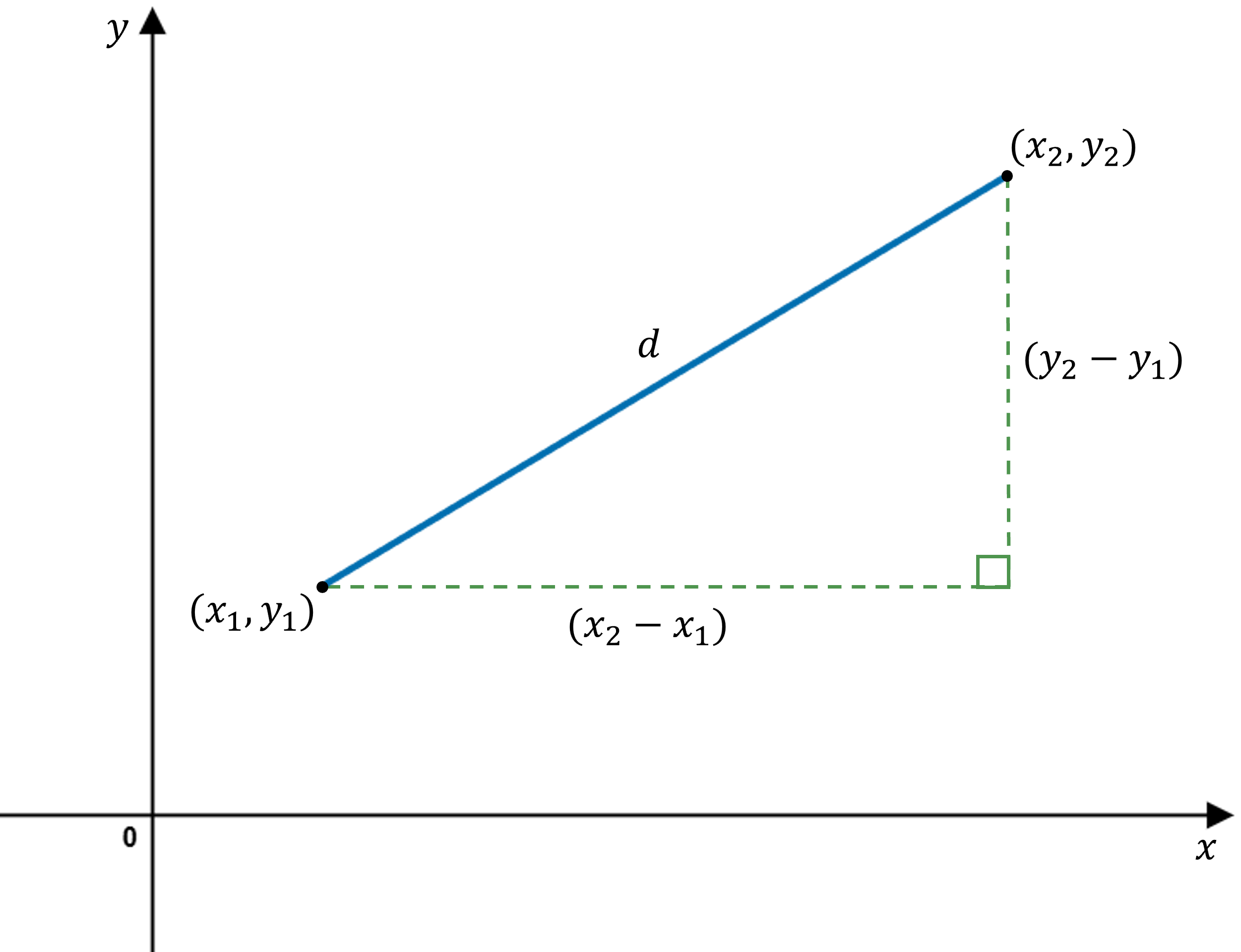
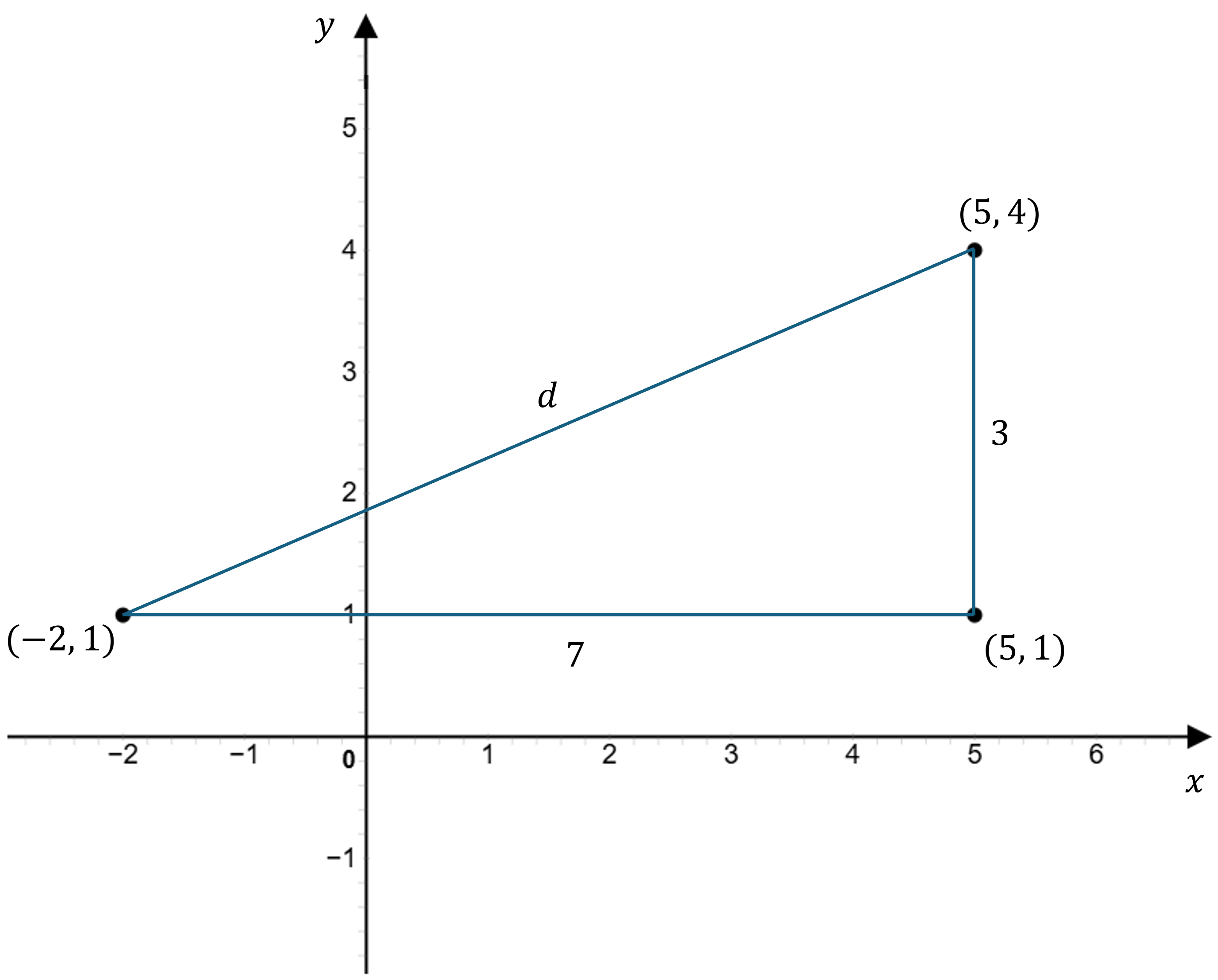
- calculating the distance between points in the Cartesian coordinate plane.
Applying the theorem
The application of Pythagoras' theorem has the following steps:
- Draw a right-angled triangle showing the two known lengths and the length to be determined
- Substitute the known values into the equation \(a^2 + b^2 = c^2\)
- Solve the equation for the unknown value, accepting only positive square root values.
- For a practical problem, approximate the answer to an accuracy suitable for the context