
Geometric Sequences
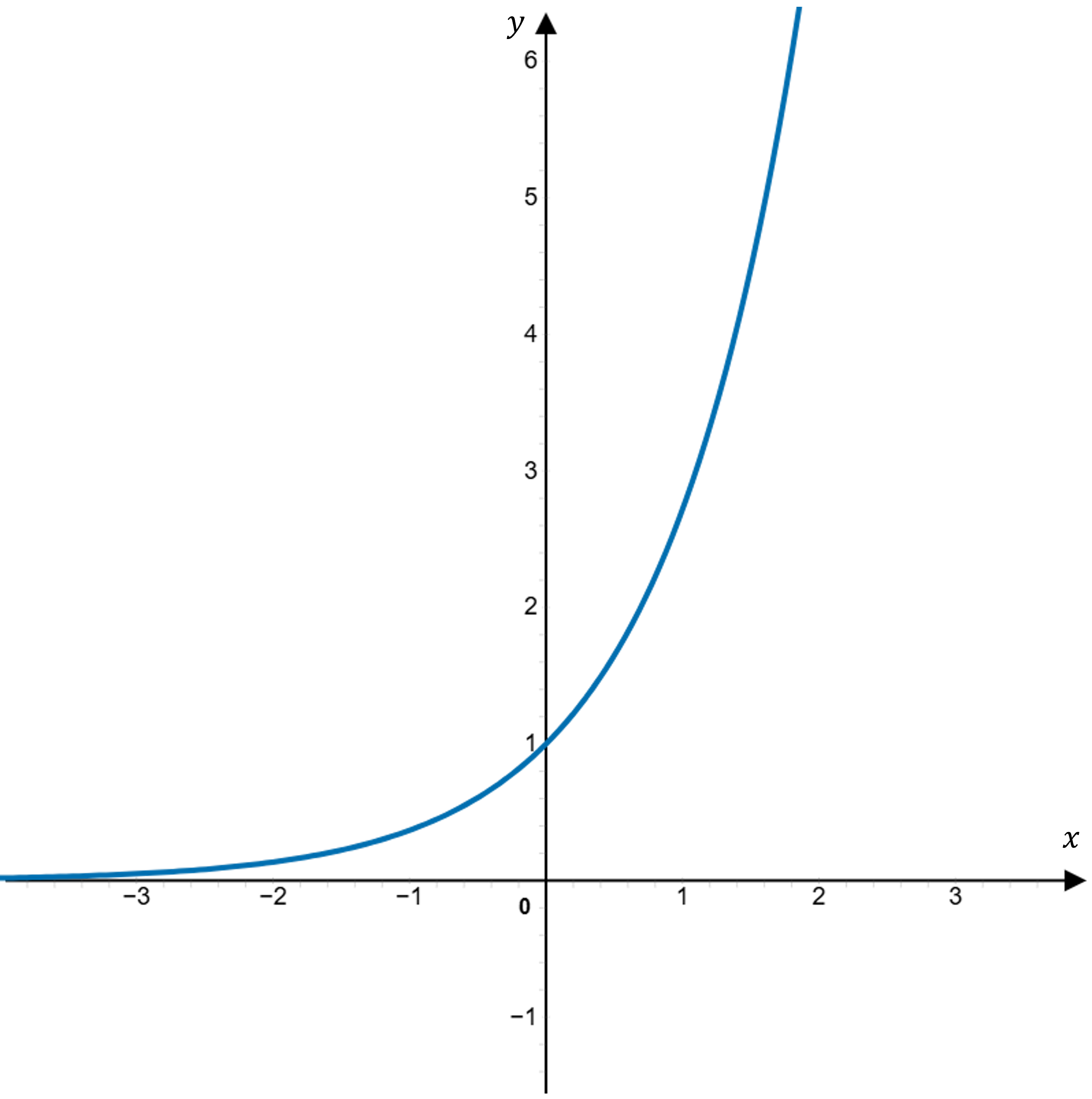
A geometric sequence is a sequence of numbers where each number is obtained by multiplying the previous number by a constant value. Geometric sequences are non-linear. That is, when they’re graphed, they form a curve rather than a straight line, and the nature of this curve depends on the constant.
Use this page to revise the following concepts within Geometric Sequences:
Geometric sequences are used in a wide range of real-world applications due to their ability to model exponential changes. They may be used in the calculation of compound interest in finance, or modelling of exponential growth or decay in science.
Common ratios
In a geometric sequence, each term after the first is found by multiplying the previous term by a fixed, non-zero number called the common ratio. The first term is referred to as \(a\) and the common ratio is referred to as \(r\) .
Worked Example
Determine which of the following sequences are geometric sequences, and for those sequences which are geometric, state the values of \(a\) and \(r\).
Example 1
\(20, 40, 80, 160, 320 , …\)
To determine whether this sequence is geometric, we divide each term after the first by the previous term to see if the ratio remains the same.
\[\begin{align}\frac{40}{20} &= 2 \\ \frac{80}{40} &= 2\end{align}\]
The ratios between consecutive terms are all \(2\), so this is a geometric sequence.
\[a = 20, r = 2\]
Example 2
\(2, 4, 6, 8, 10, …\)
Determine if the ratio is the same between terms.
\[\begin{align}\frac{4}{2} &= 2 \\ \frac{6}{4} &= \frac{3}{2}\end{align}\]
The ratios between consecutive terms are different, so this is not a geometric sequence.
Equations representing geometric sequences
Similar to arithmetic sequences, the \(n\)th term of a geometric sequence can be found using a formula.
The \(n\)th term of a geometric sequences is given by the formula:
\[u_{n} = ar^n\]
where:
- \(u_n\) is the value of nth term after the first
- \(a\) is the first term of the sequence (corresponding with \(u_0\))
- \(r\) is the common ratio
- \(n\) is the position of the term in the sequence (with \(n = 0\) being the position of the initial term)
Note that the position of the first term in the sequence is \(n = 0\), and \(a = u_0\). Since any non-zero number raised to the power of \(0 = 1\),
\[u_0 = a \times r^0 = a\]
So in the geometric sequence \(3, 6, 12, 24… u_0= 3, u_1 = 6\), and so on.
Worked Example
Determine the equations that represent the following geometric sequences.
Example 1
\(7, 28, 112, 448, 1792, …\)
First, determine the values of \(a\) and \(r\).
\(a = 7\), since it is the first term.
To determine the common ratio, we divide one number in the sequence by the preceding number.
\[\begin{align}r &= \frac{28}{7} = 4 \\ u_n &= 7 \times 4^n\end{align}\]
This can be verified using known values from the sequence. For example, \(u_4 = 1792\), so substituting \(n = 4\) into equation
\[u_4 = 7 \times 4^4 = 7 \times 256 = 1792\]
Example 2
\(8, − 4, 2, − 1, \frac{1}{2}\)
First, determine the values of \(a\) and \(r\).
\(a = 8\), since it is the first term.
\(r\) is found by dividing a term by the preceding term
\[r = \frac{-4}{8} = \frac{-1}{2}\]
Substituting \(a\) and \(r\) into the general formula, we get
\[u_n = 8 \times \left(\frac{-1}{2}\right)^{n}\]
his can be verified. It is known that \(u_3 = -1\), so
\[u_3 = 8 \times \left(\frac{-1}{2}\right)^{3} = 8 \times \left(-\frac{1}{8}\right) = -1\]
