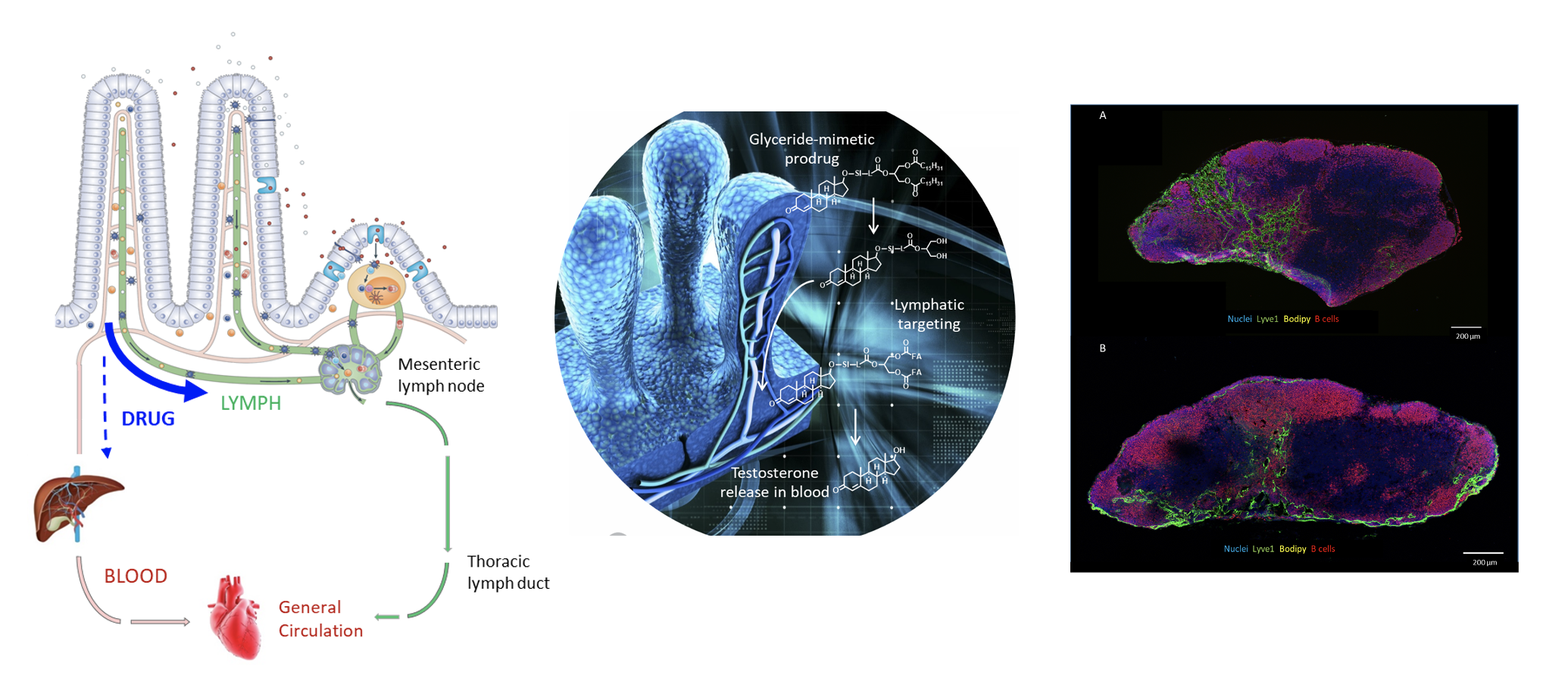
The group has published widely on drug targeting to the lymphatic system. This includes some of the first papers to document the impact of different lipids on drug transport into the lymph after oral administration. Most recently we developed a prodrug technology that transforms drugs that do not enter the lymph into prodrugs where a significant proportion of the dose is transported into the intestinal lymphatics after oral administration and is subsequently released either into the lymph nodes and lymphocytes or the systemic blood. We have shown that this can dramatically improve (>10 fold) the bioavailability of drugs such as testosterone where bioavailability is limited by first pass metabolism in the liver. For drugs that act via lymphocytes, and especially lymphocytes in the gut, this technology also provides targeted delivery to the mesenteric lymph node with attendant benefits in immuomodulation. We have also recently shown significant benefits in targeting dysfunctional mesenteric lymphatics in obesity. Our current work continues to looks at further developing the prodrug platform and in application to a range of diseases.
This prodrug technology has been patented and was initially licenced to PureTech Health (Boston). The first clinical candidate in this program is a prodrug of allopregnanolone (SPT-300). Allopregnanolone is currently marketed for post-partum depression, however utility is significantly limited by a lack of oral bioavailability and as such it must be administered in a hospital setting as a 60 hr continuous intravenous infusion. Our prodrug technology allows allopregnanolone to be administered orally rather than given intravenously. Topline Phase 1 data were released at the end of 2022 and provide the first clinical validation of the technology. A subsequent Phase 2a study in a model of anxiety read out in 2023 and showed significant reductions in the stress marker cortisol in volunteers given a stress test and administered the allopregnanolone prodrug. In 2024 the Glyph technology was spun out of PureTech into a new company Seaport Therapeutics, which has subsequently raised $355m (USD) to fund an expanded clinical program. A second clinical candidate, a prodrug of agomelatine (SPT-320), was announced at the same time and is expected to enter clinical development in 2025.
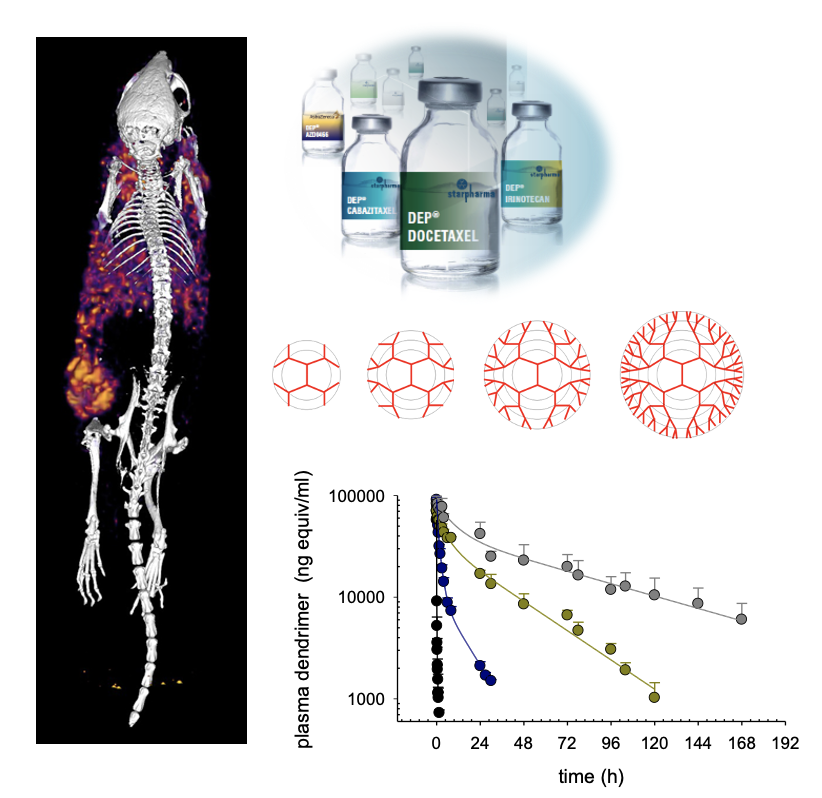
The Porter group has long standing interests in the design and understanding of nanoparticle-based medicines. The most significant contributions we have made are via a long-standing collaboration with the Melbourne-based biotech company Starpharma. We have collaborated with Starpharma for more than 20 years to develop PEGylated polylysine dendrimers as improved delivery systems for drugs, radiopharmaceuticals and imaging agents. Our initial work examined the impact of PEGylaton on dendrimer disposition and this paved the way for a series of studies exploring the impact of dendrimer size, structure and drug conjugation methods on utility as targeted drug delivery systems. The work has ultimately led to >20 publications and three separate patent families that relate to Starpharma’s ‘DEP’ drug delivery platform that has been progressed through Phase II clinical trial for docetaxel, cabazitaxel and irinotecan. Most recently my group has also become interested in the development of mRNA therapeutics and lipid nanoparticles to deliver these cargoes, largely via collaboration with Angus Johnston, Colin Pouton and Natalie Trevaskis and through the Monash-Moderna Quantitative Pharmacology Accelerator collaboration with Moderna.
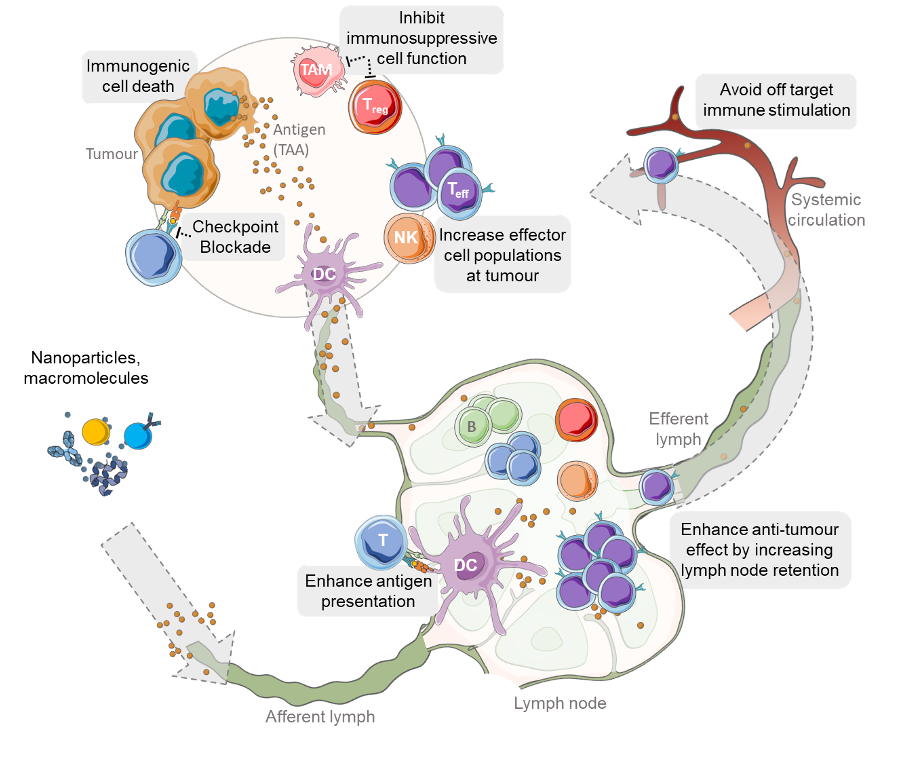
Our broad interests in lymphatic transport extend to a better understanding of the role of lymphatic transport from subcutaneous (SC) injection sites and we published many of the first papers to document the relationship between the size of proteins and nanoparticles and transport of into the lymph from the interstitium. In parallel we have a long-standing collaboration with Halozyme, a San Diego based biotechnology company that is developing enzymes such as recombinant human hyaluronidase (PH20), that break down the structure of hyaluronan, a major structural component of the interstitium. Coadministration with PH20 allows much larger volumes to be delivered subcutaneously, allowing a switch from intravenous administration to subcutaneous injection, enhanced targeting to the lymphatics and potentially increasing the utility of therapeutics with lymph-resident targets.