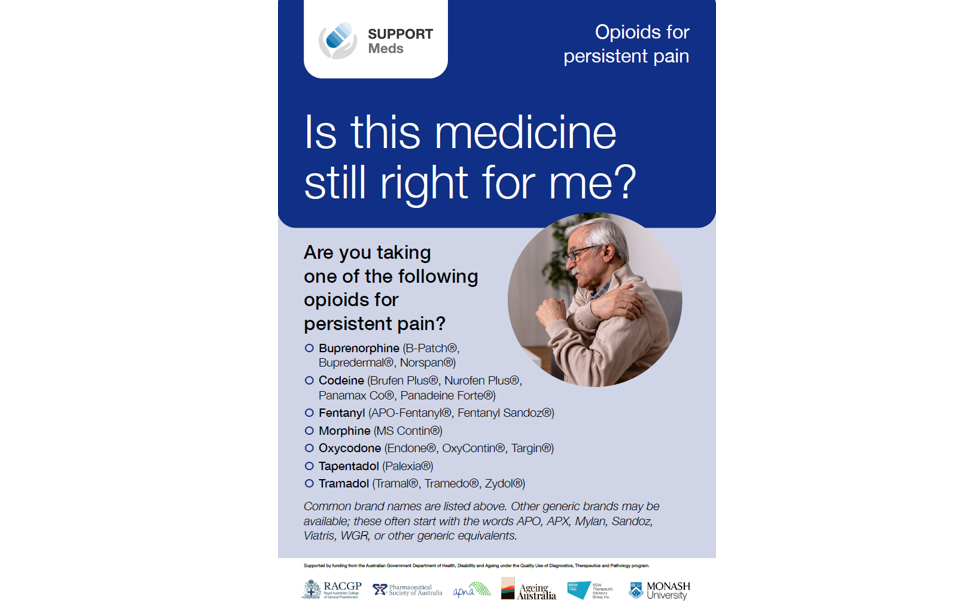
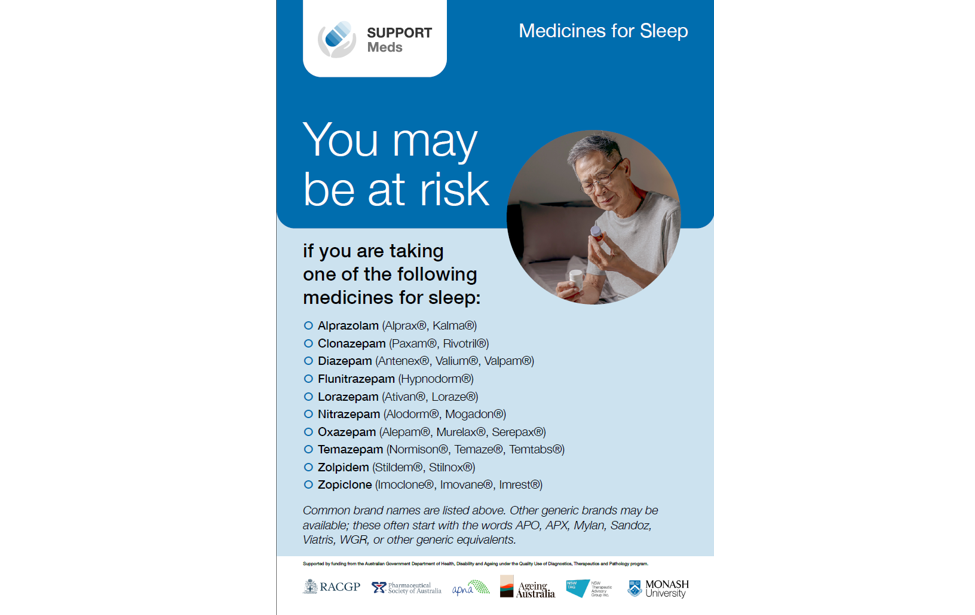
Grounded in behaviour change theory, EMPOWER (Eliminating Medications through Patient Ownership of End Results) brochures don't just provide information—they actively prompt patients to question long-held assumptions about their medicines, and encourage them to talk to their healthcare professional.1
1. Tannenbaum C, Martin P, Tamblyn R, Benedetti A, Ahmed S. Reduction of inappropriate benzodiazepine prescriptions among older adults through direct patient education: the EMPOWER cluster randomized trial. JAMA Intern Med. 2014;174(6):890-8. DOI: 10.1001/jamainternmed.2014.949
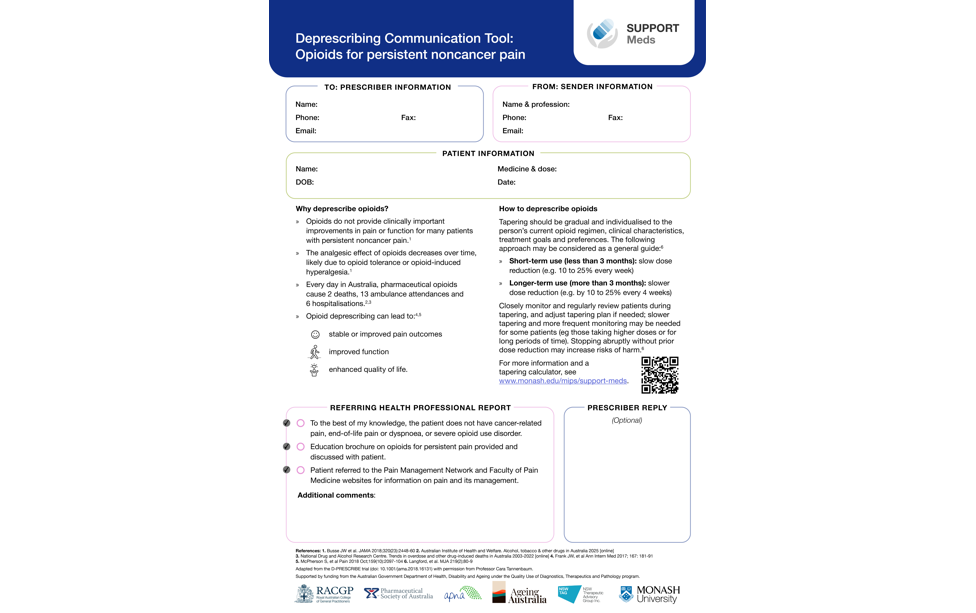
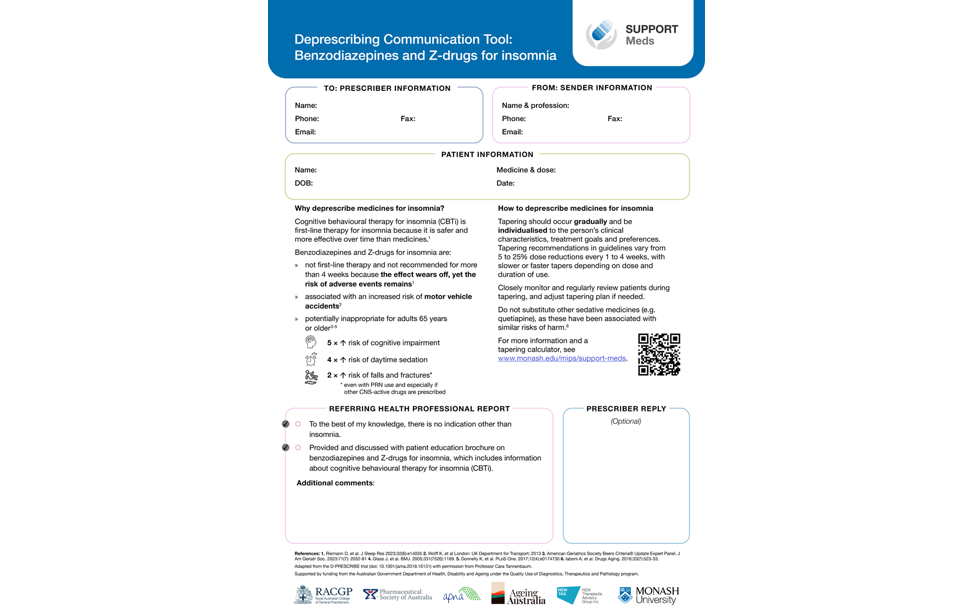
Effective deprescribing is a team effort. But clinical inertia can often get in the way; this can stem from a lack of shared information, uncertainty, reluctance to change a medicine started by another clinician, or concerns about disrupting established patient–clinician relationships.
Using a structured communication tool between primary care providers is a proven way to overcome these barriers.2
2. Martin P, Tamblyn R, Benedetti A, Ahmed S, Tannenbaum C. Effect of a Pharmacist-Led Educational Intervention on Inappropriate Medication Prescriptions in Older Adults: The D-PRESCRIBE Randomized Clinical Trial. JAMA. 2018;320(18):1889-98. DOI: 10.1001/jama.2018.16131
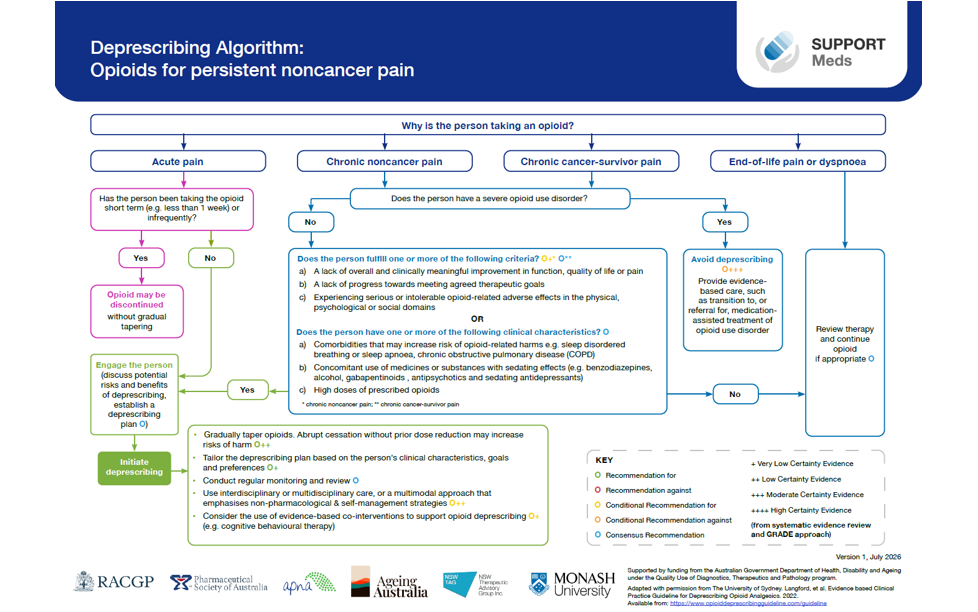
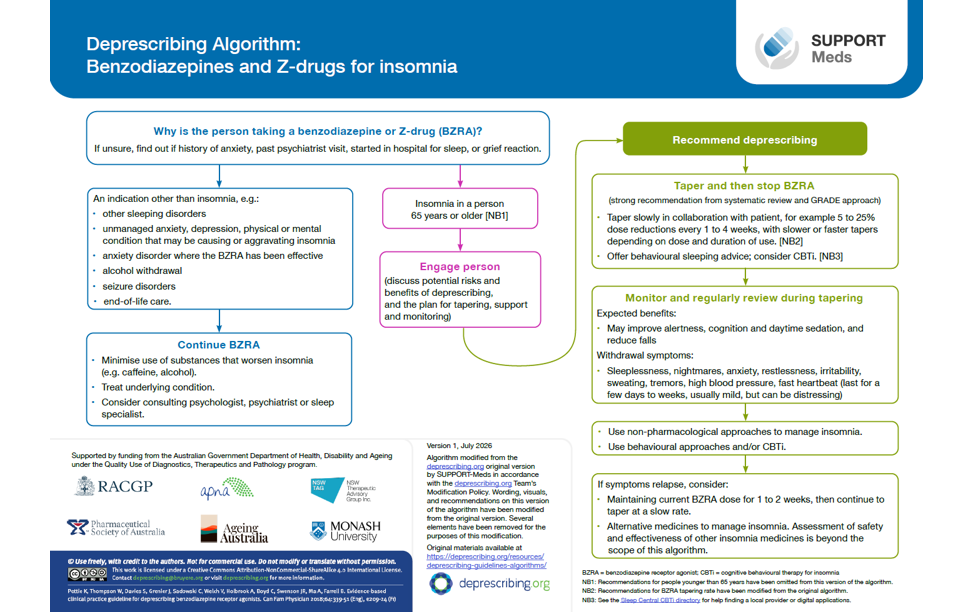
These algorithms, based on published evidence-based guidelines, can help you safely deprescribe for your patients:
Check out our series of short videos designed to guide you through the deprescribing process. Perfect for busy GPs, pharmacists, and nurses, these bite-sized guides provide practical takeaways you can use in your practice today.