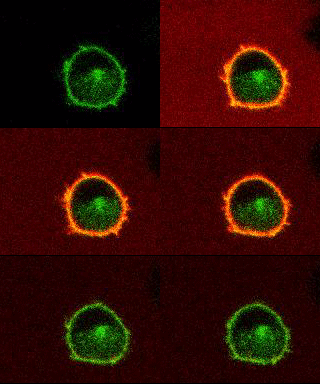
We use Fluorescence Resonance Energy Transfer (FRET) to quantify ligand-receptor interactions.
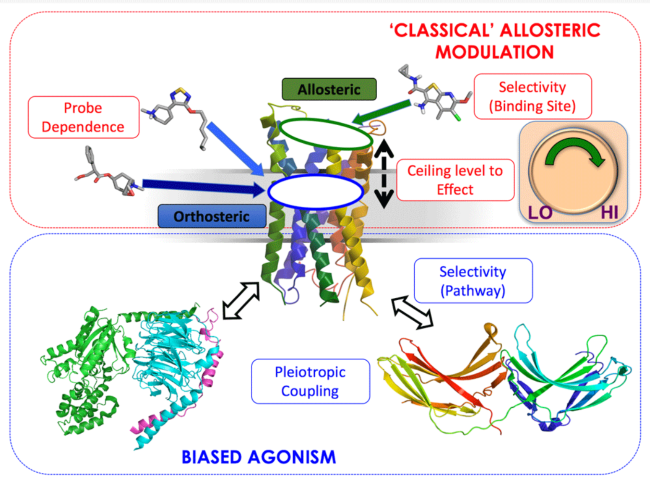
We have numerous projects that sit at the interface of chemistry and biology, using small-molecules to interrogate GPCRs and their associated signalling pathways. These studies focus on the generation of novel chemical probes as tools to illuminate biological processes, as well as the discovery of potential therapeutic leads that can progress in drug discovery programs.
Our main focus in this regard is in the optimisation of structure-activity relationships underlying allosteric modulators and biased agonist activity. To achieve this, we combine analytical pharmacology with medicinal chemistry, resonance energy transfer techniques and multi-tiered signal transduction assays that encompass a broad range of cellular activities, including assays of intracellular second messengers, protein-protein interactions, trafficking, reporter genes, whole cell metabolism and morphological changes. These are performed in both recombinant and native cells, with a view to predicting optimal behaviours for perturbing whole organ systems in a therapeutic setting.

Left: Delineating the structure-activity relationships of allosteric modulators of the M1 muscarinic acetylcholine receptor. Right: A rationally designed 'bitopic' ligand of the adenosine A1 receptor, comprised of the orthosteric agonist, adenosine, linked to a positive allosteric modulator. This hybrid molecule is a biased agonist.