
Research
Methods for protein synthesis and modification
Proteins are referred to as “the doing molecules” of biology, carrying out important cellular functions including structural roles, enzymatic activity, immune responses and hormonal activity. While the structure (and therefore function) of proteins is encoded in the genome, more than 70% of human proteins bear some type of modification which is added after translation on the ribosome (termed post-translational modifications).
These modifications play essential roles in regulating protein structure, function and stability and their study is therefore critical to understanding native protein regulation. However, accessing homogeneous samples of modified proteins remains challenging as biological expression produces heterogenous mixtures (if the modifications are even possible using model organisms).
We therefore rely on cutting-edge synthetic organic chemistry to allow access to these modified proteins specifically. We do this via two main strategies: 1) joining together modified fragments via ligation technologies or 2) undertaking late-stage modifications at specific sites on whole proteins. Both strategies enable precise incorporation of either native PTMs or designer modifications (e.g. fluorophores) for downstream evaluation.

Key publications:
Chemical Communications, 2017, 53, 5424-5427
Nature Protocols, 2019, 14, 2229-2257
Angewandte Chemie International Edition, 2022, 61, e202200163
Nature Communications, 2022, 13, 6885
Post-translational modification as regulators of anticoagulant protein function
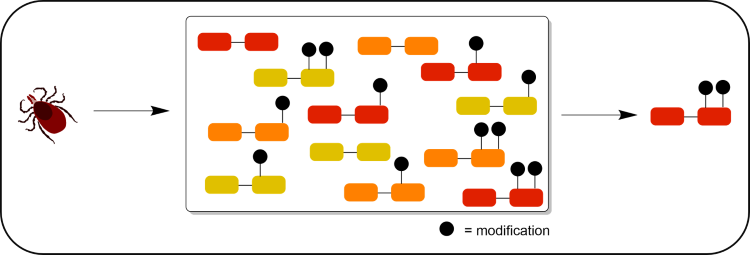
A PTM of particular interest in the lab is the addition of sulfate groups to the phenolic position of tyrosine residues which has been shown to be a key regulator of the potency of anticoagulant proteins from blood feeding organisms.
While nature uses this modification to allow insects access to their blood meals, we are looking at it to create potent and controllable therapeutic anticoagulants for use in clotting associated diseases such as stroke. Through the advanced synthetic methodologies highlighted above we can rapidly access large libraries of these proteins identified in nature, in order to find the best candidates for future evaluation.
Key publications:
ACS Central Science, 2018, 4, 468-476
Proceedings of the National Academy of Sciences USA, 2019, 116, 13873-13878
Angewandte Chemie International Edition, 2021, 60, 5348-5356
Accounts of Chemical Research, 2023, 56, 2688-2699
Peptide nucleic acids (PNA) as building blocks in molecular circuits
In living systems, there are complex networks of biomolecules designed to sense and respond to changes in the surrounding environment, allowing for nuanced, controlled and appropriate responses. However, the vast majority of therapeutic agents are administered in an “always-on” state, giving rise to the possibility for off-target effects and toxicity.
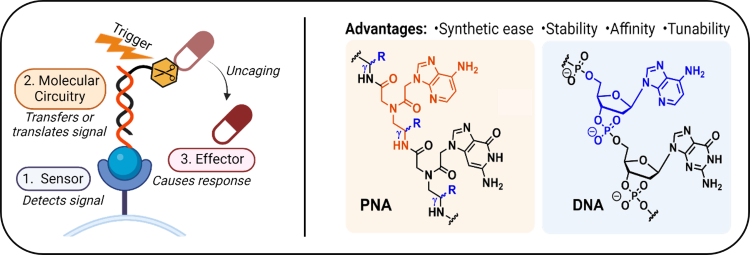
We are developing molecular circuits based on biomolecules to enable the delivery of therapeutic agents only as a direct response to specific cellular or environmental markers, with the aim to reduce patient side-effects and allow for the application of drug candidates which have unacceptable toxicity profiles in traditional administration.
These systems make particular use of peptide nucleic acids (PNA) which are mimics of native DNA or RNA, where the nucleobases are displayed on a peptide backbone. This substitution allows PNA to hybridise with DNA with higher affinity, whilst also demonstrating enhanced metabolic stability.
Key publications:
Journal of the American Chemical Society, 2021, 143, 4467-4482
Current Opinion in Chemical Biology, 2022, 66, 102104
Helvetica Chimica Acta, 2023, 106, e202300110
ChemPlusChem, 2024, 89, e202400305
ChemRxiv, 2025, doi: 10.26434/chemrxiv-2025-m8262