
Our Research
Transition-Metal Catalysis
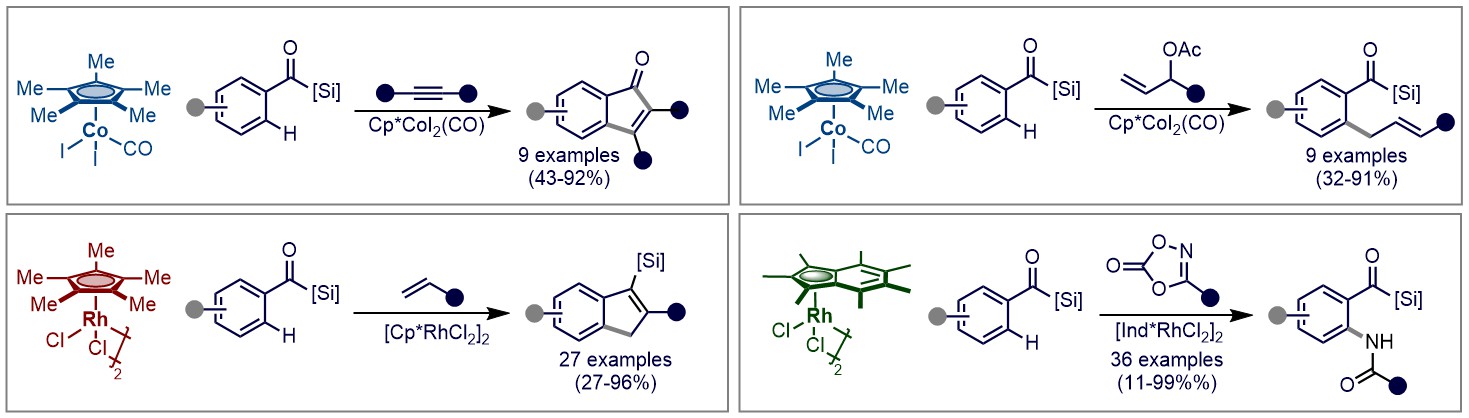
We are exploring the development of novel catalysts and catalytic systems that enable us to activate and functionalise typically inert C-H bonds. To achieve this, we are using a combination of catalyst screening, computational analysis and data science approaches to guide the design of new catalysts that deliver enhanced activity and selectivity.
We have discovered a series of new olefination, allylation, alkynylation, amidation and hydroarylation reactions using a variety of rhodium, ruthenium, iridium and cobalt-based catalytic systems. Applications of the new catalytic processes we have discovered include the late-stage functionalisation of pharmaceuticals, synthesis of drug conjugates and post-polymerisation modification.
Key Publications
Chemical Communications, 2021, 57, 7938–7941
Chemical Communications, 2022, 58, 12604–12607
Angewandte Chemie International Edition, 2023, 62, e202302175
Chemical Science, 2024, 15, 19328–19335
ACS Catalysis, 2025, 15, 6881–6894
Journal of the American Chemical Society, 2025, 147, 24734–24746
ACS Catalysis, 2026, 16, 4815–4826
Photochemistry
Synthetic photochemistry uses light irradiation to excite molecules. Photochemical excitation can provide access to novel activation modes, reactive intermediates and mechanistic pathways. Our focus in this area is the use of light to drive chemical reactions using two different approaches:
- Photons absorbed by photosensitisers that activate reactants through energy transfer or electron transfer
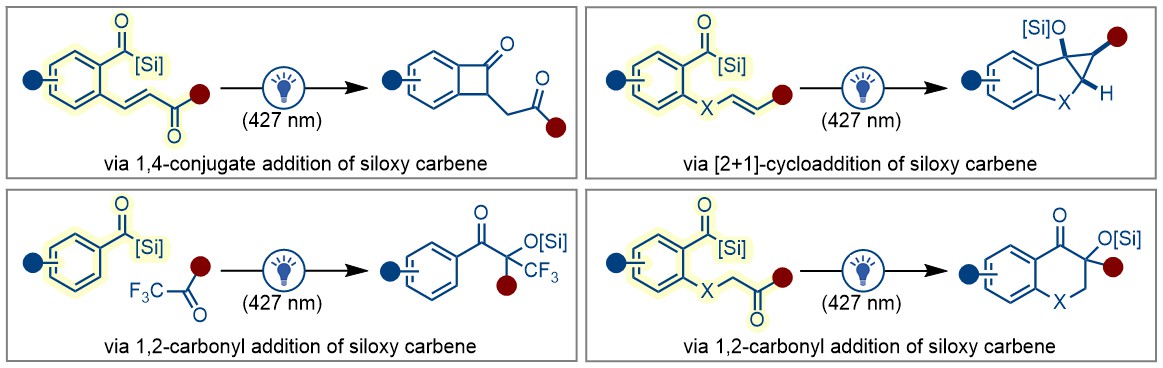
- Photons absorbed by the reactants, where specific functional groups can be directly excited to generate reactive intermediates
As a result of our investigations, we have discovered a series of new photochemical reactions involving light-induced siloxycarbene intermediates that can be generated via the direct irradiation or photosensitised activation of acylsilanes. We are also exploring new photoactivatable tools that can deliver an enhanced understanding of how molecules behave in a cellular environment, delivering key insights that can be used to develop new medicines.
Key Publications:
The Journal of Organic Chemistry, 2019, 84, 11813–11822
Advanced Synthesis & Catalysis, 2020, 362, 1927–1946
Organic Letters, 2021, 23, 2783–2789
Chemical Science, 2022, 13, 3272–3280
The Journal of Organic Chemistry, 2023, 88, 14205–14209
Chemical Science, 2024, 15, 19328–19335
Chemical Science, 2025, 16, 21475–21482
ACS Catalysis, 2026, in press
Medicinal Chemistry
Germs such as bacteria develop the ability to overcome the medicines designed to kill them, which limits our ability to successfully treat bacterial infections and leads to millions of additional deaths worldwide each year. Tuberculosis—caused by a bacterial infection—is currently responsible for more deaths annually than any other infectious disease, representing a significant global public health threat.
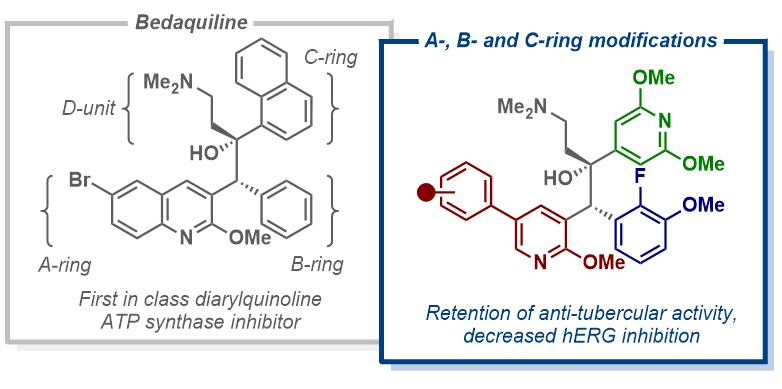
Of growing concern is the rapid emergence of drug-resistant tuberculosis strains that do not respond to traditional antibiotic medicines. To address this critical need for better tuberculosis medicines, we are exploring the development of novel therapeutic candidates that are highly potent against drug-resistant strains of the tuberculosis bacteria yet produce fewer side effects than existing treatments.
Key Publications
Organic & Biomolecular Chemistry, 2016, 14, 9622-9628
RSCMedChem, 2021, 12, 943-959
ChemMedChem, 2023, 18, e202200533
Journal of Medicinal Chemistry, 2025, 68, 8065-8090
European Journal of Medicinal Chemistry, 2026, 312, 118838