

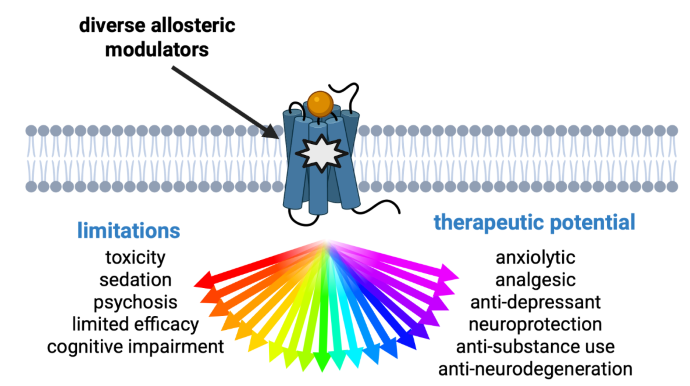
Figure 1: Targeting GPCR can induce both therapeutic and side effects. Targeting the allosteric site allows us to fine tune these effects. Modified from Kos et al 2024; made with BioRender.
Many GPCRs are activated by more than one endogenous agonist, as well as endogenous and synthetic allosteric ligands. Different ligands binding to the same receptor can give rise to distinct physiological effects via a phenomenon called 'biased agonism'. Biased agonism arises when different ligands stabilise distinct GPCR conformations, with each conformation triggering only a subset of cellular responses, at the exclusion of others. Given that allosteric ligands stabilise novel conformations by binding to sites distinct from those utilised by orthosteric ligands, there is an even greater likelihood for engendering biased agonism.
Receptor conformations stabilised by the simultaneous occupation of a single receptor with two or more ligands are likely to be different to those stabilised by either ligand alone. This raises the possibility of employing allosteric ligands to tailor therapies to promote 'good' and avoid 'bad' effects mediated by the same receptor. Related to this idea, naturally occurring variants of GPCRs may be linked to pathophysiology and/or how an individual may respond to therapeutic agents. Through a better molecular understanding of how GPCRs respond to neurotransmitter and drug-like compounds, we aim to improve drug discovery efforts to be more efficient and successful.
Our ongoing efforts are exploring how signalling, trafficking and regulation of GPCRs is altered by different endogenous stimuli, synthetic small molecule ligands and naturally occurring variants. To achieve this, we use recombinant cell lines, murine primary cultures and human iPSC-derived brain cells. These studies seek to elucidate how distinct receptor behaviours contribute to the overall (patho)physiology and/or therapeutic effects of targeting a specific GPCR. We link these molecular properties to the effects of drug-like molecules in preclinical models of disease. This information will inform novel drug screening approaches. Indeed, our work seeks to lead to the development of more effective therapies for mental health disorders and dementia.
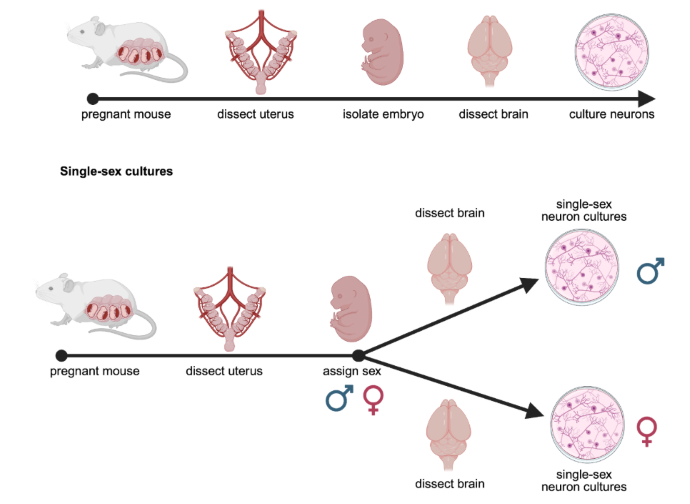
Figure 2: Traditional mixed-sex neuronal cultures (top) vs single-sex cultures to study sex differences at a cell signalling level. Illustration by Jackson Kos; made with BioRender.
The traditional research approach to only use male or unknown sex for in vitro and in vivo drug discovery has contributed to drugs failing at late clinical stages or withdrawn from the market due to inefficacy or side effects. Sex differences in disease progression and symptoms as well as in drug efficacy and side effects have been traditionally overlooked in drug discovery research. Our lab is committed to a more ethical and rigorous approach by including both male and female mice in our in vivo research, as well as by studying sex differences at the cell signalling level by using sex-differentiated primary neuronal cultures.
In collaboration with the Cardiac GPCR Biology team, we have committed to improving our lab practices in the interests of planetary health. Aligned with Monash strategic plan, we are evaluating our existing lab practices and proactively considering sustainability as we embark on new projects.