Our research
It is important to understand signal organisation in cells because all physiological and pathological processes depend on cell signalling
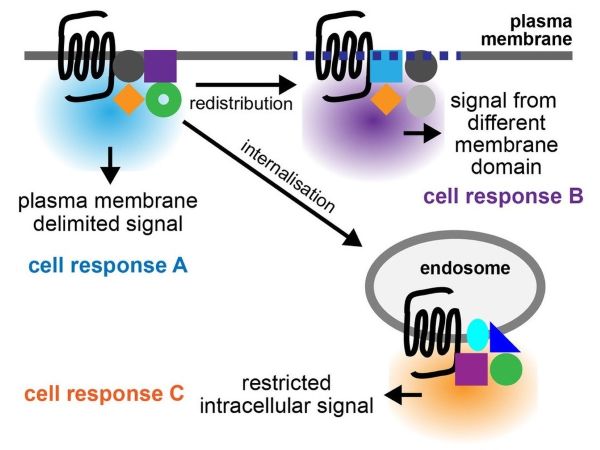
Cells contain the machinery to receive an astoundingly diverse range of stimuli (light, odours, hormones, lipids) and relay this information to perform distinct and diverse functions (including sight, smell, cell migration and metabolism). The largest class of proteins that receive and translate these stimuli are the G protein-coupled receptors (GPCRs). Cell responses are integrated by ~800 different GPCRs that activate the same 4-5 canonical signalling pathways but initiate a variety of cell responses such as migration, contraction, gene transcription and metabolism. With >100 different types of GPCRs expressed on average on each cell, it has been difficult to rationalise how these same few signalling pathways can simultaneously coordinate a variety of cellular responses.
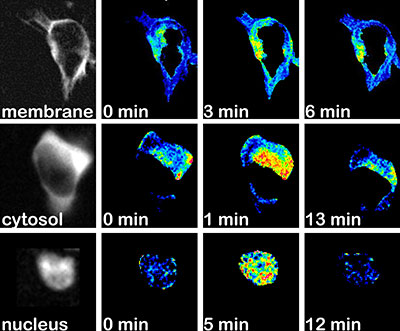
By measuring localised signals in live cells my team has shown that signals from GPCRs are highly localised and organised in both space and time. That is, the types of signals activated by the GPCR are dependent on receptor location and are often restricted to tightly regulated subcellular compartments. This is facilitated by their physical incorporation into extensive protein scaffolding networks. With our interdisciplinary collaborators, this knowledge has driven cutting-edge drug development to target GPCRs in specific subcellular locations. This new generation of targeted therapeutics has much greater efficacy than current drugs which are designed to bind all receptors at the cell surface.