

We screen libraries of chemical compounds to discovery small-molecule ligands for biomolecular targets such as proteins, which could be used in drug design and discovery. In our research, nuclear magnetic resonance (NMR) spectroscopy is the primary workhorse, with a particular emphasis on fluorine (19F) NMR. Because fluorine is essentially absent from endogenous biomolecules and many drug-like compounds already have one or more fluorine atoms with very different chemical shifts, 19F NMR offers exceptional spectral simplicity, high sensitivity, and the capacity to monitor many candidate ligands in parallel. This allows us to quickly detect ligands in mixtures of dozens of compounds.
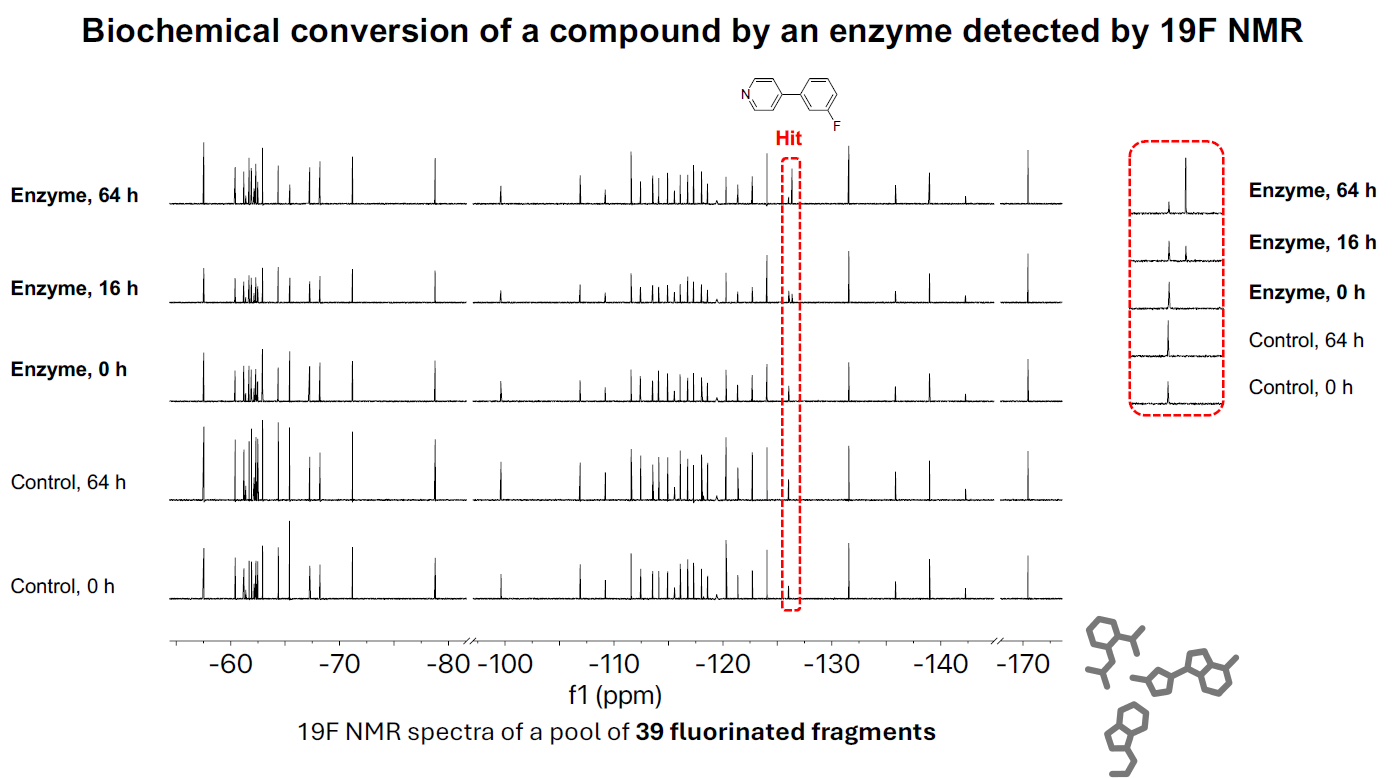
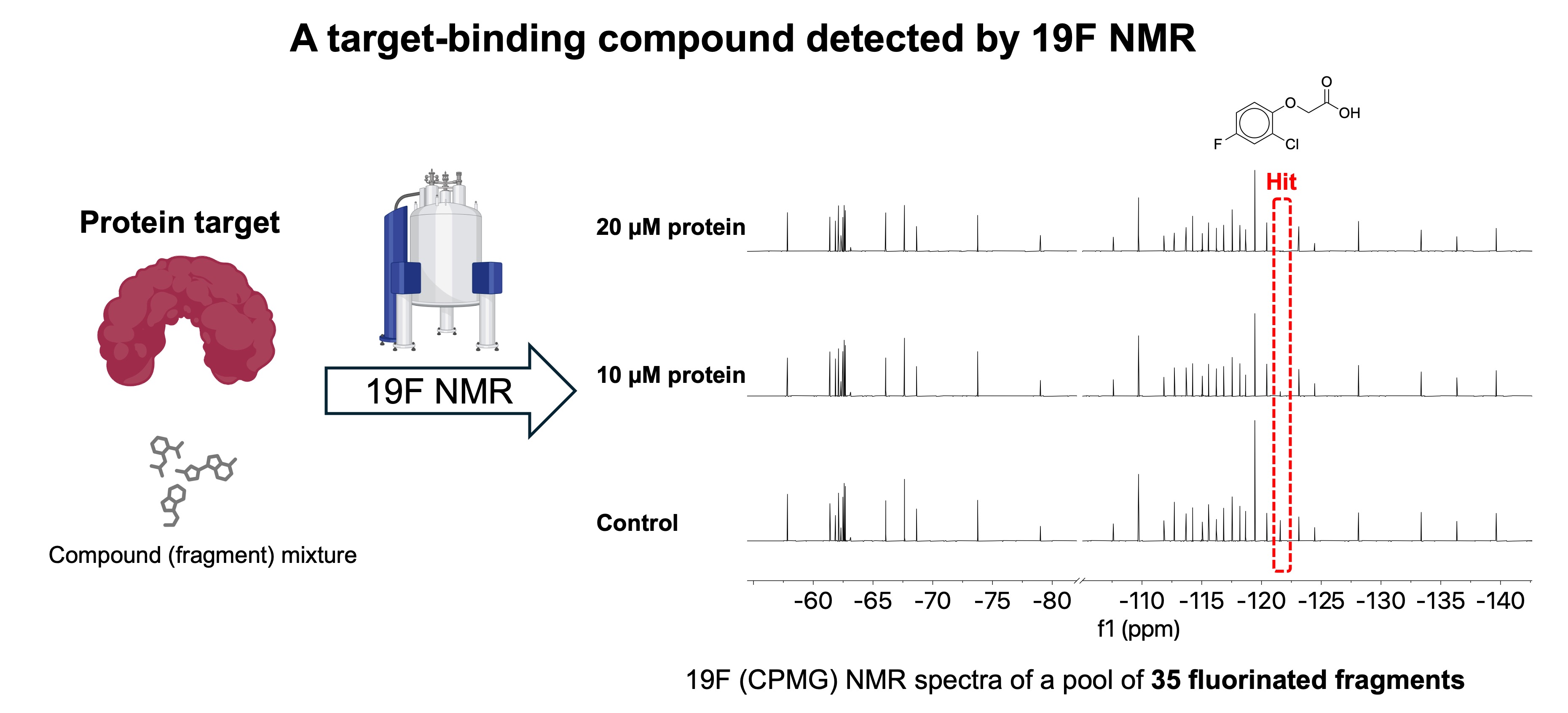 Beyond detecting binding events, we also use NMR as a biochemical readout of enzymatic catalysis: changes in peak intensity and sometimes appearance of new peaks report on the consumption of substrates and formation of products, allowing detection of enzymatic ligands from compound libraries and even quantification of reaction directly in complex mixtures. Time-course NMR experiments, including 19F-based assays, can therefore serve as both binding and activity screens.
Related publications:
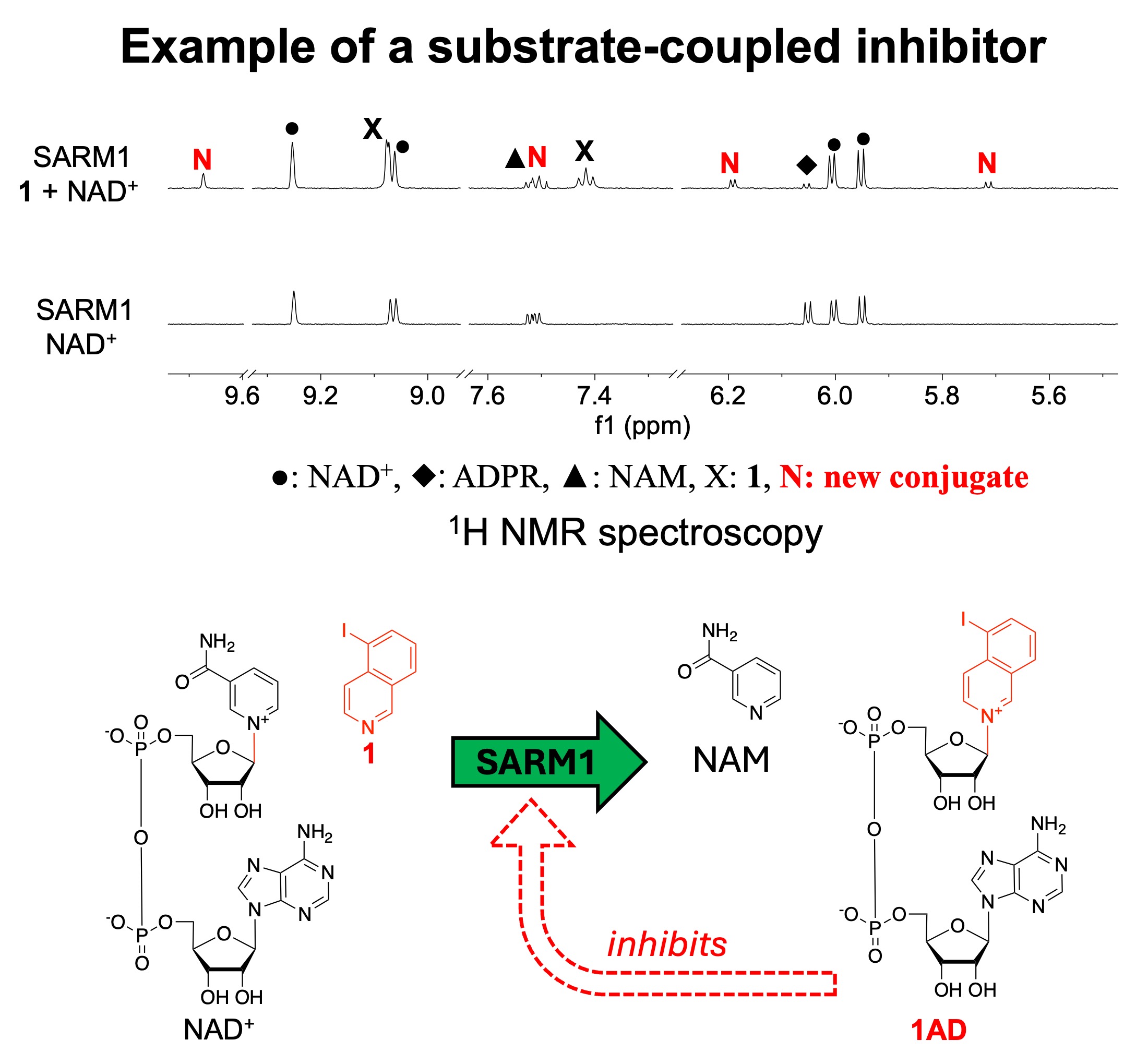
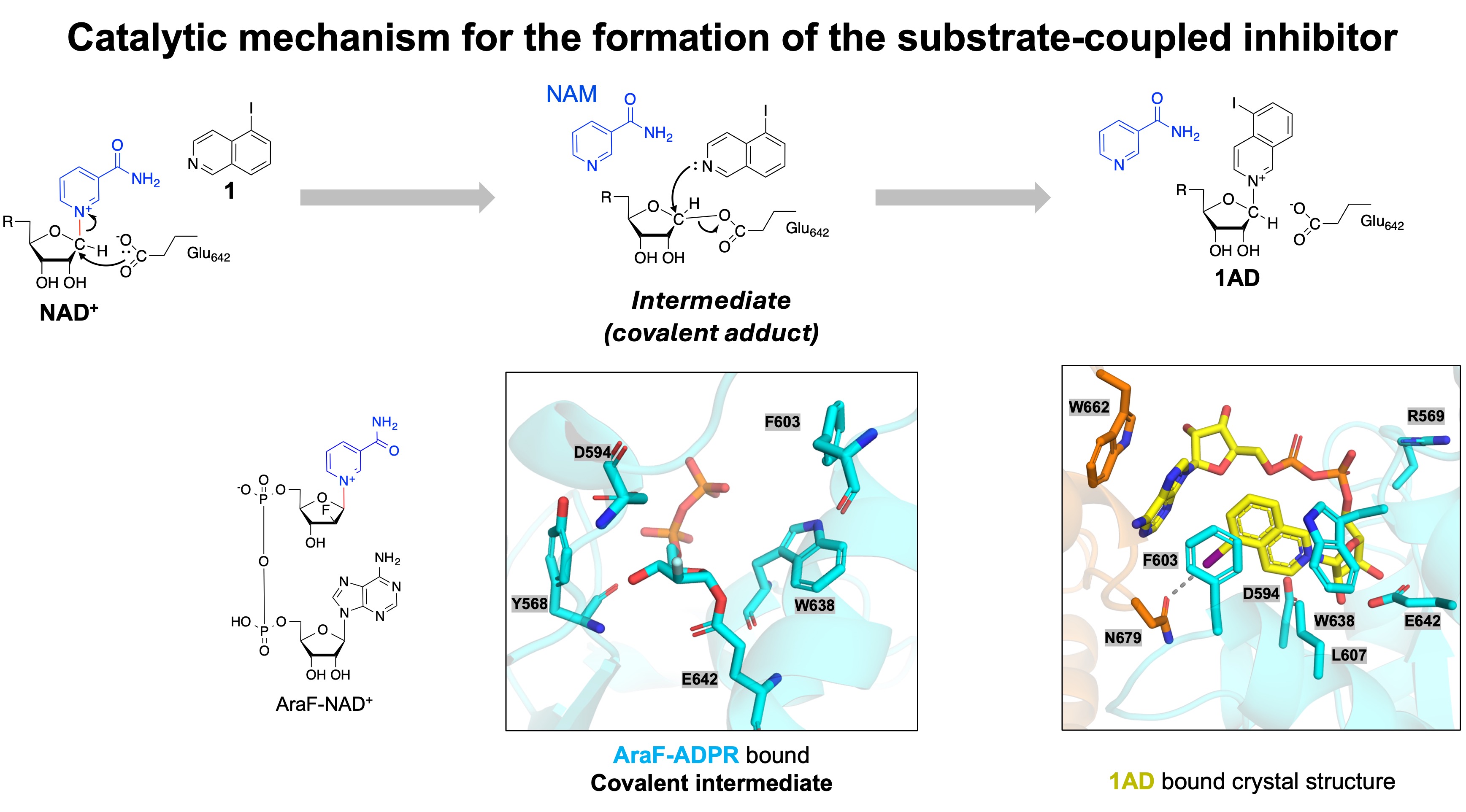
Many metabolic enzymes recognise their substrates with exquisite specificity yet are far less selective for conventional small-molecule inhibitors. Our research exploits this asymmetry by developing substrate-coupled inhibitors, ligands that achieve high affinity (and selectivity) only when assembled in situ with the native substrate to form a conjugate. In this strategy, the enzyme’s own catalytic machinery brings substrate and ligand together within the active site, forming a conjugate compound that blocks further access by substrate molecules and thereby inhibits the enzyme. Using NMR/mass spec-based screening, enzyme kinetics, and structural analysis, we can identify and characterise such small molecules for further development of drug candidates. This mechanism-aware approach effectively turns the substrate into a specificity handle for inhibitor discovery and enables potent inhibition from very small compounds such as fragments. Some of the best examples are inhibitors of SARM1, an NAD+ glycohydrolase with therapeutic implications in neurodegeneration, as they undergo base-exchange reactions with NAD+ to achieve potent inhibition.
Related publications:
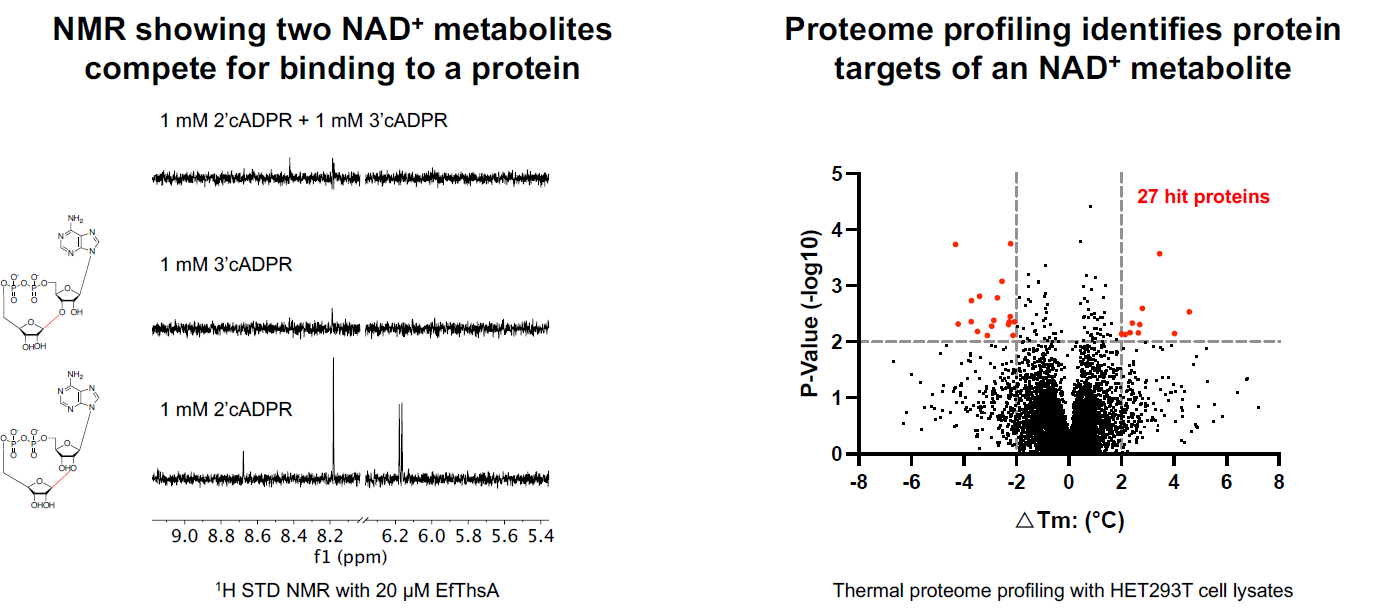
Cellular metabolism is increasingly recognised as a dense interaction network in which metabolites act not only as fuels and substrates, but also as signalling molecules that bind and regulate proteins. My research focuses on discovering previously unrecognised metabolite–protein interactions, with a particular emphasis on NAD⁺ and its derivatives. Building on our recent work identifying protein targets for novel NAD⁺ metabolites, we are employing an interaction-first strategy that combines NMR-based ligand screening with discovery proteomics, to map binding events directly in complex chemical and biological samples. By systematically charting this “hidden layer” of metabolite–protein connectivity, our work aims to reveal new regulatory nodes, uncover non-canonical functions for common metabolites, and provide novel targets and mechanistic hypotheses for therapeutic intervention.
Related publications: