
$20 million in NHMRC project grants for Monash BDI researchers

The Hon. Greg Hunt MP, Federal Minister for Health, visited the Monash Biomedicine Discovery Institute (BDI) today to announce more than $500 million in funding through the NHMRC and Medical Research Future Fund (MRFF) Clinical Researchers Program, as part of the biggest round of funding for the year.
As part of his visit, Minister Hunt toured the lab of Associate Professor Ana Traven, who has received NHMRC funding for two projects in this round.
Associate Professor Traven’s research focuses on the deadly fungus Candida albicans. Fungal infections cause an estimated 1.5 million deaths annually. Current antifungal drugs are insufficient, and the mortality from fungal infections are very high, and comparable or higher to the mortality from bacterial infections. More than half of intensive care patients in Australia infected with C. albicans die within seven days of the infection taking hold, due lack of appropriate diagnostics and treatment options.
Associate Professor Traven’s projects will focus on what makes C. albicans virulent and deadly – building on her earlier research which detailed how this human pathogen destroys immune cells by starving them of nutrients, and how it shape-shifts into a deadly version which can break through human tissues into the bloodstream. This research will pave the way for new treatment options, for instance treating fungal infections through nutritional approaches as a complementary strategy to identify credible new drug targets. The outcomes have the potential to be relevant to the design of improved therapies against a broad ranges of infectious diseases.
Congratulations to the 25 Monash BDI researchers who have secured 28 NHMRC project grants this year, worth more than $20 million.
Research into mitochondrial biogenesis, host/pathogen competition, weight loss, prostate cancer and hypertension were among the projects recognised within the Monash BDI.
Special congratulations to six of our Early Career Researchers (ECRs), who received highly-competitive New Investigator grants. For these grants, fewer than 10 years must have passed since the applicant completed their PhD, and they must apply as sole Chief Investigator (CI) or with another ECR as CI. Dr Partha Das, Dr Garron Dodd, Dr Sandeep Gopal, Dr Tracy Heng, Dr Romana Stark and Dr Kelly Walton are all sole CIs on their grants.
Professor John Carroll, Director of the Monash BDI, congratulated those in the institute who were successful this year.
“We’re doing research that really matters - this latest funding success reflects the government’s recognition of this,” Professor Carroll said.
“We have secured more grants this year than in 2017, highlighting the upwards trajectory of our world-class research and the position our researchers have at the forefront of biomedical discovery research,” he said.
Monash has been awarded almost $76 million in this latest round of funding announcements, attracting funding across the three schemes – Project Grants (74), Postgraduate Scholarships (11), TRIP Fellowships (6), Partnership Project Grants (1), Equipment Grant (1) and International Collaboration (1). The university attracted the most funding nationally bringing this year’s total to over $104 million in federal grants for medical and health research projects.
Professor Marc Parlange, Monash Provost and Senior Vice-President, said continued success in attracting grant funding is a testament to the talent and dedication of Monash’s researchers.
“This funding is vital in our quest to improve the health of our communities worldwide. It recognises Monash as global leader in medical research and the world class projects being pursued by our talented scientists,” Professor Parlange said.
“I thank the NHMRC for their continuing support in recognising the importance of progressing these projects, and for sharing our desire to make a difference,” he said.
The full list of NHMRC Project Grant recipients can be found here.
Congratulations to the Monash BDI 2018 NHMRC Project Grant recipients:
Dr Natalie Borg: Functional dissection of a unique DEAD-box helicase; target for antivirals
Dr Jane Bourke: Simultaneously targeting airway contraction and fibrosis as a new therapeutic strategy for asthma
Associate Professor John Boyce: Co-opting bacterial weaponry: manipulation of the Acinetobacter type VI secretion system for targeted killing of bacteria
Professor John Carroll: Mitochondrial metabolism and its role in the maternal epigenome
Professor Michael Cowley: Can we engage weight loss circuits in the brain without causing hypertension? Professor Tamas Horvath of Yale University is a CI on Professor Michael Cowley’s project grant. This is a huge success for the Monash BDI–Yale Alliance, as the first collaboration between researchers from the Monash BDI and Yale under this alliance.
Dr Partha Das: Dissecting TAF5L and TAF6L functions in embryonic stem cells, reprogramming and neurodevelopment
Associate Professor Chen Davidovich: RNA-mediated regulation of the histone methyltransferase PRC2: a new link to disease-associated and causing mutations
Dr Garron Dodd: Insulin on the brain: determining how insulin signalling in the brain coordinates glucose homeostasis
Dr Sandeep Gopal: Role of transient Ca2+ in transcriptional wiring of stem cells
Dr Tracy Heng: Dying stem cells as a mechanism in mesenchymal stromal cell therapy
Dr Mitchell Lawrence: Giving prostate cancer enough rope with supraphysiologic testosterone
Dr Michael Lazarou: Understanding how mitochondrial repair pathways cooperate to maintain mitochondrial health
Dr Jérôme Le Nours: Diversity within the MR1-restricted T cell repertoire
Dr Jérôme Le Nours: An investigation into aberrant T cell reactivity towards lipids
Dr Greg Moseley: Viral hijacking of the nucleolar DNA-damage response machinery: novel mechanisms to regulate host cell biology
Dr Thomas Naderer: Pore-forming toxins of Staphylococcus aureus: imaging assembly, pore formation and killing
Professor Brian Oldfield: The vagus nerve and gut - brain interactions: the underpinnings of successful weight loss surgery through recruitment of Brown Adipose Tissue
Associate Professor Roger Pocock: MIR-1: A conserved gatekeeper of protein aggregation
Professor Anthony Purcell: Diversification of immune responses through unanticipated proteolytic mechanisms
Professor Mike Ryan: Dissecting the functions of accessory subunits in mitochondrial complex I
Professor Mike Ryan: Defining molecular pathways for COX2 maturation in mitochondrial Complex IV
Associate Professor Chrishan Samuel: Enhancing the anti-fibrotic and regenerative capacity of bone marrow-derived stem cells
Dr Romana Stark: How does the brain sense low blood glucose and switch on corrective actions?
Professor Tony Tiganis: The role of NOX4 in antioxidant defence and mitochondrial biogenesis in muscle
Associate Professor Ana Traven: An investigation into metabolic competition between host and pathogen in infection.
Associate Professor Ana Traven: Control of host-pathogen interactions and fungal virulence by short chain fatty acids
Dr Kelly Walton: Defining the physiology and therapeutic potential of inhibin
Professor Matthew Wilce: Structural basis for ribosomal docking on a picornavirus type I IRES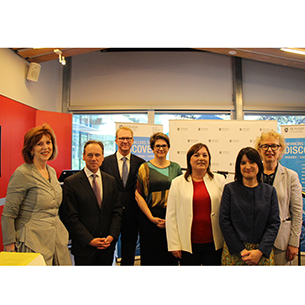
Monash is home to Australia's largest network of RNA and mRNA researchers. Keep up to date with our work on life-saving vaccines and therapeutic treatments on our Monash RNA webpage.
About the Monash Biomedicine Discovery Institute
Committed to making the discoveries that will relieve the future burden of disease, the newly established Monash Biomedicine Discovery Institute at Monash University brings together more than 120 internationally-renowned research teams. Our researchers are supported by world-class technology and infrastructure, and partner with industry, clinicians and researchers internationally to enhance lives through discovery.