
Scientists reveal key mechanisms of vital enzyme complex
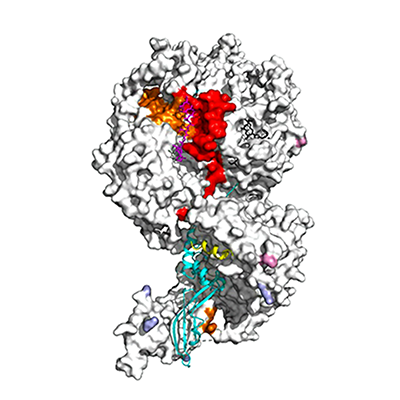
Polycomb repressive complex 2 (PRC2) is an enzyme complex with wide reach, found in multicellular organisms from plants and flies to humans, and which is essential to the development and livelihood of the whole organism. It is critical to maintaining cell identity by keeping thousands of genes inactive.
Mutations in genes coding for PRC2 subunits or their overexpression are associated with most types of cancer, making the enzyme complex of considerable interest to cancer clinicians and researchers.
In a major development for the field, a Monash Biomedicine Discovery Institute (BDI) scientist has revealed exactly what happens at the site where PRC2 interacts with RNA, the immediate product of genes. For Associate Professor Chen Davidovich, who has studied the way PRC2 is regulated by RNA for close to a decade, this was like “closure”.
The study, published in Nature Structural and Molecular Biology, was conducted in collaboration with the laboratory of Associate Professor Roberto Bonasio (University of Pennsylvania) and Dr Ralf Schittenhelm who heads the Monash Biomedical Proteomics Facility.
It has been known for more than a decade that PRC2 binds tightly to RNA and it was later shown that RNA enervates its enzymatic activity. Yet it was unknown exactly how this happened and, importantly, under what circumstances the inhibitory activity of RNA is relieved.
The researchers used mass spectrometry to tease out the processes at play, then backed up their discoveries using other methods.
Perhaps surprisingly, they found that the factors that inhibit PRC2’s enzymatic activity also occur at the same site on the complex (its regulatory centre) as those that stimulate it.
“Overall this study helps to explain how the positive and negative effectors of PRC2 regulate enzyme activity – I think this is very significant in the context of the regulation of PRC2,” Associate Professor Davidovich said, who is also a member of EMBL Australia and the ARC Centre of Excellence in Advanced Molecular Imaging.
“I’m really excited about it; I’ve really wanted to know where the site was for many years,” he said.
It’s a question many different research groups have tried to answer.
“PRC2 doesn’t have a classical RNA binding domain, which has meant that so far you had to guess where RNA might bind.”
“What we think – and this is only a model – is that RNA is a sort of safety switch to prevent PRC2 from working in genes where it shouldn’t.”
Associate Professor Davidovich credits the “outstanding” Monash Biomedical Proteomics Facility with providing the tools that were key to the discoveries.
Postdoctoral researcher Dr Qi Zhang and PhD student Nick McKenzie were first authors on the paper, while Associate Professor Davidovich was the senior author.
Read the full paper in Nature Structural & Molecular Biology titled RNA exploits an exposed regulatory site to inhibit the enzymatic activity of PRC2.
Monash is home to Australia's largest network of RNA and mRNA researchers. Keep up to date with our work on life-saving vaccines and therapeutic treatments on our Monash RNA webpage.
About the Monash Biomedicine Discovery Institute Committed to making the discoveries that will relieve the future burden of disease, the newly established Monash Biomedicine Discovery Institute at Monash University brings together more than 120 internationally-renowned research teams. Our researchers are supported by world-class technology and infrastructure, and partner with industry, clinicians and researchers internationally to enhance lives through discovery.