
Monash BDI scientists win Diabetes Australia awards in 100-year anniversary of insulin
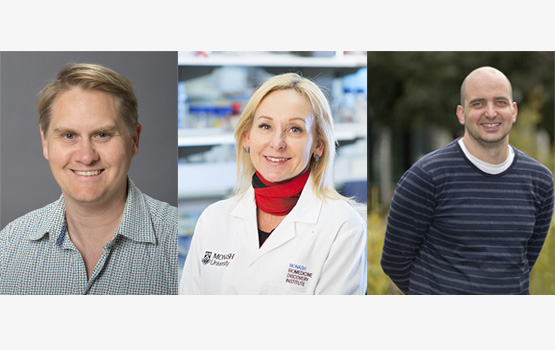
Three Monash Biomedicine Discovery Institute (BDI) scientists have successfully gained research grants from Diabetes Australia to progress their innovative work into new therapies for diabetes and kidney disease.
Dr Adam Rose, and Professor Sharon Ricardo, working with co-awardee Dr Mark Del Borgo, were awarded the one-year $60,000 grants. Nineteen diabetes research projects were granted funding by the Diabetes Australia Research Program in Victoria; eight of them from Monash University.
The successful recipients were announced at a special online presentation hosted by Diabetes Victoria late last month.
Diabetes Australia CEO Professor Greg Johnson said he hoped the $1.1 million of new funding would contribute to improved treatment and management options for the 1.8 million Australians with diabetes.
“This year we mark the 100-year anniversary since the discovery of insulin and look forward to the next discovery that transforms the lives of people with diabetes,” Professor Johnson said.
Professor Ricardo and Dr Del Borgo’s project is developing an injectable cell-free therapy to alleviate diabetic kidney damage.
“It’s really a bioengineering approach; I have a background in kidney disease and diabetes, and Mark is a protein chemist,” Professor Ricardo said.
The novel therapy uses nanoparticles to capture the regenerative properties of mesenchymal stem cells through bioinspired exosome-like vesicles – structures that deliver stem cells’ cargo of proteins and other beneficial properties.
“It’s a new way of overcoming the clinical hurdles of stem cell therapy, producing cell-free systems to capture the benefits of stem cells themselves,” Professor Ricardo said.
Biological exosomes are difficult to isolate in large quantities and expensive to scale-up in the production of a treatment, she said.
Dr Del Borgo said, “We can actually produce the same sized nanoparticles with the same goodies inside,” he said. These would be delivered to the damaged parts of the kidney in a hydrogel.
“It’s great to be able to get the funding to solidify these ideas and test them,” Professor Ricardo said. “It’s very competitive ground so it’s nice to know we’re doing cutting-edge technology coupled with diabetes, which is just a growing epidemic.”
Dr Rose said the Diabetes Australia funding would allow his team to explore a new angle in metabolism in type 2 diabetes.
“I was elated when I heard about the grant – it’s a big funding boost for the lab,” he said.
The project builds on ground-breaking work on amino acid metabolism in type 2 diabetes.
“We previously showed that if we either, through dietary means or genetic means, disrupt amino acid supply or metabolism we could improve the health of diabetic mice,” Dr Rose said.
“But these strategies rely on either nutrition – a diet that no one adopts – or manipulating an enzyme which is dangerous to manipulate, so we came up with another strategy that is probably a safer option,” he said.
“We found a metabolic pathway that should emulate dietary restriction and the aim is to affect it as a new avenue for type 2 diabetes therapy.”
The project will test whether the approach works or not and provide proof of principle that the researchers could use to potentially ‘drug’ this target in type 2 diabetes.
About the Monash Biomedicine Discovery Institute at Monash University
Committed to making the discoveries that will relieve the future burden of disease, the newly established Monash Biomedicine Discovery Institute at Monash University brings together more than 120 internationally-renowned research teams. Spanning six discovery programs across Cancer, Cardiovascular Disease, Development and Stem Cells, Infection and Immunity, Metabolism, Diabetes and Obesity, and Neuroscience, Monash BDI is one of the largest biomedical research institutes in Australia. Our researchers are supported by world-class technology and infrastructure, and partner with industry, clinicians and researchers internationally to enhance lives through discovery
Media Enquiries
Monash Media - Wendy Smith
T: +61 425 725 836
E: wendy.smith1@monash.edu