
Monash BDI researcher shines light on global threat of AMR with award win
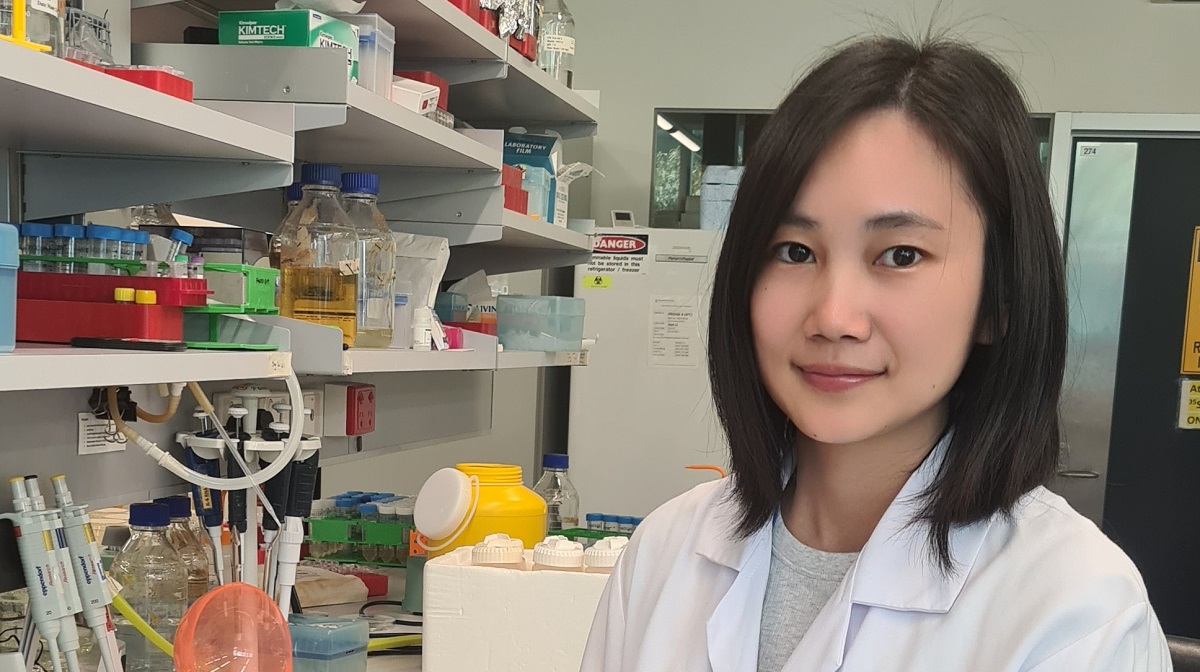
Dr Sue Nang, a postdoctoral researcher at the Monash Biomedicine Discovery Institute (BDI) has won first prize in the ATA Young Scientist Encouragement Award competition. ATA Scientific hold their national competition three times a year and awards young researchers with financial assistance to help them with their education and research journey. Dr Nang was awarded for her submission that highlighted the increasing global threat of antimicrobial resistance (AMR) and the urgent action required to treat life-threatening multidrug-resistant infections.
Following a once-in-a-decade report released by the CSIRO, which identifies seven global megatrends (pictured below), entrants were asked to answer, “Which of the 7 CSIRO topics do you think will have the greatest impact on Australia’s future? and “What do you understand these topics mean in terms of the effect they may have on your daily life?”
In her entry, Dr Nang stated that while all trends are important, she emphasised that the “escalating health imperative” trend is quite significant as it ultimately hinders the remaining six global megatrends. This highlights its intercorrelating impact due to the rising issue of antimicrobial resistance.
In speaking about her research, “AMR is no longer new to us and has been deemed a global emergency. Shockingly, AMR is predicted to cost the lives of 10 million people annually by 2050, surpassing the death toll caused by the COVID-19 pandemic,” said Dr Nang.
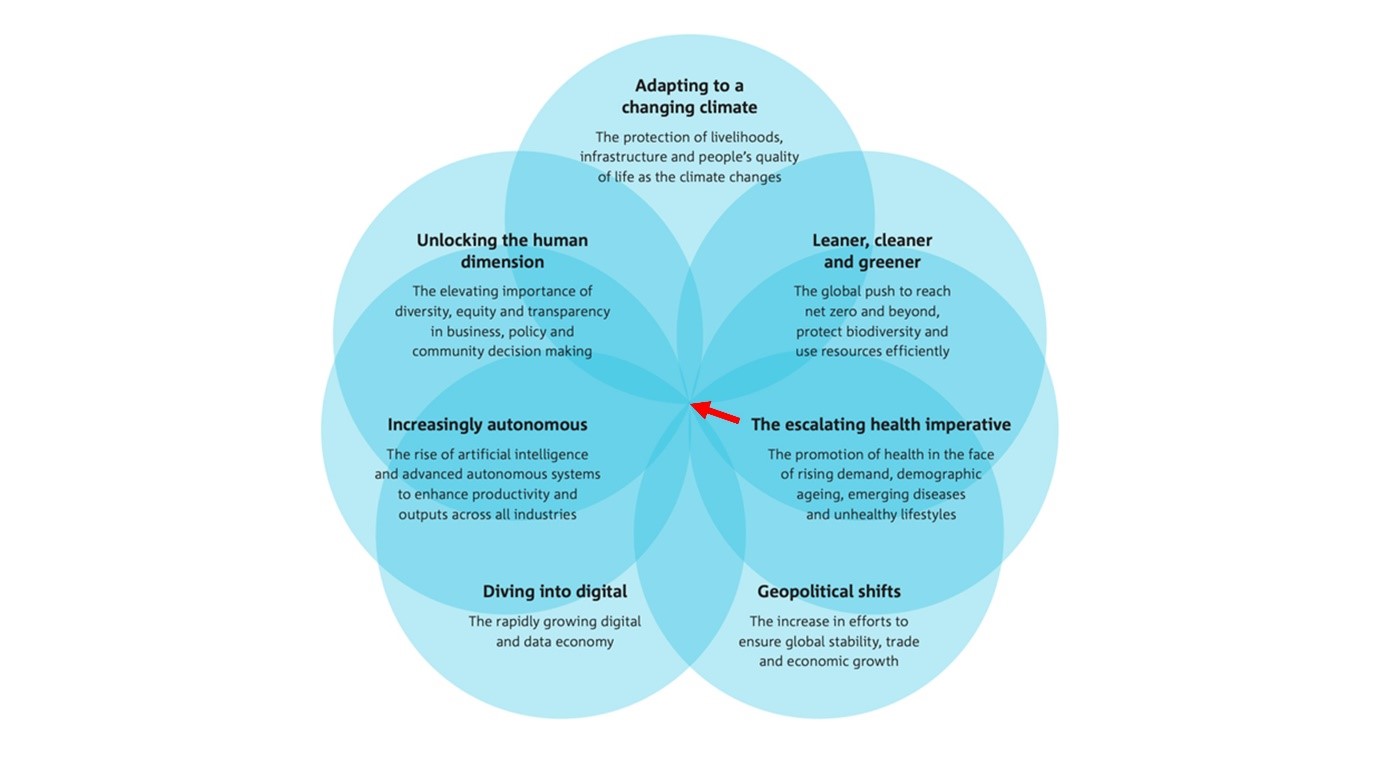
Figure: adapted from 'Our future world' - a report from CSIRO. With the topic on ‘health’ as the root, the red arrow is pointing at the small overlapping region of the seven pressing topics, addressing the massive intercorrelating impact due to the rising issue of antimicrobial resistance.
Dr Nang’s research focuses on an innovative approach to combat the current global threat of AMR, by using bacteriophages (phages) – viruses that specifically target bacteria.
“While it has been over a century since phages were discovered, little is known about them. In recent years, phage therapy is starting to gain the credibility needed as antibiotics are becoming less effective in treating bacterial infections; however, the knowledge that we have on phages is not keeping pace with the exponential increase in the urgency for phage therapy. By shining light onto the undiscovered niches for utilising phages as anti-infectives, we hope to maximise the therapeutic potential of phages,” she said.
Dr Nang leads the phage therapy team in Professor Jian Li’s group, looking into antimicrobial systems pharmacology and the discovery of novel antimicrobials to combat Gram-negative ‘superbugs’. “AMR is considered a ‘silent global pandemic’ and urgent action is required. Our goal is to develop innovative strategies and therapeutics to treat deadly multidrug-resistant infections,” said Professor Jian Li.
Dr Nang will use her $1500 prize win to present her research findings at the 33rd European Congress of Clinical Microbiology and Infectious Diseases (ECCMID) held in Copenhagen in 2023. ECCMID brings leading international experts in the infection field together, promoting the collaboration among like-minded experts on the pressing public health issue of AMR.
To learn more about Dr Nang’s research visit the Li Lab website.
About the Monash Biomedicine Discovery Institute
Committed to making the discoveries that will relieve the future burden of disease, the Monash Biomedicine Discovery Institute (BDI) at Monash University brings together more than 120 internationally-renowned research teams. Spanning seven discovery programs across Cancer, Cardiovascular Disease, Development and Stem Cells, Infection, Immunity, Metabolism, Diabetes and Obesity, and Neuroscience, Monash BDI is one of the largest biomedical research institutes in Australia. Our researchers are supported by world-class technology and infrastructure, and partner with industry, clinicians and researchers internationally to enhance lives through discovery.