
Monash researchers discover key to epithelial cell growth
Monash researchers have discovered a new way that epithelial cells, which form layers in organs such as the skin and stomach, attach to one another, and how they perceive growth signals at these attachments, helping them form tissues of the right size and shape.
Epithelial cells cover the surfaces of most organs in the body and must adhere to each other to form both a protective and permeable barrier. They are exquisitely designed to both be tightly sealed against pathogens such as bacteria, and to also allow the transport of salts, fluids, and nutrients.
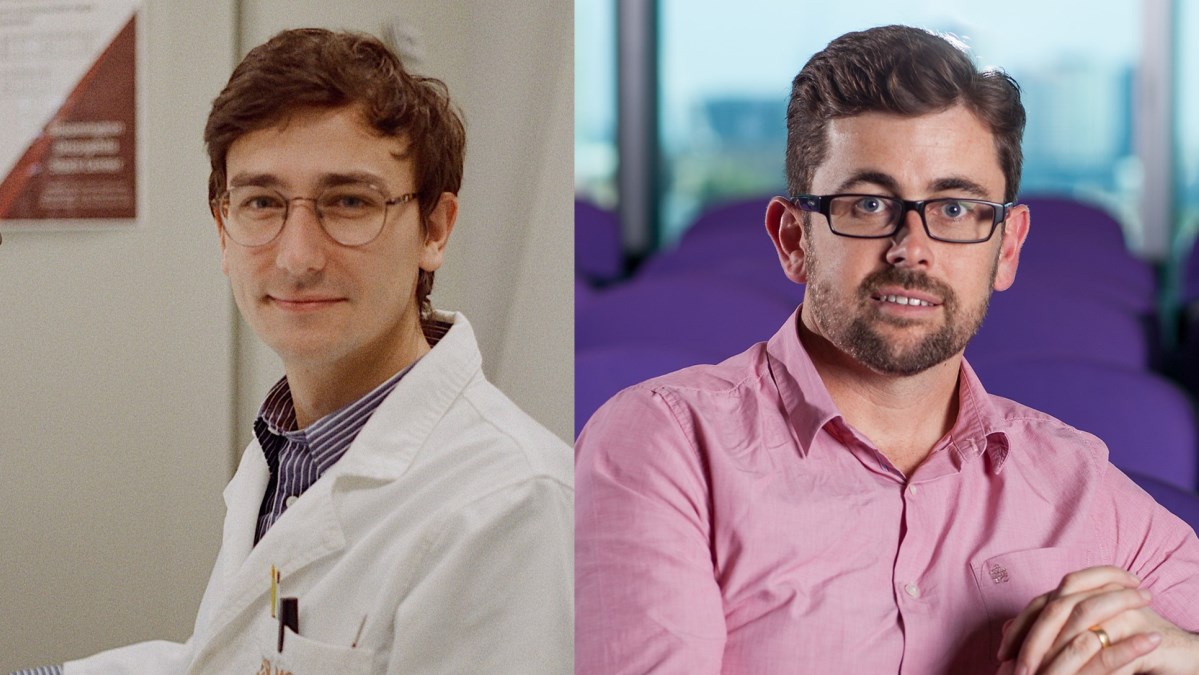
Researchers, led by Professor Kieran Harvey and first author Dr Benjamin Kroeger, at the Monash University Biomedicine Discovery Institute have discovered a new way by which epithelial cells adhere to each other in the vinegar fly, Drosophila. The study is published today in the journal, Developmental Cell.
Previous work from Professor Harvey and others led to the discovery of an important organ growth control pathway, called Hippo. First discovered in Drosophila, the Hippo pathway does effectively the same job in mammals and controls the size of different organs such as the liver and heart. The Hippo pathway is also important for human diseases as it is mutated in multiple epithelial cancers.
The new study provides further insights into how Hippo signaling is coordinated in growing tissues.
In the present study, the researchers made the important discovery of a new subcellular adhesion site that helps epithelial cells adhere to one another – termed by the researchers as “basal spot junctions”. They showed that basal spot junctions not only helped cells adhere to one another but were important for regulating Hippo signaling.
“Our discovery of basal spot junctions in epithelial tissues has given us new insights into how epithelial cells adhere to each other and how epithelial tissues grow to the right size and shape,” Professor Harvey said.
These latest discoveries of how Hippo signaling operates in growing epithelial tissues are crucially important, according to Professor Harvey, because “when Hippo signaling breaks down, it can cause many types of cancers,” he said.
The first ever Hippo targeted therapies are currently in clinical trials for human cancers and are showing benefit, which Professor Harvey said “will hopefully lead to better treatments for many types of epithelial cancers such as mesothelioma and lung cancer.”
Read the full paper in Developmental Cell titled: Basal spot junctions of Drosophila epithelial tissues respond to morphogenetic forces and regulate Hippo signaling
DOI: 10.1016/j.devcel.2023.11.024
MEDIA ENQUIRIES
Tania Ewing, Monash University
E: taniaewing@taniaewing.com
M: +61 408 378 422
Monash Media
E: media@monash.edu
T: +61 (0) 3 9903 4840
About the Monash Biomedicine Discovery Institute at Monash University
Committed to making the discoveries that will relieve the future burden of disease, the Monash Biomedicine Discovery Institute at Monash University brings together more than 120 internationally-renowned research teams. Spanning seven discovery programs across Cancer, Cardiovascular Disease, Development and Stem Cells, Infection, Immunity, Metabolism, Diabetes and Obesity, and Neuroscience, Monash BDI is one of the largest biomedical research institutes in Australia. Our researchers are supported by world-class technology and infrastructure, and partner with industry, clinicians and researchers internationally to enhance lives through discovery.