
Monash scientists uncover new, potentially longer lasting, covid vaccine targets
Melbourne researchers have discovered over 200 new vaccine target candidates from the COVID-19 virus, SARS-CoV-2, that could lead to the development of vaccines with a longer lasting broader immunity than existing vaccinations.
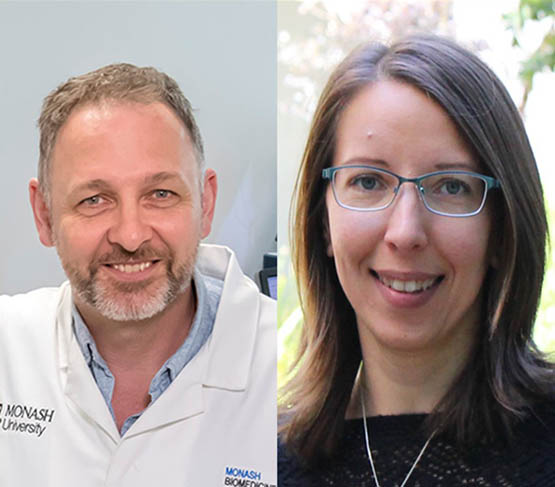
In a paper published in the journal Nature Communications, research led by Professor Anthony W. Purcell and first-authored by Dr Asolina Braun from the Monash Biomedicine Discovery Institute investigates seven proteins of the COVID-19 virus that could become targets for new vaccines.
The initial vaccines designed to combat COVID-19 were targeted against the original Wuhan strain Spike protein. However, while this approach led to the generation of several highly effective, safe vaccines within an astonishingly brief timeframe, it also comes with some limitations, according to Dr Braun. “The SARS-CoV-2 virus has mutated its Spike protein leading to lower efficacy of current vaccines,” she said.
“Also, the original vaccines focused on B cell-mediated antibody responses for developing immunity. We now know that recruiting the other arm of the immune system, the T cells, can help to maintain immunity for longer.”
In the study the researchers describe over 200 SARS-CoV-2-derived peptides that could be targets for new and improved vaccines against COVID-19 and validate that a number of those peptides can trigger T cell responses in convalescent individuals.
Reflecting on this achievement, lead investigator Professor Tony Purcell remarks: “As part of a long term collaboration with Evaxion Biotech, we pivoted and turned our attention to SARS-CoV-2 during the pandemic. Rather than continue the mainstream attention that focussed predominantly on the Spike glycoprotein we turned our attention to other more conserved viral proteins as potential next generation vaccine targets. The combination of the Monash team's epitope discovery by immunopeptidomics and protein chemistry, T cell immunology at the Peter Doherty Institute and Evaxion's AI-guided bioinformatics expertise was critical to the development of this paper that highlights the potential of several conserved viral proteins as vaccine candidates. We also acknowledge financial support from the Innovation Fund Denmark who sponsored aspects of this research.”
According to Dr Braun, COVID-19 still continues to pose a high burden on health systems worldwide, and “this continued burden is mainly caused by the spread of several new variants. Thus, an unmet need remains for the development of novel vaccines able to target several viral strains and confer wide-spread protection in the global population,” she said.
“The next generation of vaccines will benefit from eliciting both, B-cell and T-cell mediated immunity towards multiple COVID proteins. Our study has uncovered promising candidates for the development of just such vaccines.”
Importantly the approach used in this study can be rapidly deployed to other viruses and emerging health threats.
Read the full paper published in Nature Communications, titled Mapping the immunopeptidome of seven SARS-CoV-2 antigens across common HLA haplotypes.
DOI: 10.1038/s41467-024-51959-6
This article garnered media coverage in The National Tribune.
MEDIA ENQUIRIES
Tania Ewing, Monash University
Media and Communications Contractor
E: taniaewing@taniaewing.com
M: +61 (0) 408 378 422
GENERAL MEDIA ENQUIRIES
For more Monash media stories, visit our news and events site
Monash Media
E: media@monash.edu
T: +61 (0) 3 9903 4840
About the Monash Biomedicine Discovery Institute at Monash University
Committed to making discoveries that will relieve the future burden of disease, Monash Biomedicine Discovery Institute at Monash University brings together more than 120 internationally renowned research teams. Spanning seven discovery programs across Cancer, Cardiovascular Disease, Development and Stem Cells, Infection, Immunity, Metabolism, Diabetes and Obesity, and Neuroscience, Monash BDI is one of the largest biomedical research institutes in Australia. Our researchers are supported by world-class technology and infrastructure, and partner with industry, clinicians and researchers internationally to enhance lives through discovery.
About the Peter Doherty Institute for Infection and Immunity
Finding solutions to prevent, treat and cure infectious diseases and understanding the complexities of the immune system requires innovative approaches and concentrated effort. This is why The University of Melbourne – a world leader in education, teaching and research excellence – and The Royal Melbourne Hospital – an internationally renowned institution providing outstanding care, treatment and medical research – have partnered to create the Peter Doherty Institute for Infection and Immunity (Doherty Institute); a centre of excellence where leading scientists and clinicians collaborate to improve human health globally.