
Bacteria build microscopic ‘power cables’ to boost energy production, study finds
Scientists have uncovered a previously unknown way that bacteria overcome one of life’s fundamental engineering challenges: how to generate more energy without redesigning the cell itself.
Published in Nature Microbiology, the study reveals that some bacteria construct long, hollow filaments that act like microscopic power cables, extending part of their energy generating machinery away from the cell membrane and deep into the cell interior. The discovery challenges long-held assumptions about how cellular respiration works and suggests an entirely new strategy for biological energy generation.
All living cells require energy, most of which is produced through respiration, a chain of chemical reactions that normally takes place in cell membranes. For decades, biologists believed a cell’s respiratory capacity was limited by the amount of membrane surface it could build. While complex organisms solve this with mitochondria packed with folded membranes, and some bacteria increase membrane area through elaborate internal structures, these solutions all depend on expanding membrane space.
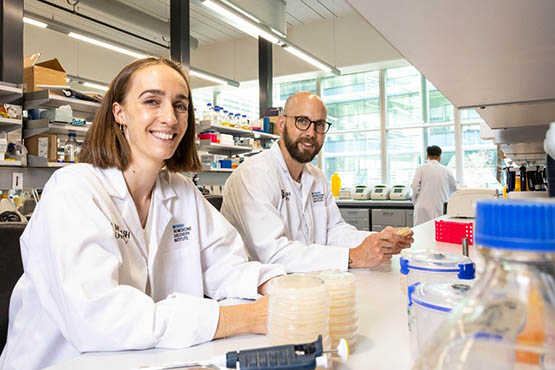
The research team, led by Associate Professor Rhys Grinter, a Lab Head at Monash University’s Biomedicine Discovery Institute, found a different solution in the common bacterium Bacillus subtilis. Using a combination of cryo-electron microscopy, lipid analysis and molecular modelling, the scientists discovered filaments formed by proteins and phospholipids that create a protected hollow channel. These structures transport quinones, molecules that carry electrons during respiration, effectively extending the cell’s respiratory chain beyond the membrane.
The filaments form continuous conduits, allowing energy-processing enzymes to operate in regions of the cell that were previously thought inaccessible to the respiratory machinery. According to the researchers, this enables more respiratory activity while occupying very little membrane space.
Associate Professor Grinter said the findings challenge conventional ideas about where respiration can occur.
“What's striking is that this appears to represent a third solution to a problem that has shaped the evolution of cellular life for billions of years," Associate Professor Grinter said.
"Until now, we thought increasing respiratory capacity required either more membrane or more elaborate membrane architecture. These bacteria appear to have found an entirely different route. Beyond its biological significance, it also points to a design principle for engineering systems that can capture, transport and manage energy-carrying molecules at the nanoscale.”
The researchers compared the genetic blueprints of hundreds of bacteria and found related systems across many species, suggesting the mechanism is widespread rather than a biological oddity. Beyond reshaping scientists’ understanding of how cells are organised, the findings could inspire new approaches in synthetic biology and the design of molecular systems for energy transport.
Evidence of related systems across diverse bacterial groups suggests these structures may be far more widespread than first thought. The researchers are now investigating how the filaments operate inside intact cells, how much quinone they can transport, and how they connect to the rest of the respiratory machinery. Those studies will help establish the broader role these structures play in bacterial physiology and whether they represent a major, previously overlooked route for organising cellular energy production.
Read the full paper published in Nature Microbiology, titled Quinone-transporting filaments expand bioenergetic capacity in Gram-positive Bacillota DOI: 10.1038/s41564-026-02450-z
GENERAL MEDIA ENQUIRIES
For more Monash media stories, visit our news and events site
Monash Media
E: media@monash.edu
T: +61 (0) 3 9903 4840
About the Monash Biomedicine Discovery Institute at Monash University
Committed to making discoveries that will relieve the future burden of disease, Monash Biomedicine Discovery Institute at Monash University brings together more than 120 internationally renowned research teams. Spanning seven discovery programs across Cancer, Cardiovascular Disease, Development and Stem Cells, Infection, Immunity, Metabolism, Diabetes and Obesity, and Neuroscience, Monash BDI is one of the largest biomedical research institutes in Australia. Our researchers are supported by world-class technology and infrastructure, and partner with industry, clinicians and researchers internationally to enhance lives through discovery.