
Beating bowel cancer
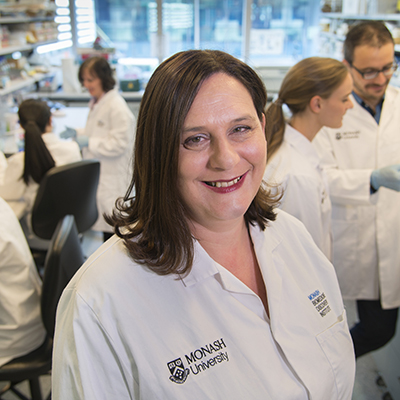
Associate Professor Helen Abud, Monash Biomedicine Discovery Institute
It’s Australia's second biggest cancer killer, claiming the lives of 80 Australians each week. As Bowel Cancer Awareness month comes to a close, we’re shining the light on the work of Associate Professor Helen Abud and her team – research that could help doctors treat bowel cancer more effectively than ever before.
Using small amounts of normal and cancerous tissue taken from the colon of bowel cancer patients at Melbourne’s Cabrini Hospital, Associate Professor Abud and her team from the Monash Biomedicine Discovery Institute are growing living, three-dimensional tumours outside the body. Known as organoids, they mimic the properties and traits of the tissue from which they are taken.
Paving the way for a personalised form of cancer treatment, the organoids can be used as a quick and cost-effective way to study tumour biology and determine the best treatment for an individual’s cancer.
But the impact is not just economic, the research has significant implications for patient care, with the potential to take some of the stress and anxiety out of bowel cancer treatment. By testing the organoid to see what type of drugs a tumour responds to, patients could be spared a gruelling trial and error approach to treatment.
Associate Professor Abud also hopes that ultimately, the living biobank of organoids will also be used to trial new drugs to determine how effective they are in stopping the cancer growth.
So far, the team have grown 65 organoids, well on track to achieving their goal of developing a living biobank of 100. And the team is making new progress every day. This month, in addition to banking primary tumours, the team began to bank secondary tumours – progress that will go a long way in studying how different tumours grow and what can be done to stop their spread.