
Our research
Targeting Inflammation Resolution: A Paradigm Shift in Cardiopulmonary Disease Treatment
Cardiopulmonary diseases are a leading cause of death and disability worldwide, contributing to over 18 million deaths each year. Despite improvements in conventional risk-factor management, current therapies often fail to address a key underlying driver: persistent, unresolved inflammation.
These diseases—including hypertension, heart failure, pulmonary arterial hypertension, and myocardial infarction—are increasingly recognised as chronic inflammatory disorders, where immune dysregulation plays a central role in their development and progression.
In healthy physiology, inflammation is a self-limited process with distinct phases: initiation, followed by active resolution. However, in cardiopulmonary disease, this natural resolution phase fails—a process known as inflammation chronification. As a result, inflammation becomes perpetual, causing continuous tissue damage, maladaptive repair, and progressive organ dysfunction.
This represents a critical and underexploited therapeutic window. Instead of suppressing inflammation indiscriminately, harnessing the body’s endogenous resolution mechanisms offers a targeted and restorative approach.
At the Cardiovascular Pharmacology Laboratory, we are leading efforts to develop pro-resolving medicines—novel therapies designed to actively promote the resolution of inflammation and restore tissue homeostasis in cardiopulmonary disease.
By shifting the immune response back to balance, our work aims to transform the way cardiopulmonary diseases are treated—with safer, disease-modifying therapies that extend and improve life.
(See Figure: Failure of inflammation resolution drives progressive tissue damage in cardiopulmonary disease.)

Pro-resolving GPCR Targets for the Resolution of Inflammation
Our research has uncovered a previously unrecognised role for pro-resolving G protein-coupled receptors (GPCRs)—specifically formyl peptide receptors (FPRs)—in the development and progression of cardiovascular disease. Traditionally viewed through the lens of pathogen defense and acute inflammation, FPRs are now emerging as novel therapeutic targets due to their critical involvement in the resolution phase of inflammation.
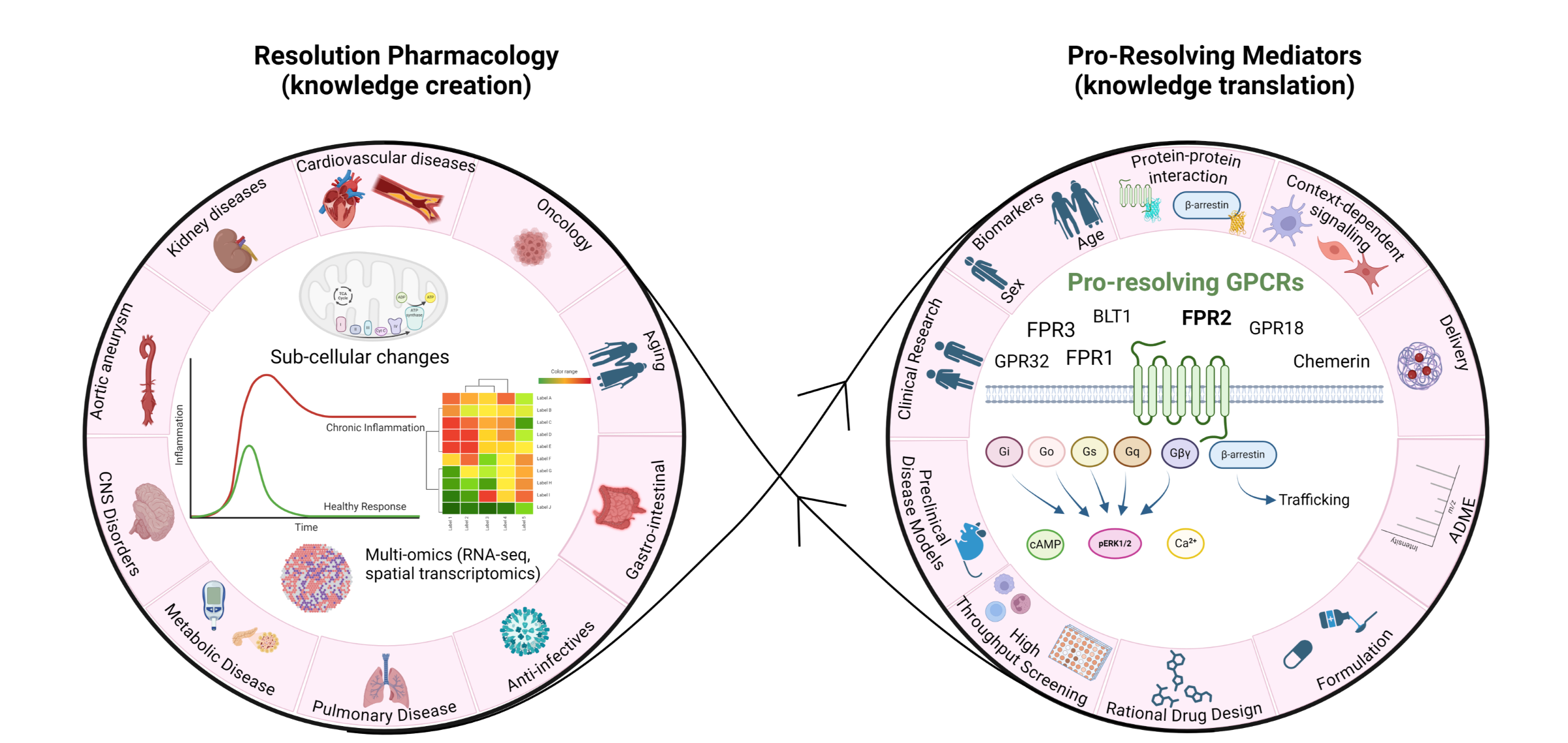
FPRs are members of the seven-transmembrane GPCR superfamily and are central to modulating both pro-inflammatory and anti-inflammatory signals. In humans, three subtypes—FPR1, FPR2, and FPR3—are expressed across a wide range of tissues and immune cells. Notably, the outcomes of FPR activation are context-dependent: while they can dampen inflammation and promote tissue repair, inappropriate or non-selective activation may exacerbate disease pathology.
Our team has generated the first compelling evidence that FPRs hold untapped therapeutic potential in cardiovascular disease. We have developed a new class of selective compounds, termed “biased agonists,” designed to engage only the beneficial signalling pathways downstream of FPR activation. This approach enables precise modulation of receptor function—essentially “reprogramming” FPRs in cardiovascular tissues to trigger pro-resolving responses without eliciting harmful side effects (see Figure below).
This paradigm-shifting strategy leverages the body’s endogenous resolution mechanisms and opens a promising new avenue for developing targeted therapies against chronic inflammatory cardiovascular conditions.
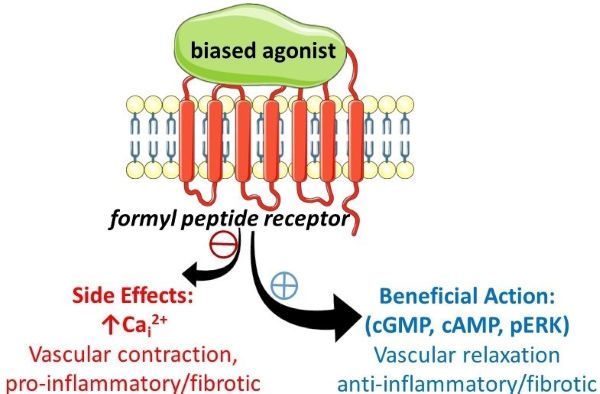
A Novel Mechanism of Action: Biased FPR Agonism
Biased agonists represent a transformative approach to targeting formyl peptide receptors (FPRs), enabling selective activation of pro-resolving signalling pathways while avoiding pathways associated with adverse effects. Unlike conventional, non-selective (unbiased) receptor activators, biased agonists steer FPR signalling toward beneficial outcomes—offering a safer and more effective means of modulating these receptors in disease settings.
Our findings provide the first compelling rationale for developing small-molecule biased FPR agonists as a novel therapeutic strategy for cardiovascular disease, particularly in the context of acute myocardial injury. This innovative platform, which we pioneered and reported in Nature Communications, forms the basis of a patented technology with strong translational promise.
By precisely reprogramming receptor function at the molecular level, this approach opens the door to a new class of cardioprotective therapies aimed at the resolution of inflammation—addressing a key driver of disease progression in heart attack and beyond. We believe this discovery lays the foundation for next-generation medicines to combat the world’s leading cause of death: cardiovascular disease.
