
Monash University, Indonesia Master Students Showcase Social Impact Lab Projects Promoting Sustainable Innovation
Jakarta, 1st July 2023 – Monash University, Indonesia master’s students presented their final project presentations of their Social Impact Lab class. Social Impact Lab (SIL) is Monash University, Indonesia’s signature unit that asks students to address pressing social and environmental challenges. It is essentially a capstone project in the student’s final term, that embodies essential elements from the startup world, like live pitches, expert judges and mentoring through an iterative process, to cultivate student innovators and entrepreneurs.
Monash University, Indonesia’s Assistant Professors Dr Muhamad Risqi U. Saputra and Dr Quinton Temby who are jointly leading the class have played instrumental roles in guiding the students throughout their project journeys towards their presentations in front of a high calibre panel.
The main objective is to create projects with practical solutions and a tangible impact to real-world problems and in line with Monash University, Indonesia’s research focus on urban transformation, digital societies, and inclusive communities. Although tech innovation is a strong Social Impact Lab, it is most and foremost about social impact innovation. Teams are made out of students from a variety of disciplines, to address social and climate justice issues through transdisciplinary lenses.
The final project presentations were evaluated by a distinguished panel of judges, including Akira Murayama, Managing Director from PT ABeam Consulting Indonesia, Ardya Dipta Nandaviri, Head of Data Science and Business Insights from PT Kalbe Farma Tbk, Cynthia Krisanti, Director of Innovation from Pijar Foundation, as well as Antonia Timmerman, leading technology and climate journalist from China Global South Project (CGSP).
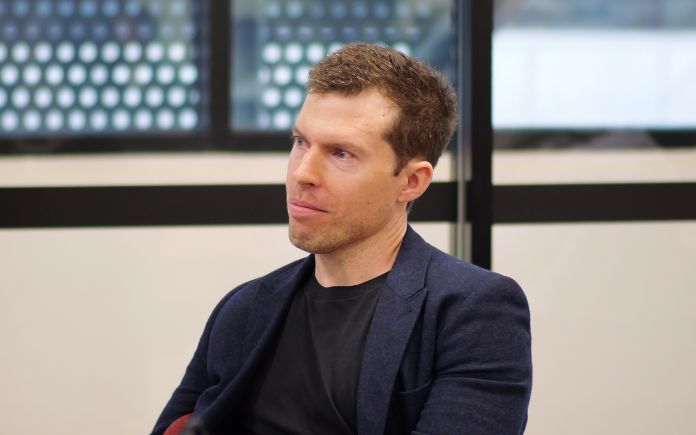 “Working towards a startup-style pitch contest in front of an expert panel is the key to Social Impact Lab. It drives students to design innovative solutions to real-world problems, while anticipating ethical and practical questions. It’s also a chance for them to get support for their ideas from leading experts in the field. “ Dr Quinton Tembly explained.
The final project presentations showcased a diverse range of six projects of which four were mobile application solutions, Youvi (responsible ultraviolet exposure), Noroko (smoking cessation), LifeFlo (blood donation) and DigiGro (urban farming). Amongst the other projects were Super Maggot (food waste management) and the self explanatory ‘A better MRT for Jakarta’ with Super Maggot and Youvi coming out as top voted contenders by jury members.
What was particularly interesting was the juxtaposition between the projects. Digi-Gro's focus on food security and Super Maggot's emphasis on food waste management. Indonesia, being the world’s second largest producer of food waste, faces a significant challenge in reducing the staggering amount of lost or wasted food per capita each year. The innovative solution proposed by Super Maggot to convert food waste into valuable resources holds promise for addressing this pressing issue. Simultaneously, Indonesia also grapples with the issue of malnutrition, particularly among children, leading to stunting and impaired growth and development. The focus on food security by the Digi-Gro team underscores the urgency to ensure access to nutritious food for all, especially the most vulnerable through urban farming. The efforts of both teams shed light on the multifaceted nature of Indonesia's food-related challenges and the need for holistic approaches that encompass both waste management and addressing malnutrition, ultimately striving for a more sustainable and nourished future.
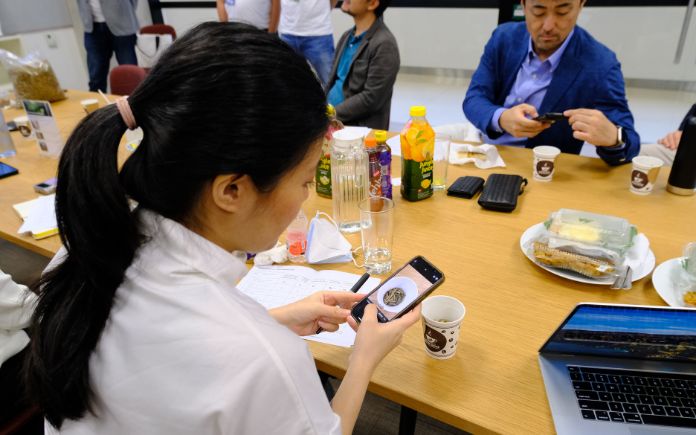
Attendees taking photos of Super Maggots live maggots.
In the dynamic landscape of Indonesia's health and transportation challenges, two seemingly unrelated issues converge, creating a thought-provoking paradox. Noroko's ambitious project to combat the country's high smoking rates, with 7 out of 10 males being smokers, underlines the urgent need to reduce tobacco consumption. Remarkably, while Indonesia ranks as the world's second-largest market for cigarettes, concerns about transportation prices eclipse the financial impact of smoking in the minds of its citizens, with smoker households dedicating up to 11% of their budget to tobacco products.
Compounding the irony, Indonesia's cigarette tax remains among the lowest globally. Meanwhile, research findings on the Mass Rapid Transit (MRT) project indicate that besides inadequate connectivity, the perceived high cost is a significant factor contributing to low ridership. Addressing the affordability of public transportation systems becomes an integral priority to foster accessibility and widespread usage to address Indonesia’s challenges in reducing carbon dioxide emissions. These issues clearly highlight the complexity and challenges of Indonesia’s current issues and enhance the overall well-being of the Indonesian population.
Both LifeFlo and Youvi are mobile based and aim to create accessible and user-friendly platforms for individuals to actively engage in managing their health, contributing to the overall improvement of public health outcomes in Indonesia. LifeFlo directly addresses Indonesia’s critical shortage of blood donations, a crucial aspect of ensuring access to life-saving treatments and reducing preventable deaths. By optimising the blood donation process and facilitating connections between donors and blood banks, the app contributes to improving healthcare outcomes and saving lives.
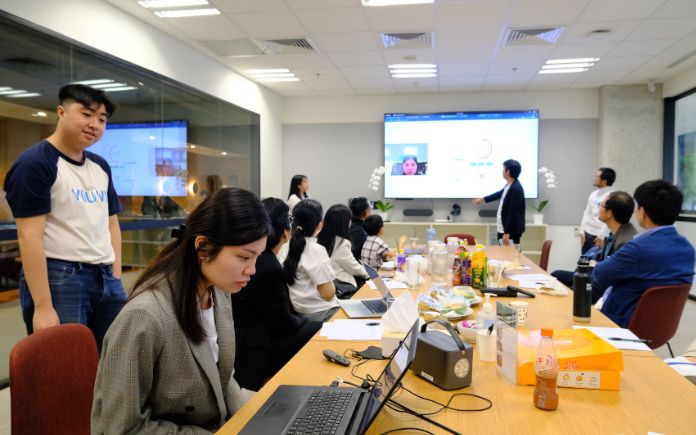
Jury members volunteering to try out Youvi prototype.
Similarly, the Youvi project focuses on combating the increasing levels of UV radiation in Indonesia. UV exposure can have severe consequences for health, including skin cancer, an increase in cataract linked to visual impairment and weakened immune systems. By providing real-time UV index maps, skin analysis tools, and a sun exposure tracker, the Youvi app empowers users to make informed decisions about sun safety, reducing the risks associated with excessive UV exposure.

Jury members, academics and students, who demonstrated exceptional potential, feasibility, and relevance in addressing pressing challenges faced by Indonesia.
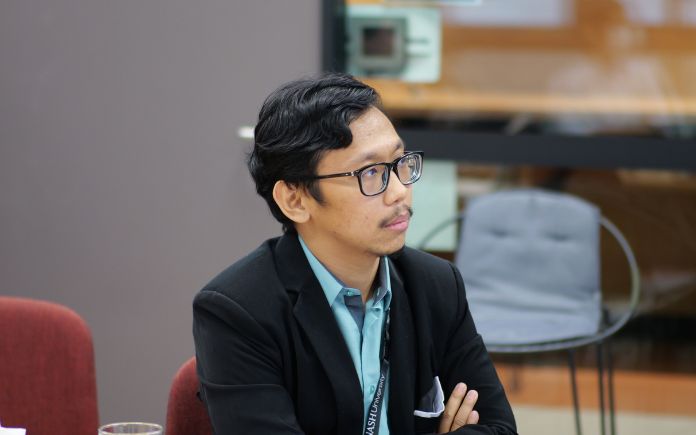
“The selection process was a challenging task. Each project exhibited merits and strengths that made it exceptional in its own right. While two projects stood out, it is important to acknowledge that all the presentations showcased innovative ideas and valuable contributions to social impact. The students' dedication, creativity, and commitment to addressing pressing challenges were evident throughout, making it a truly remarkable showcase of talent and potential.” - Dr Muhamad Risqi U. Saputra
Jury member Antonia Timmerman remarked: "I thought they were all fantastic. I was told that they were given complete liberty to pick their own topics, and so I was impressed that they were able to identify truly the most pressing matters in Indonesia, and proposed creative solutions. The winning teams Super Maggot and Youvi both addressed under-reported problems. They both demonstrated excellent team work and built solutions on extremely thorough research. Very excited to see what next year's students will bring, though I'm hoping they could be more encouraged to have a go at policy recommendations or engage more public institutions."
If you're interested in Monash University, Indonesia's programs and our commitment to addressing today's social, environmental, and economic challenges, visit our Master’s information page.
Project Summaries and Members
Noroko
Team Members: Rizky (Data Science), Kelly (Data Science), Reynald (Data Science), Satria (Urban Design)Noroko introduced a personalised smoking cessation app to help smokers quit and involve non-smokers in their journey. The app, which includes features like tele-consultancy, digital health monitoring, gamification, a rewards catalogue, and a coin system, was developed to cater to low-income smokers. The app offers both free and premium options, and has received interest from the 20-year-old age group. Noroko's marketing plan included referral codes, online advertising, offline promotions, and app reviews. The app's ultimate goal was a 10% decline in smoking-related deaths and diseases among active smokers. The team received suggestions to address health reasons and the financial impact of smoking on the country, considering tax income derived from tobacco. The team described their experience as collaborative and enjoyable due to the friendly atmosphere among team members.
LifeFlo
Team Members: Ruby (Data Science), Adityo (Data Science), Yenni (Data Science), Prasidya (Public Policy and Management), Anne (Urban Design)
The LifeFlo team aimed to address the critical shortage of blood donations in Indonesia by optimising the blood donation process. They developed a mobile application to encourage regular blood donations and connect users with nearby blood banks and potential donors. The team considered factors such as blood type and expected incentives, such as donation to charitable organisations and fast-track facilities. The minimum viable product included various features to facilitate blood donation, including notifications, reminders, geolocation, supply-and-demand, and expressing gratitude to donors. The mobile application was designed for smartphone users aged 20 to 60 in urban areas, with informative features, user profiles, encouragement for regular donations, and scheduling capabilities.
A Better MRT for Jakarta
Team Members: David (Data Science), Erwin (Data Science), Felicia (Data Science), Marco (Urban Design)
The "A Better MRT for Jakarta" team aims to improve the Jakarta MRT by exploring non-app solutions. They identified challenges related to ridership and revenue, such as low ticket prices and high price-to-GDP per capita ratio. Research suggests lowering ticket prices would encourage more people to use the MRT and maximise non-farebox revenue. The team developed policy, business, and design strategies to increase ridership by 7.7 million passengers, reduce car usage by 9,600 vehicles, and reduce carbon dioxide emissions by around 7,500 tons. In consideration of sustainability principles, the team aims to create a better MRT experience for Jakarta residents, contributing to improved transportation infrastructure and reduced congestion.
Digi-Gro
Team Members: Fernando (Data Science), Dian (Data Science), Ariq (Public Policy and Management), Fahira (Urban Design)
The Digi-Gro team focused on addressing the issue of food security. They recognised that food security was not adequate, especially considering the challenges posed by the pandemic, economic downturns, and unpredictable weather patterns. In 2020, there were 811 million people experiencing undernourishment globally. To tackle this problem, the team explored the potential of urban farming, specifically through home gardens. They also integrated an AI-based image detection system that could assess crop quality with an accuracy rate of 94%.
Y O U V I
Team Members: Ghani (Data Science), Bryan (Data Science), Robi (Urban Design), Asyfarina (Urban Design)
Team Youvi aims to combat extreme UV levels in Indonesia, which continue to rise at 2-6% annual increase. This poses health risks like skin cancer, cataracts, weakened immune systems, and premature ageing. Annually, Indonesia faces a significant prevalence of cataract and skin cancer cases, while simultaneously grappling with a shortage of dermatologists and ophthalmologists per capita. The Youvi team aims to create awareness and resources to combat this issue. Their project includes an outdoor map with real-time UV index, a machine learning skin lab, and a Sun Exposure Tracker. Through a live demo, the Youvi team showcases the project's potential to raise awareness, offer skin disease screening, and provide valuable information to users. By empowering individuals with knowledge and tools to monitor and manage their UV exposure, Team Youvi aims to contribute to the well-being of the Indonesian population and promote a healthier approach to sun safety.
Super Maggot
Team Members: Yosua (Data Science), Daniel (Data Science), Martinus (Data Science), Dian (Business Innovation), Alicia (Urban Design)
Team Super Maggot, aims to reduce food waste by focusing on recycling and reducing food loss and waste. The country ranks as the second-largest producer of food waste globally, causing economic and environmental costs. The team proposed a solution using compost, biogas, and black soldier fly (BSF) maggot bio-conversion, which can consume five pounds of waste in just four hours. They emphasised the importance of involving all stakeholders in an end-to-end waste management process, implementing proper bin systems, sorting and collection mechanisms, and establishing BSF maggot treatment facilities near market areas.