
Healing Together: How Indonesia and Australia Can Redefine Perinatal Mental Health Through Partner-Initiated Care
Written by Muhammad Deivito Dunggio, Master of Public Health cohort 2023
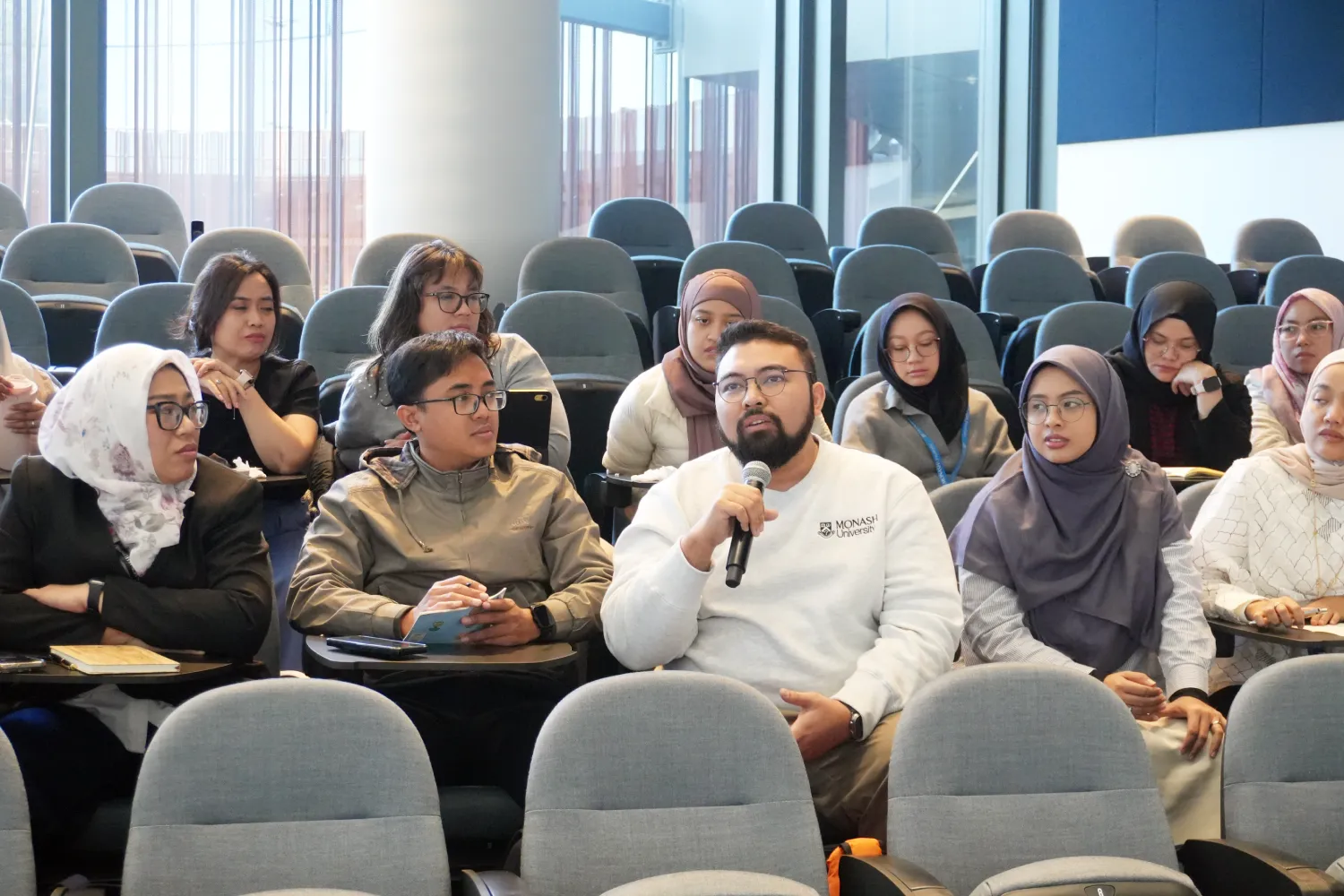
Muhammad Deivito Dunggio participating in the Australia Leadership Program 2025
Melbourne, Australia – The global burden of perinatal mental health disorders presents one of the most pressing yet overlooked public health challenges of our time. Epidemiological data reveal that approximately 20% of mothers and 10% of fathers experience clinically significant anxiety or depression during the perinatal period (WHO, 2021). The economic and social consequences are profound, with Australia alone facing an annual cost of $877 million in healthcare expenditures and lost productivity (PwC Australia, 2019).
The Indonesia-Australia connection becomes particularly salient when examining these issues through a regional health lens. In Indonesia, where maternal depression prevalence doubles that of men, the intergenerational consequences manifest starkly in child health outcomes - evidenced by a 2022 study finding that 33.8% of stunted children were born to mothers with antenatal depression (Apriliana et al., 2022). This data shows the urgent need for transnational solutions that address perinatal mental health as both a medical and social determinant of health, The team at OXÈA is currently addressing issues at the microlevel while simultaneously waiting for further developments in government level.
The Science Behind Partner Touch
Oxytocin, often called the "love hormone," plays a crucial role in bonding and stress reduction. While traditionally associated with mother-infant bonding, emerging research reveals its profound impact on partner relationships during the perinatal period (Uvnäs-Moberg et al., 2020). Harnessing the power of touch to strengthen families at their foundation, while promoting the idea that we can initiate change immediately. The #OXÈA campaign introduces a simple yet scientifically grounded intervention that reimagines partner support: fifteen minutes of daily oxytocin massage administered by partners to mothers before bedtime. This innovative approach represents a paradigm shift from the predominant focus on infant-directed touch to prioritizing the spousal connection, recognizing that supporting mothers directly may represent the most effective pathway to improving outcomes for entire families. This intervention offers a practical approach emerging from robust neurobiological research and cross-cultural studies of relationship dynamics during the perinatal period.
The #OXÈA protocol leverages this science through structured massage techniques that stimulate oxytocin release in both partners (Holt-Lunstad et al., 2008), lower cortisol levels and reduce symptoms of anxiety and depression (Field, 2010), & enhance relationship satisfaction during this vulnerable transition period (Kim et al., 2021).
The implications of this approach are especially significant in the Indonesian context, where cultural norms may limit physical affection between spouses while simultaneously valuing traditional healing practices. #OXÈA provides a medically validated framework for strengthening spousal connections in a culturally appropriate manner, bridging modern neuroscience with traditions of therapeutic touch. The intervention's focus on pre-sleep massage timing is easy to follow, capitalizing on the body's natural circadian rhythms when oxytocin sensitivity peaks and the psychological benefits of touch-mediated relaxation can most effectively combat the sleep disturbances common in the perinatal period.
The Transformative Potential of Mother-Directed Touch
The perinatal period creates unique stresses that can strain even the strongest relationships. #OXÈA's focus on partner-to-mother touch (rather than parent-to-infant contact) addresses several critical gaps in current care models:
- Direct Maternal SupportMassage from a partner provides physical and emotional comfort precisely when mothers need it most - at the end of long days of caregiving. Studies show this regular, predictable contact can reduce postpartum depression symptoms by 30% (Field, 2010).
- Partner Engagement
Many fathers report feeling helpless during the perinatal period. The structured #OXÈA protocol gives partners a concrete way to contribute, with participating fathers showing 72% higher caregiving confidence (Philpott et al., 2019). - Relationship PreservationThe shared ritual creates protected time for connection during a life stage when relationships often become purely functional. Couples maintaining the practice report greater intimacy and communication up to two years postpartum (Kim et al., 2021).
Implementation Recommendation Across Indonesia-Australia
The beauty of #OXÈA lies in its adaptability. In Australia, the campaign can potentially partner with prenatal classes to teach techniques alongside childbirth education. In Indonesia, where traditional massage (pijat) already enjoys cultural acceptance, the program could train local midwives to incorporate oxytocin principles into existing practices. The universal human need for connection makes #OXÈA adaptable across diverse cultural settings, though successful implementation requires thoughtful contextualization. Ensures the intervention's core benefits, stress reduction, partner engagement, and relationship preservation, can be achieved while respecting local norms and healthcare infrastructures.
A call towards collaboration
The partnership between Indonesia and Australia highlights the importance of cross-cultural teamwork in tackling a critical public health challenge that is often neglected. Australia brings well-organized systems and clinical knowledge, while Indonesia provides culturally relevant practices that can improve community involvement and acceptance. The #OXÈA approach stands at this intersection, a science-backed, culturally adaptable solution that recognizes the universal need for connection during the perinatal journey. This collaboration demonstrates how combining modern neuroscience with traditional care and integrating policy frameworks with local knowledge can create regional partnerships that support compassionate, scalable, and globally pertinent maternal mental health.