
Intersections of Gender-Based Violence and Drug Overdose: New Research Presented at AIDS 2024
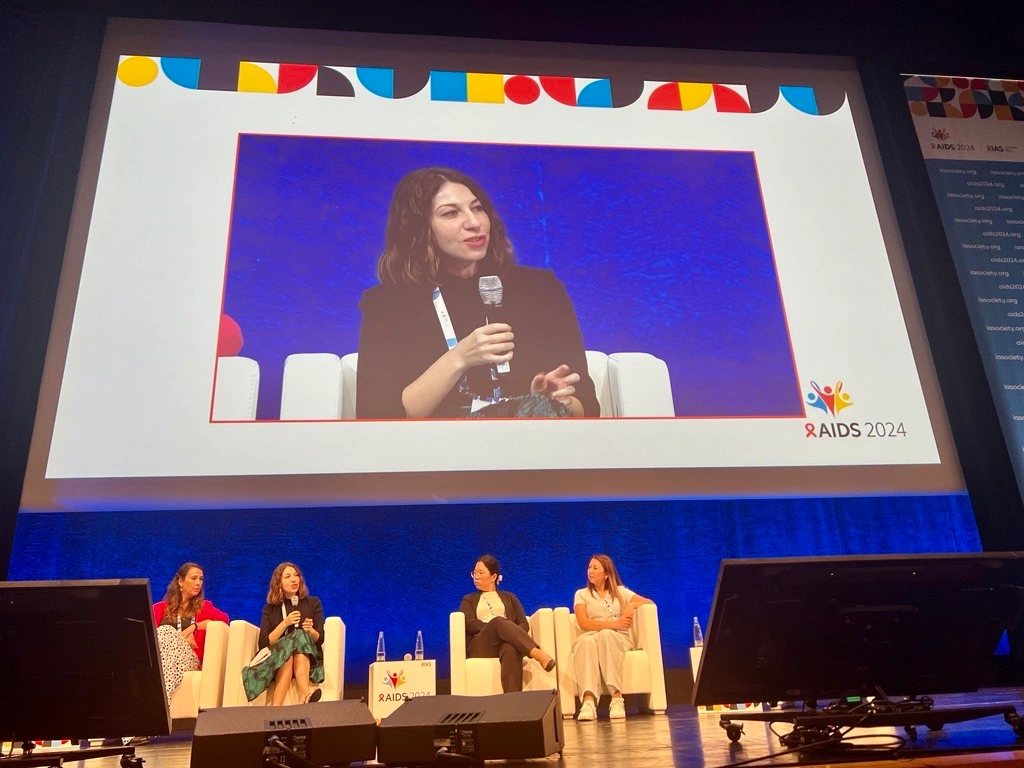 Dr. Claudia Stoicescu on the panel discussion at the 25th International AIDS Conference
Dr. Claudia Stoicescu, Associate Professor of Public Health at Monash University, Indonesia, presented groundbreaking research at the 25th International AIDS Conference (AIDS 2024) held in Munich, Germany. Her presentation was part of a session titled "Emerging Patterns: Exploring Trends and Shifts in Drug Use," which took place on July 23, 2024.
The conference, attended by more than 10,000 participants, is the largest gathering on HIV and AIDS in the world. It featured over 40 oral abstract sessions, 50 invited-speaker sessions, 20 workshops, 30 symposia sessions, 100 satellite sessions, and 2,200 posters, bringing together activists, scientists, and policymakers to address pressing issues in HIV/AIDS research and policy.
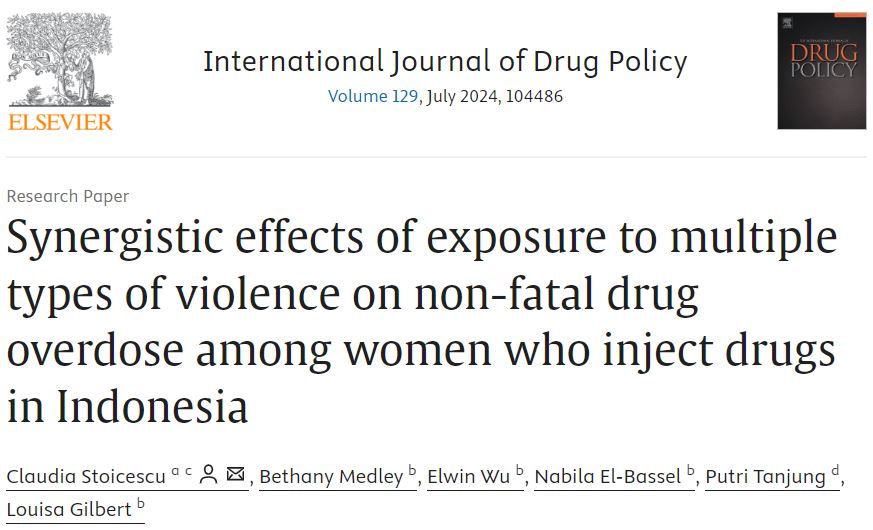 Dr. Stoicescu's research publication on International Journal of Drug Policy
Dr. Stoicescu's research, Synergistic effects of exposure to multiple types of violence on non-fatal drug overdose among women who inject drugs in Indonesia, was recently published in the International Journal of Drug Policy. The research links gender-based violence perpetrated by the police and male intimate partners to increased levels of non-fatal drug overdose among women who inject drugs in Indonesia.
“Because research into risk factors for overdose remains limited in low-and middle-income settings and particularly Southeast Asia, we focused on addressing this gap. We explored whether exposure to different forms of gender-based violence, which we have found to be very high in previous studies with women who use drugs, might be associated with higher levels of drug overdose,” said first author Dr. Stoicescu, explaining the rationale for the research.
Among the 731 women who participated in the study, 31.4% to 33% experienced at least one non-fatal overdose. A lot of these women faced intimate partner violence: 84.2% in Jakarta and 92.2% in Bandung. Additionally, many reported being extorted by police, or asked to pay a bribe in exchange for a lesser charge, dropping charges, or access to drug dependence treatment during the process of arrest: 37.1% in Jakarta and 26.5% in Bandung.
The study found that women who experienced intimate partner violence, police extortion, and police sexual violence were significantly more likely to experience non-fatal drug overdose. There was a notable interaction between violence perpetrated by intimate partners and sexual violence perpetrated by the police – when both were experienced together, the risk of a non-fatal overdose almost quadrupled compared to experiencing either type of violence alone.
This work has important implications for broadening the scope of harm reduction services in Indonesia, suggesting the need to improve the gender-responsiveness of existing services and integrating violence prevention screening into drug-related services.
The findings emphasize the urgent need for widespread community-based education, resources, and services to reduce harm, such as overdose prevention education and peer naloxone distribution, along with violence prevention interventions. Naloxone is a medicine that rapidly reverses an opioid overdose; however, in Indonesia, it is only available through hospital emergency providers. Making naloxone available to community health workers and peers at places where overdoses are likely to occur in the community has been shown to significantly reduce overdose deaths.
Additionally, the findings call for improved police training, supervision, and accountability in responding to gender-based violence against women who use drugs. The prevalent fear of police among these women suggests a need for trained civil society responders who could accompany police in addressing incidents of violence against women.
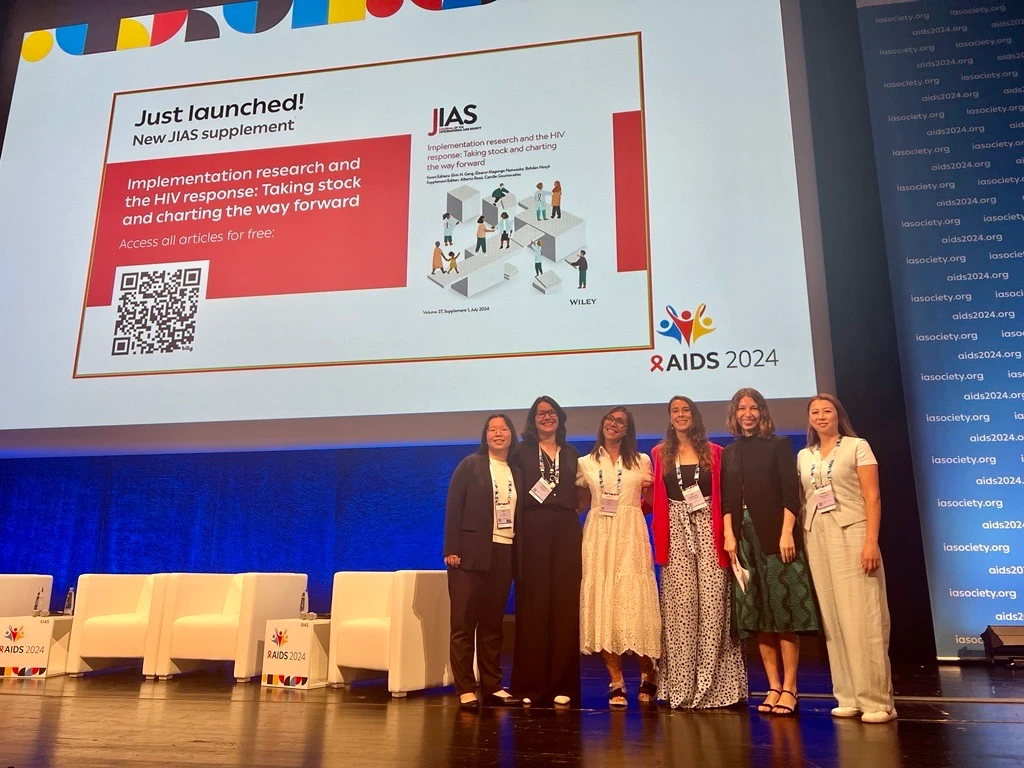
Dr. Stoicescu with other speakers had a photo session
Dr. Stoicescu's presentation at AIDS 2024 contributed to the conference's goal of showcasing community-led innovations alongside scientific breakthroughs. Her research underscores the importance of addressing the complex interplay between gender-based violence and drug use in efforts to improve public health outcomes for vulnerable populations.