
Master of Business Innovation Students Develop Human-Centered Solutions for Vulnerable and Underserved Communities
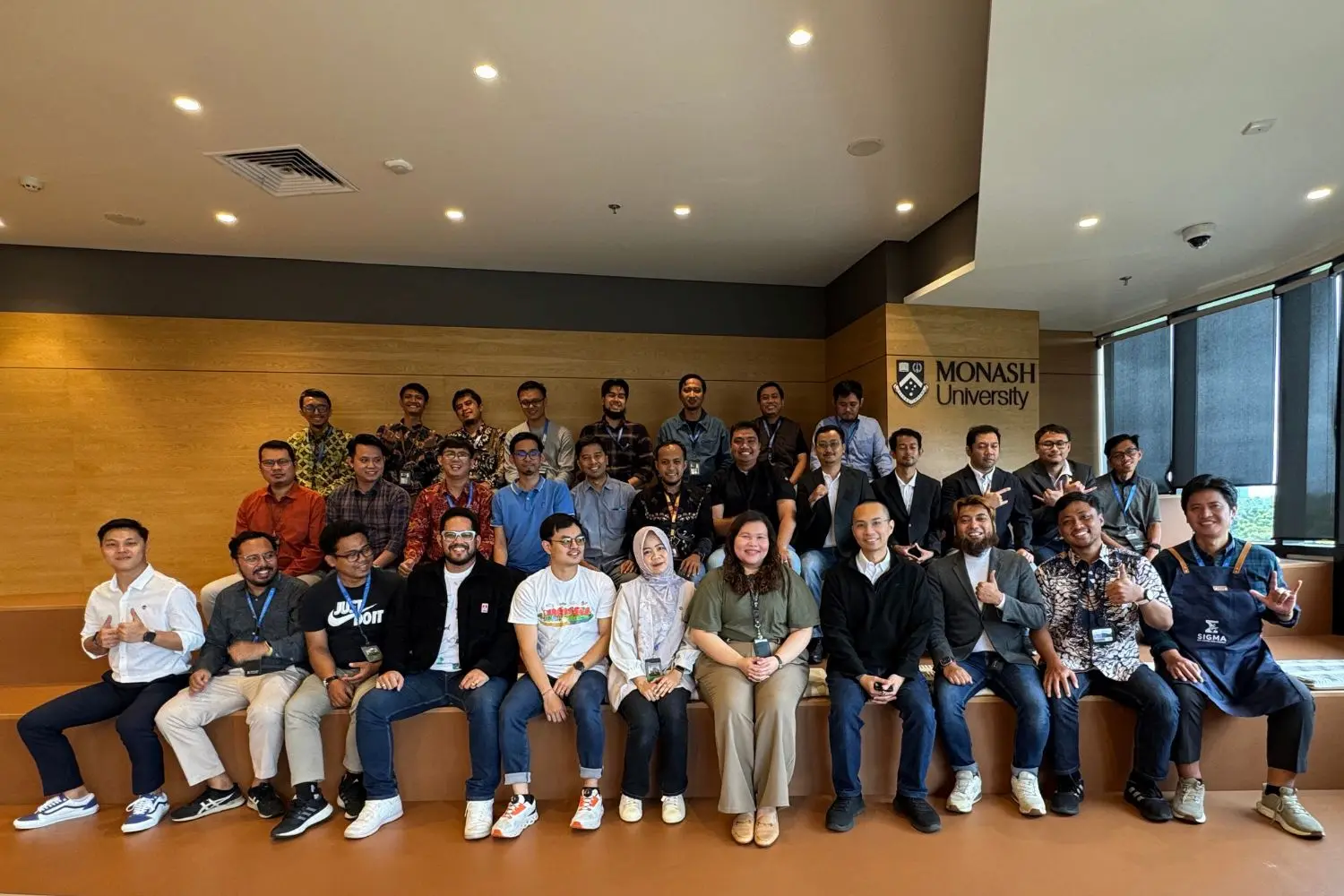 PLN-Sponsored MBI Students in ADI5111 and ECI5590: Students presenting outcomes from cross-unit projects that integrate design thinking and socio-economic analysis to deliver inclusive, impact-driven solutions
BSD City, Tangerang – PLN-sponsored students in the Master of Business Innovation (MBI) programme have completed a cross-unit applied project integrating insights from Design Thinking for Business (ADI5111) and Poverty, Inequality, and Opportunity (ECI5590). Through this collaboration, students developed practical solutions aimed at improving conditions for communities experiencing various forms of vulnerability. The projects applied empathy-driven fieldwork, problem framing, and iterative prototyping, reflecting an approach where innovation is manifested as a socially relevant practice rooted in real-world contexts rather than remaining an abstract exercise within the confines of theory.
Projects Highlight
Group 1. Enhancing Communication Accessibility in a Deaf-Operated Café
This project addressed communication barriers in a Deaf Café through observation and interviews supported by multimodal strategies. The team identified persistent interactional asymmetries between Deaf employees and hearing customers. Their proposed solution is an interactive, tech-assisted menu featuring short sign-language videos for each item, encouraging customers to use basic signs and fostering more equitable service interactions. Moreover, the recommendation is an effort to address SDG 10 reduces inequality in Deaf communities.
Team members: Alfia Estitika, Yudha Gurun, Rizki Laktomo, Mustika Mahanarendra, Joko Wasono, Wisnu Wibowo.
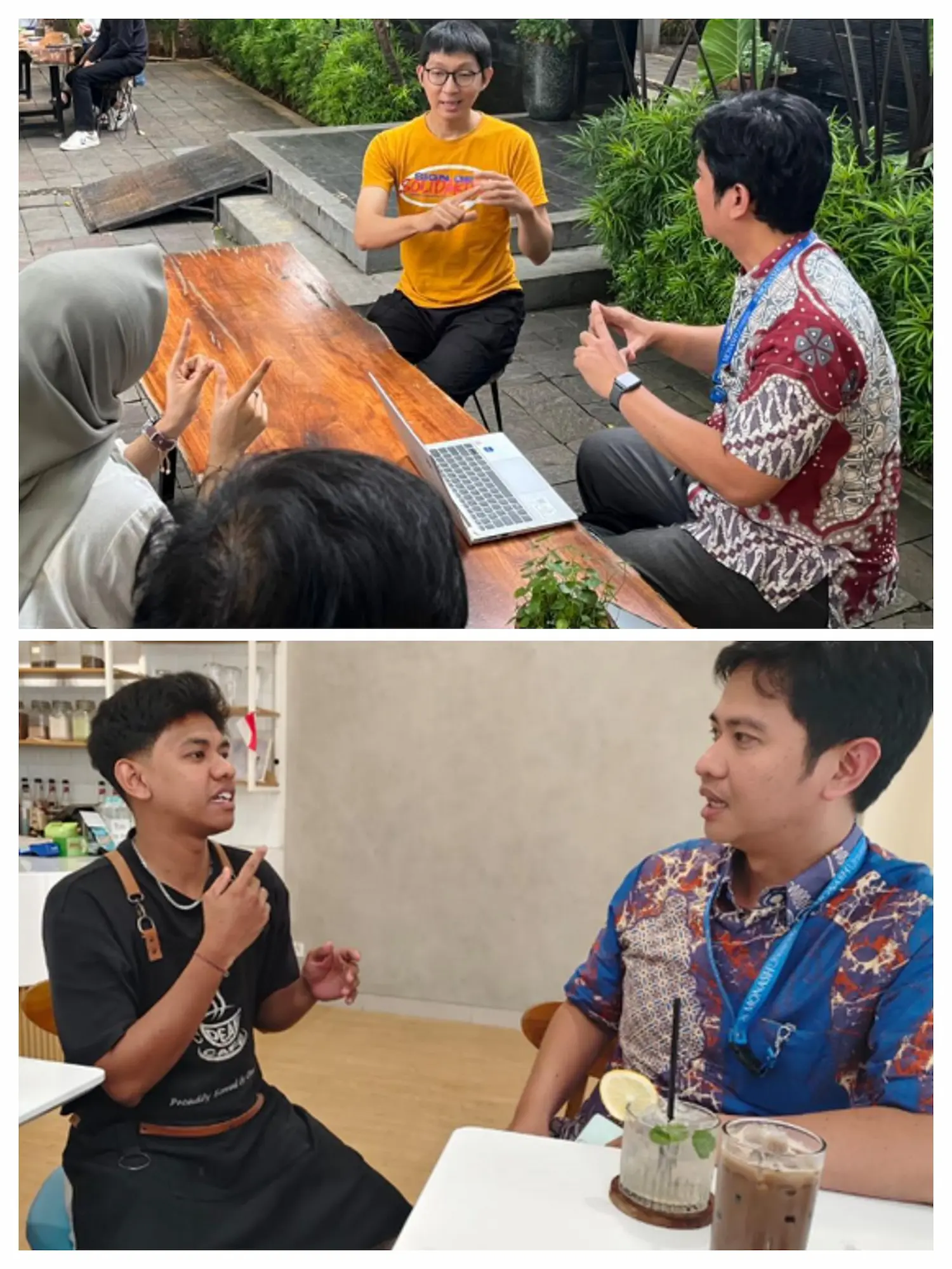 Students engaging with Deaf baristas at a local café in Tangerang to understand communication challenges and co-design inclusive solutions
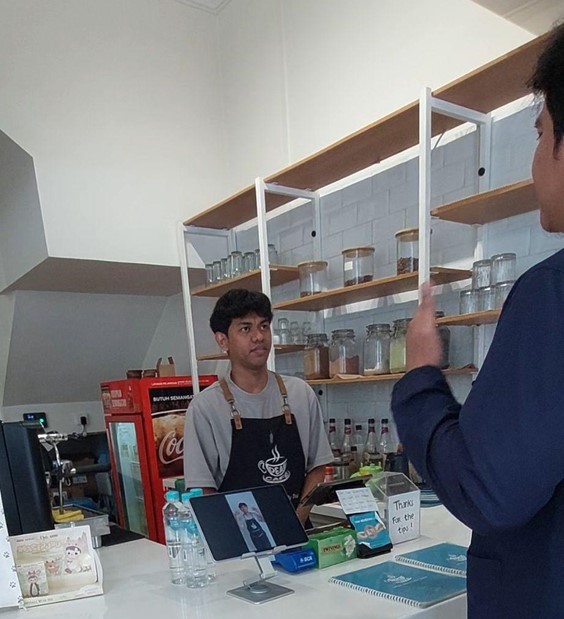
Customer ordering the menu by following the sign language gesture through video interactive app to Deaf baristas at a local café in Tangerang
Group 2. Supporting Crab Fishers in Karang Anyar Through Income Diversification
Field visits and empathy interviews revealed that local crab fishers in Karang Anyar earn below the poverty line due to unstable catch volumes and low selling prices. The group proposed fattened and soft-shell crab aquaculture as an income diversification strategy. A bamboo cage prototype was co-tested with fishers and refined based on feedback. The initiative aligns with SDG 1 and SDG 8, offering a pathway to more stable and sustainable livelihoods.
Team members: Ganung Ardian, Anggi Arivian, Ahmad Aulia, Rianta Mulyana, Arif Permana, Depas Pramono.
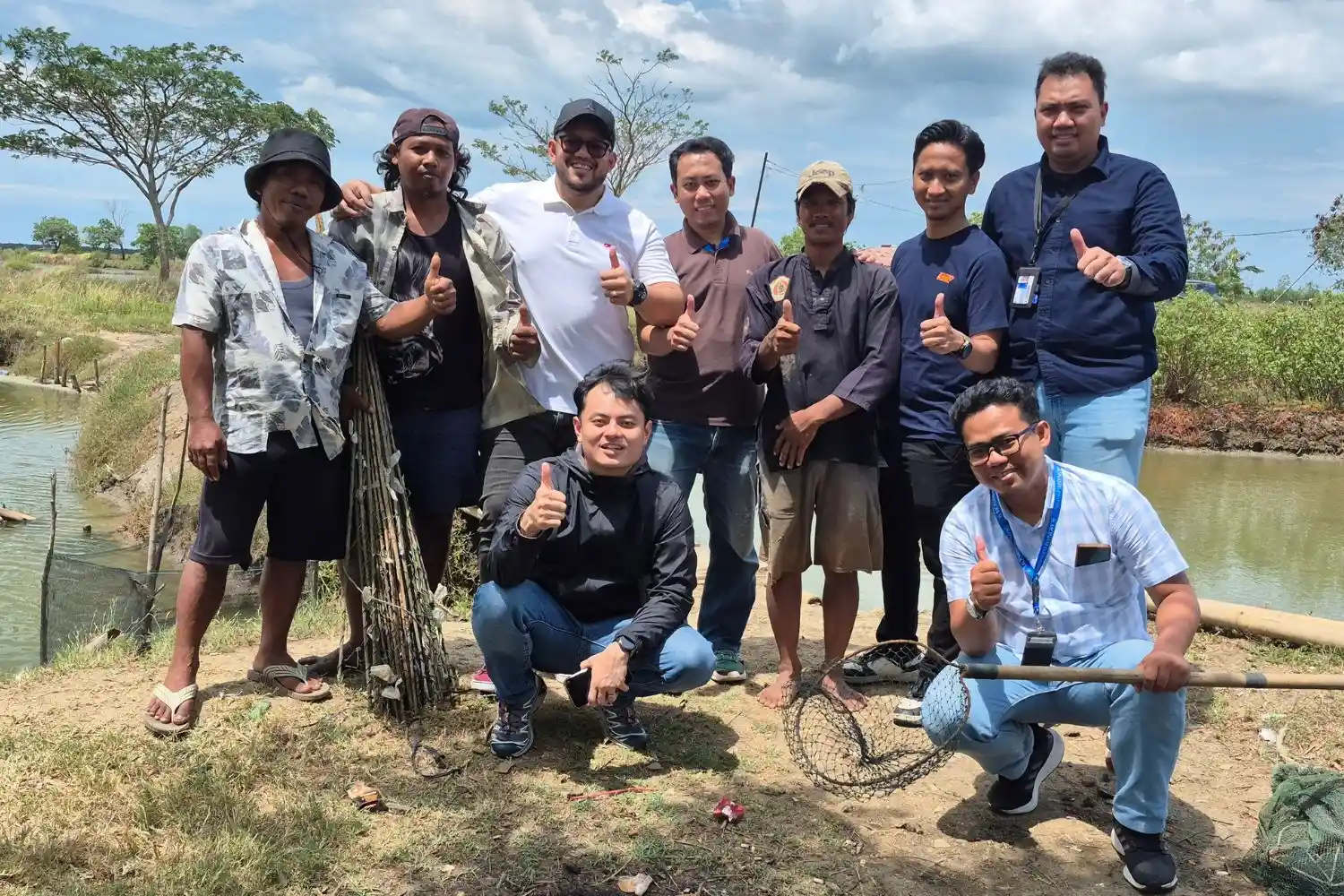
Students collaborating with crab fishers in Karang Anyar to prototype bamboo cages for soft-shell crab aquaculture as part of an income diversification strategy
Group 3. Waste-to-Wealth CSR Program for Market Cleaners (Group 3)
Working with cleaning staff at Pasar Modern BSD City, this team co-designed a circular waste-to-value model. Through workshops and prototyping, they developed a programme that converts organic and recyclable waste into marketable products such as liquid organic fertiliser. The model supports sustainable income generation and strengthens CSR practices through a practical circular economy approach.
Team members: Syamsu Ahmady, Ahmad Fauzi, Cahya Prakasa, Muhamad Prawira, Yudhistira Putra, Iwan Putro.
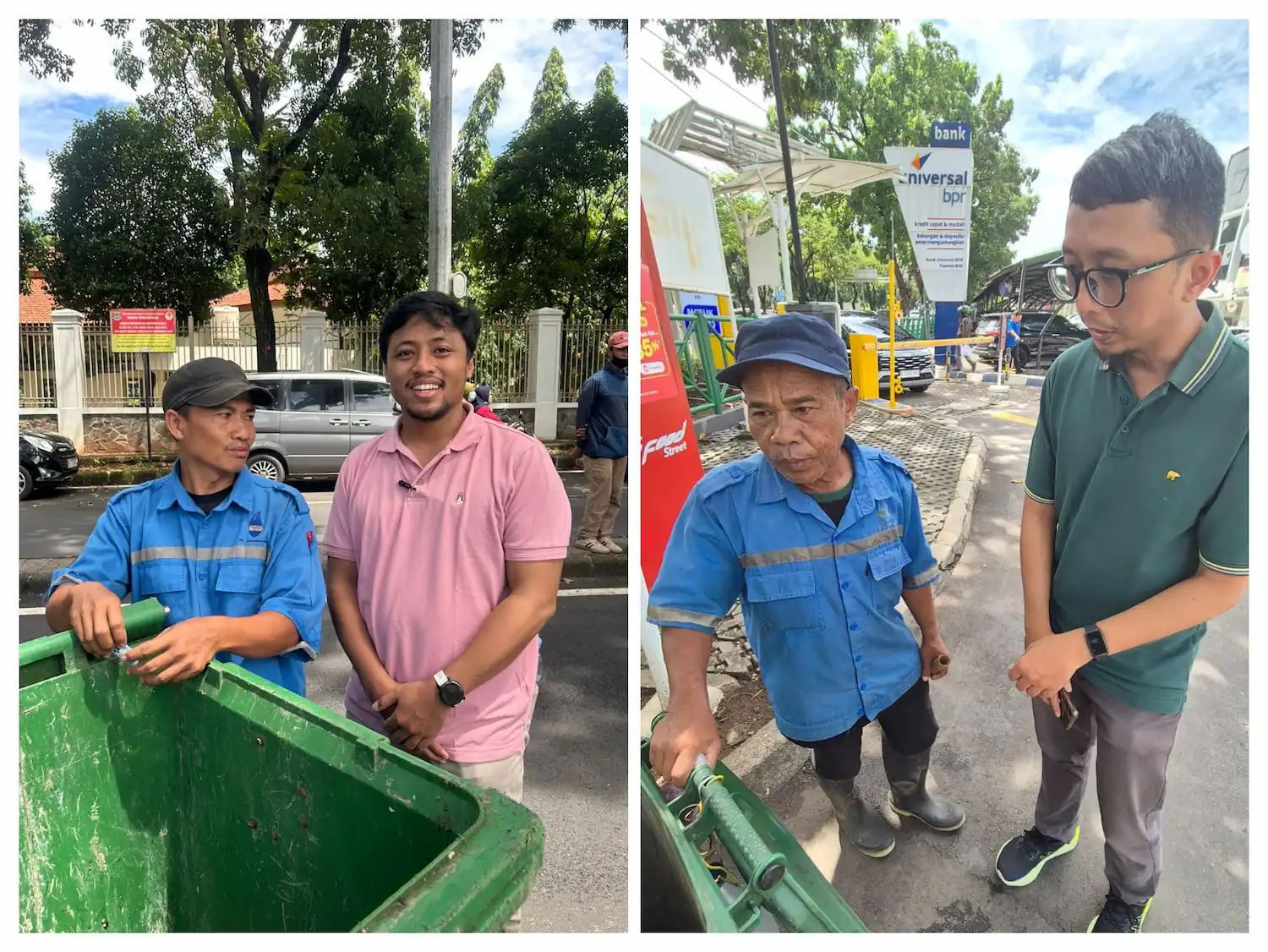
Students working alongside cleaning staff at Pasar Modern BSD City to develop a waste-to-value model, including liquid organic fertiliser production
Group 4. Strengthening Emergency Preparedness for Wheelchair Users at Monash University, Indonesia
The project reviewed Monash University, Indonesia’s emergency preparedness through an accessibility lens and identified opportunities to enhance support for wheelchair users. Recommendations include additional evacuation chairs, designated refuge areas, automatic doors, and localisation of the Monash platform to improve alerts and coordination. Aligned with SDG 16 and national accessibility standards, these proposals form part of a 2025–2027 roadmap to advance inclusive emergency preparedness.
Team members: Martinzaid Wibowo, Januar Hosein, Arthur Korompis, Dedhy Putra, Khevin Sidik, Akbar Tendean.
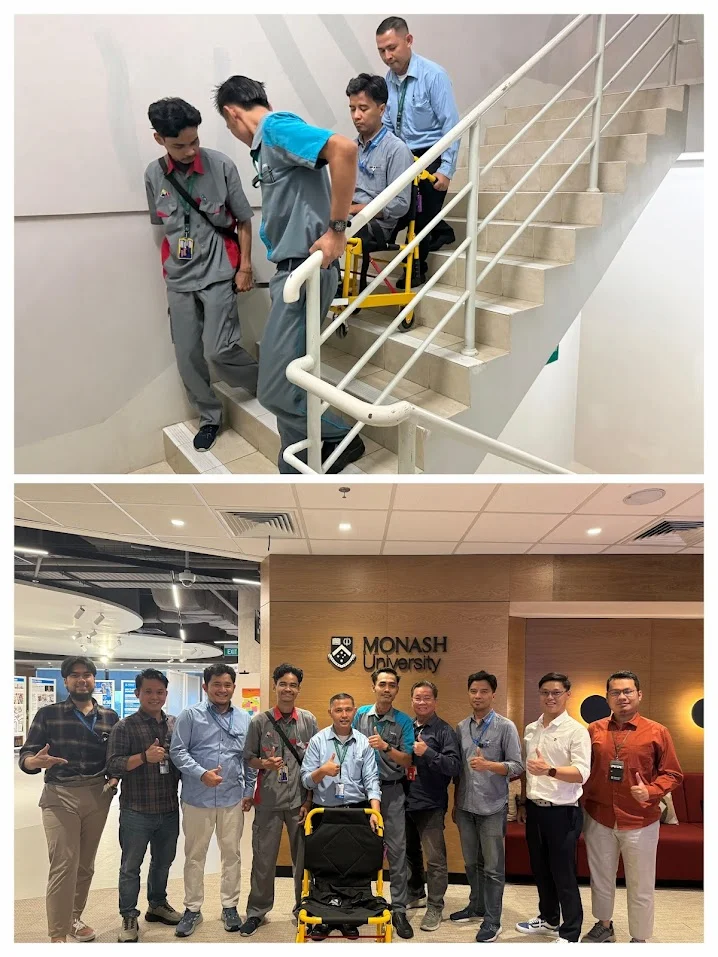
Students testing emergency response procedures and evacuation prototypes with wheelchair users at Monash University, Indonesia
Group 5. CERIA: A Community-Based Senior Daycare Model
Responding to the pressures faced by Jakarta’s “sandwich generation,” this project proposed CERIA (Community Eldercare & Resilient Inclusion Alliance), a small-scale senior daycare model operating at the sub-district level. Based on interviews, the core need identified was “peace of mind” for working adults concerned about elder safety and wellbeing. The service design includes daytime supervision, preventative health monitoring, and structured social-cognitive activities. The model aligns with SDG 1, SDG 3, and SDG 8, supporting household resilience, elder wellbeing, and local employment in the care sector.
Team members: Diky Irpanaputra, Julian Perdana, Lukman Prilyandani, Rosyihan, Eki Supriatna.
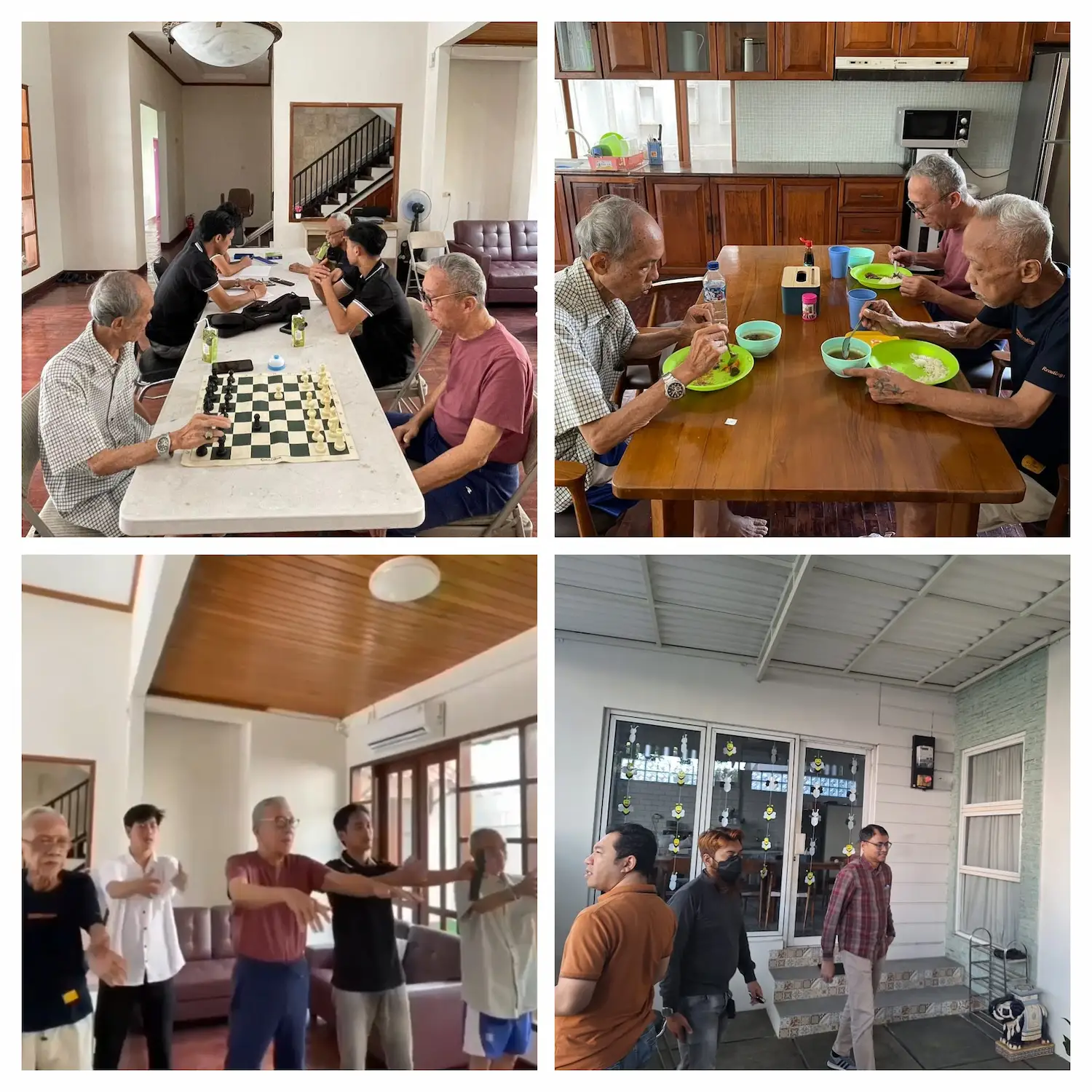 Students benchmarking practices at a senior group home to inform the design of CERIA, a community-based daycare model for older adults.
A Grounded and Context-Aware Approach to Business Innovation
Across all projects, students demonstrated that innovation extends beyond theoretical analysis by addressing concrete needs identified through field engagement. The cross-unit collaboration is distinctive: ADI5111 equips students with user-centred innovation methods through Design Thinking, while ECI5590 deepens understanding of poverty and inequality and how business tools can contribute to addressing these challenges. Together, these units enable students to design solutions that are socially relevant and operationally feasible.
Dr. Harriman Saragih, who teaches ADI5111, noted: "Innovation becomes more meaningful when it begins with a clear understanding of people’s lived realities and constraints." He emphasised that education should not operate as an ivory tower but equip learners to generate insights and solutions that communities can genuinely use.
Dr. Sarah Gultom, who teaches ECI5590, added: "Linking innovation with poverty and inequality enables students to see how business tools can support more equitable outcomes."
This initiative reflects Monash Impact 2030's commitment to creating real-world impact through education and research, ensuring that innovation serves society and advances inclusive development.